
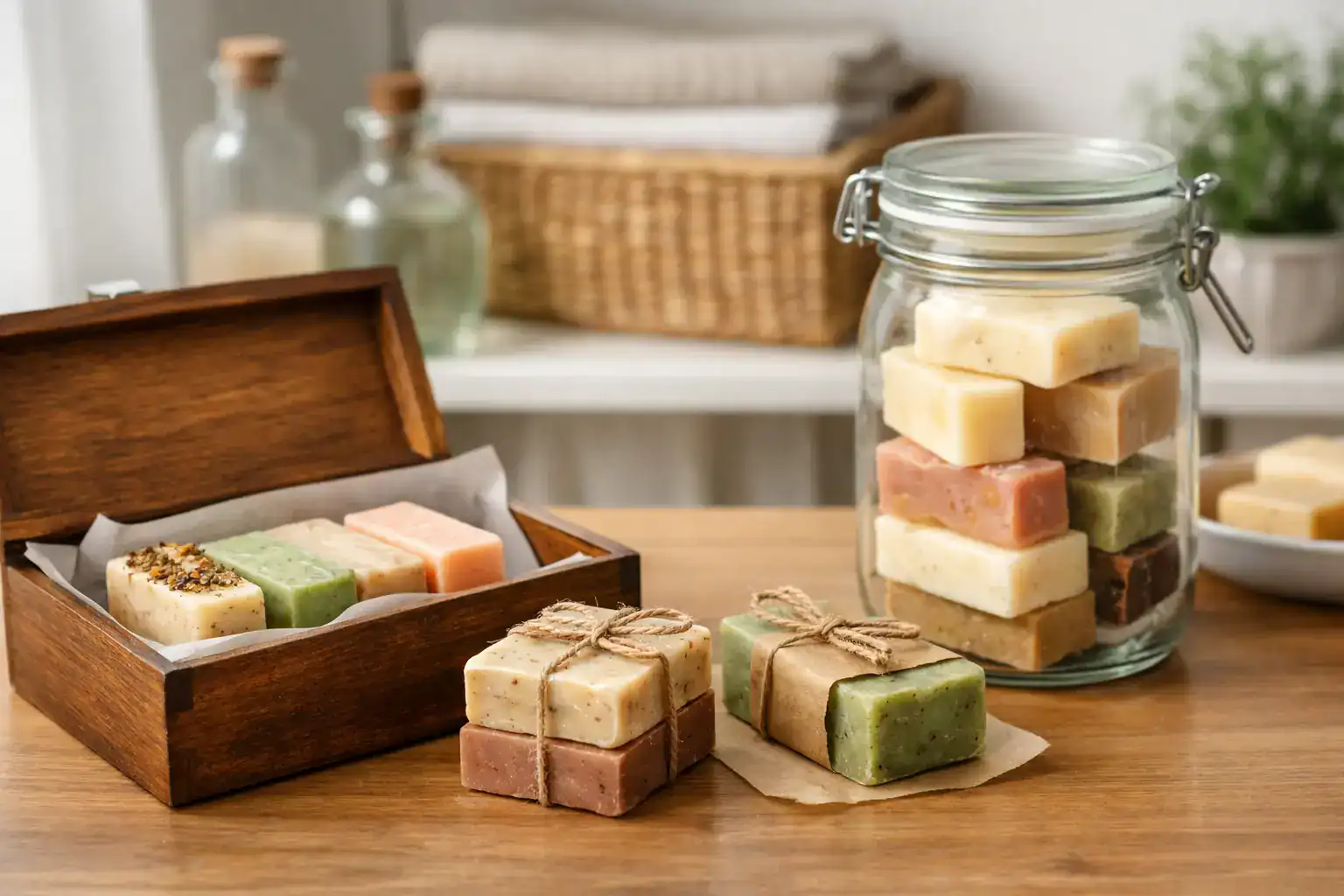
A handmade bar can feel like a small daily comfort: a creamy lather, a gentle scent, and skin that feels clean without feeling stripped. Knowing how to store handmade soap properly helps protect that experience. It also helps each bar last longer, which matters when you have chosen a carefully crafted soap made with pure goat milk, nourishing oils, and ingredients gentle enough for the whole family.
The simple rule is this: handmade soap needs air and drainage. It does not need to sit in a puddle, bake in a sunny window, or stay sealed up while damp. A few small changes to where and how you keep your soap can make a noticeable difference in how firm, fresh, and long-lasting it feels.
Why Handmade Soap Needs a Little Extra Care
Handcrafted soap is different from many mass-produced bars. It is often made in small batches with skin-loving oils, natural colorants, goat milk, and essential oils rather than harsh detergents or heavy synthetic preservatives. Those thoughtful ingredients are part of what makes a bar feel so good on dry or sensitive skin, but they also mean the soap deserves proper storage.
Water is the biggest concern once a bar is in use. When soap remains wet between showers or hand washes, it softens quickly and dissolves faster than it should. Humidity can do the same thing, especially in a busy family bathroom where several showers happen each day.
For unused bars, heat, direct sun, and excess moisture can affect the color and fragrance over time. The soap is still usable, but keeping it in a cool, dry place gives you the best chance of enjoying it exactly as it was meant to be enjoyed.
How to Store Handmade Soap Properly Before Use
A new bar should be kept somewhere cool, dry, and out of direct sunlight. A linen closet, bedroom drawer, or pantry shelf away from the stove is usually a much better choice than the bathroom. Bathrooms are convenient, but their changing heat and moisture levels make them less than ideal for long-term storage.
Keep the bar in its original paper wrap or label until you are ready to use it. Paper allows the soap to breathe while protecting it from dust and light. If you have removed the packaging, place the bars in a cardboard box, a paper bag, or an open basket lined with plain paper.
Avoid sealing unused handmade soap in an airtight plastic container, particularly if it has been stored in a humid place or feels at all damp. Trapped moisture can cause the surface to sweat or soften. A little airflow is your friend.
If you like to stock up on favorite scents, arrange the bars with a bit of space between them rather than stacking them tightly. This is especially helpful for soaps scented with essential oils, since fragrance can mingle when bars are pressed together for months. Storing similar scents together is a practical choice for households that keep several bars on hand.
Give Your In-Use Bar a Dry Place to Rest
The best soap dish has one important job: it keeps the bar lifted above water so air can circulate around it. A draining soap dish, slatted wooden holder, raised tray, or well-designed soap saver all work well. The bar should rest on a surface that lets water run away instead of pooling underneath.
A soap saver can be especially useful for goat milk soap because it protects the bar between uses without taking up much space beside the sink or in the shower. Choose one that dries quickly and rinse it now and then to remove any soap buildup. If the dish has a drain, make sure that drain is not blocked by residue or sitting flat against the counter.
Try not to place a bar directly on the ledge of a shower, on the rim of a bathtub, or in a smooth dish with no drainage. Even a firm, well-cured bar will become soft if the bottom stays submerged. It may develop a gel-like layer, break into pieces, or disappear much sooner than expected.
For a household with multiple users, giving each person their own draining soap dish is often easier than sharing one wet bar. It keeps soaps cleaner, helps each bar dry fully, and makes it simple to choose the right formula for each person’s skin needs.
Let the Bar Dry Between Uses
After washing, set the bar back on its draining holder rather than leaving it under the stream of water. This one habit can add many more uses to a bar. If your shower is particularly humid, place the soap just outside the direct spray or use a small shelf where it can get more airflow.
A larger bar can also be cut into two pieces before use. Keep one piece stored dry and use the other at the sink or in the shower. This approach is helpful for travel, small soap dishes, and families that want to make a favorite bar last as long as possible.
Keep Soap Away From These Common Trouble Spots
A handmade bar does not need complicated storage, but a few locations consistently cause problems. The following are worth avoiding:
- A closed shower caddy that stays damp all day
- The edge of a sink where water collects beneath the bar
- A sunny windowsill, dashboard, or shelf near a heating vent
- An airtight plastic bag or container used while the soap is still wet
Heat can soften natural oils and fade botanical colors. Direct sunlight can also weaken the scent of essential oils over time. Moisture is the more immediate issue, but light and heat matter when you are storing extra bars for several weeks or months.
The refrigerator is usually unnecessary. While it may seem like a safe, cool option, soap can pick up food odors or develop condensation when moved back into a warmer room. A dry closet or drawer is simpler and generally better.
Storing Handmade Soap for Travel
Travel soap needs a slightly different plan because it is often packed right after use. Never put a wet bar into a fully sealed travel case if you can avoid it. Let it dry in the open overnight first. If you need to pack it sooner, choose a travel tin or case with ventilation and take the bar out as soon as you reach your destination.
For a weekend away, a smaller piece of soap is easier to dry and carry than a full bar. Wrap a dry piece in paper or tuck it into a breathable pouch before placing it in your toiletry bag. Once you arrive, give it a draining dish or a clean, dry washcloth rather than leaving it in the bottom of the case.
This is one of those situations where convenience and longevity can compete. A sealed case prevents leaks in your luggage, but prolonged sealing can leave a damp bar soft. Letting the soap dry first is the best way to get both benefits.
What If Your Soap Has Already Gone Soft?
A softened bar is not ruined. Move it to a dry, well-draining soap holder and let it rest for a day or two. It will usually firm up as the extra moisture evaporates. Do not try to speed up the process with a microwave, oven, or direct heat. Gentle air circulation works better and protects the soap’s natural ingredients and scent.
If you have several small leftover pieces, press them together while they are slightly damp and use them as a hand soap. You can also place the pieces in a small sisal pouch or soap-saving bag for the shower. There is no need to waste a bar that is still perfectly good.
At The Goats Field, our handcrafted goat milk soaps are made to bring a little more comfort to everyday care. Treating each bar well is a simple way to enjoy every last creamy, skin-loving wash.
A dry resting place may not seem like much, but it is one of the kindest things you can do for your soap. Set out a draining holder, keep your extra bars cool and dry, and let that small farm-crafted comfort stay with your family a little longer.