

When it comes to your face, the best mineral sunscreen uses non-nano zinc oxide, gives you broad-spectrum SPF 30+ protection, and is made for your specific skin type—especially if it’s sensitive or reactive. It needs to feel good enough to wear every single day, without clogging your pores or leaving a greasy film behind.
Your Guide to Choosing the Right Facial Sunscreen
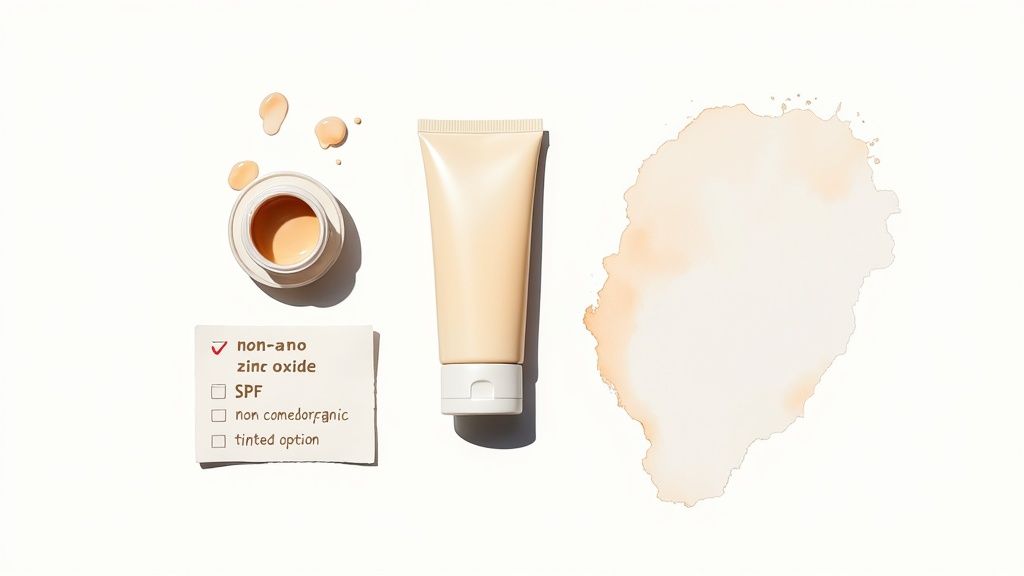
Let's be honest—trying to find the right sunscreen can feel like a chore. You walk down the aisle and are hit with a wall of confusing terms: 'nano,' 'non-nano,' 'chemical,' 'physical.' It’s enough to make anyone give up. This guide is here to cut through all that noise.
We’re going to walk through, step-by-step, what actually matters in a facial sunscreen, particularly if your skin is on the sensitive side. Forget long product lists. The goal here is to give you the knowledge to pick a formula that protects, soothes, and just plain works for you.
Why Mineral Sunscreen Is a Smarter Choice for Your Face
The skin on your face is much more delicate and prone to reactions than the skin on your body. That’s why picking the right kind of protection is so important. Mineral sunscreens, which you might also hear called physical sunscreens, work completely differently than their chemical cousins.
Think of a chemical sunscreen like a sponge. It soaks up UV rays and turns them into heat within your skin. A mineral sunscreen, on the other hand, is more like a mirror. It forms a physical shield on top of your skin that reflects and scatters the rays away before they can get in.
This one difference is a huge reason why mineral formulas are the smarter pick for daily facial use. They are usually much better tolerated by sensitive skin because the active ingredients—zinc oxide and titanium dioxide—sit on the skin’s surface instead of getting absorbed.
This isn’t just a niche preference anymore. The global mineral sunscreen market hit $1.6 billion in 2023 and is expected to climb to $2.3 billion by 2030, all thanks to people wanting gentler, more effective ingredients. It shows a major shift toward physical blockers, especially for the face.
Key Considerations for Sensitive and Reactive Skin
When you're picking a sunscreen for your face, especially if your skin gets irritated easily, it's crucial to look for formulas designed to be gentle. The same rules you follow for finding soothing skincare or the best natural makeup for sensitive skin apply here, too.
For your face, a gentle formula is one that is:
- Free from common irritants: This means no synthetic fragrances, parabens, or harsh chemical filters that can cause flare-ups.
- Non-comedogenic: This is just a fancy way of saying the formula is designed not to clog your pores, which is a must if you're prone to breakouts.
- Made with soothing ingredients: A truly great mineral sunscreen doesn't just protect; it also supports your skin's health.
In the next sections, we'll dive deeper into each of these points, starting with exactly how mineral sunscreens work their magic to shield your skin from damage.
Understanding How Mineral Sunscreen Actually Works
Think about blocking a sunny window for a moment. You could hang a dark curtain that soaks up the light and heat, or you could put up a mirror that just bounces all that light straight back outside. Mineral sunscreen works exactly like that mirror—it creates a physical shield right on top of your skin.
This shield is made from super-fine minerals that act like tiny bodyguards. When UV rays from the sun try to hit your skin, these minerals simply reflect and scatter them away before they can do any damage. It's a straightforward, effective method that tends to be much kinder to the skin.
Unlike their chemical counterparts, which need to absorb UV rays and turn them into heat, mineral formulas get to work the second you put them on. No more waiting 20 minutes before you can step outside. The physical barrier is ready to protect you instantly.
The Two Powerhouse Minerals: Zinc Oxide and Titanium Dioxide
The real protective magic in mineral sunscreen comes from two key ingredients approved by the FDA: Zinc Oxide and Titanium Dioxide. Both are fantastic at blocking UV rays, but they each have their own specialty.
- Titanium Dioxide: This mineral is a champ at blocking the shorter UVB rays—the ones responsible for giving you a nasty sunburn. It's incredibly effective and very gentle.
- Zinc Oxide: Many experts consider this the gold standard in sun protection. Zinc oxide offers true broad-spectrum coverage, protecting you from both the UVB (burning) rays and the sneaky, longer UVA (aging) rays that cause wrinkles and sun spots.
For the most complete protection for your face, a sunscreen built around Zinc Oxide is your best bet. It ensures you’re covered against the entire range of damaging sunlight.
The main takeaway is how they work. A mineral formula sits on your skin's surface and physically blocks rays. A chemical one sinks in and absorbs them. If you want to get into the nitty-gritty, you can read more about the differences between mineral and chemical sunscreen.
This physical barrier approach is a huge reason why dermatologists often point people with sensitive, acne-prone, or reactive skin toward mineral options. Since the ingredients rest on the surface instead of sinking in, they're far less likely to cause irritation.
Why Non-Nano Particles Are the Safest Choice
When you see “zinc oxide” on an ingredient list, there’s one more detail that really matters: whether the particles are nano or non-nano. It all comes down to size, and this small difference has big safety implications.
Here’s a simple way to picture it:
- Nano Particles are like ultra-fine dust. Their microscopic size means they could potentially be absorbed through the skin and enter the bloodstream, which has understandably raised some safety questions.
- Non-Nano Particles are more like tiny pebbles. They’re too large to pass through your skin's natural barrier, so they stay right where they belong—on the surface, forming that protective shield.
This is why choosing a non-nano zinc oxide sunscreen is the safest way to go. You get all the amazing broad-spectrum protection without any of the worry about what's getting into your body. It ensures your sunscreen is protecting you from the outside, not from the inside. This is especially critical when you're choosing a sunscreen for your face, where the skin can be more delicate.
Opting for a non-nano zinc oxide formula gives you powerful UV defense with total peace of mind. It’s a simple choice that puts both effectiveness and your long-term health first, making it the perfect foundation for any daily sun care routine.
Decoding Labels to Find Your Perfect Match
Now that you have the science down, it’s time to put that knowledge to work in the real world. Choosing the best mineral sunscreen for your face isn’t a guessing game; it's about learning to read the label like a pro. This is how you can confidently pick a product that will protect, soothe, and truly support your skin.
Think of a sunscreen label as a recipe card. The ingredients, percentages, and claims all tell a story about how it will perform. Your job is simply to become a savvy reader, focusing on the details that matter most for delicate facial skin.
This visual guide breaks down the first and most important decision you'll make when choosing sun protection.
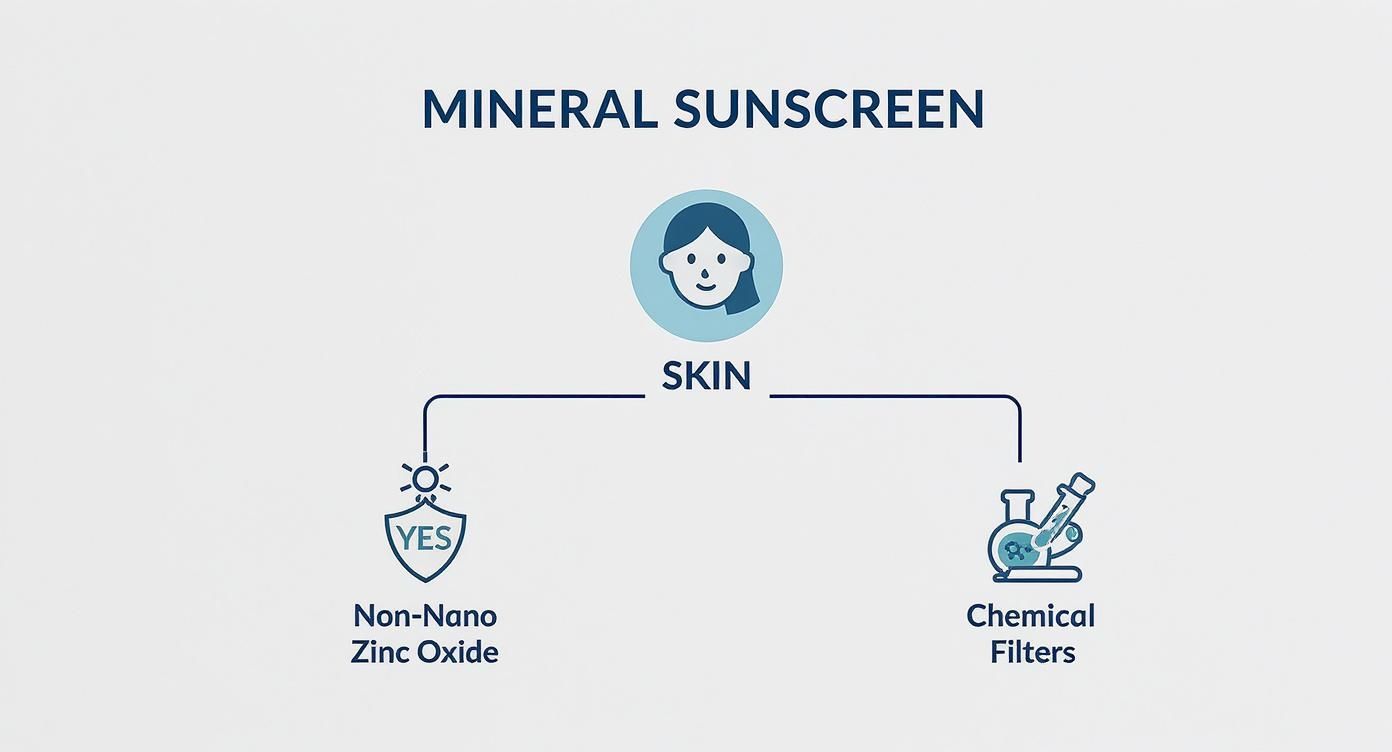
As you can see, opting for a physical barrier like non-nano zinc oxide is the foundational choice for gentle, effective facial sun care.
Your Non-Negotiable Active Ingredient
When you flip over a bottle of sunscreen, the first place your eyes should go is the "Active Ingredients" box. For the safest and most complete protection, there’s one ingredient you should always look for: non-nano zinc oxide.
While you might see titanium dioxide listed, it mainly excels at blocking UVB (the burning rays). Zinc oxide, on the other hand, is the true powerhouse, providing complete broad-spectrum protection. It shields your skin from both UVB and the deeper-penetrating UVA rays that cause premature aging. That makes it the clear winner for daily facial use.
Understanding SPF Numbers for Daily Use
SPF, or Sun Protection Factor, can be a little confusing. An SPF 30 blocks about 97% of UVB rays, while an SPF 50 blocks around 98%. That jump might seem tiny, but for a long day of intense sun, that extra percentage point can really count.
However, for everyday life—commuting to work, running errands, or even sitting by a sunny window—most dermatologists will tell you that an SPF of at least 30 is the sweet spot. It offers solid protection against the incidental sun exposure we get all day, without feeling heavy or greasy.
"Daily use of a facial sunscreen is the single most effective anti-aging and skin health practice you can adopt. Choosing a formula with at least SPF 30 broad-spectrum protection is the baseline for preventing long-term damage."
The real key is consistency. A comfortable SPF 30 that you actually want to put on every morning is far more powerful than a thick SPF 50 that you only pull out for beach trips.
To make things easier, here's a quick checklist to run through when you're shopping for your next facial sunscreen.
Your Facial Mineral Sunscreen Checklist
Use this quick reference to ensure your next sunscreen meets all the key criteria for safe and effective facial protection.
| Feature | What to Look For | Why It Matters for Your Face |
|---|---|---|
| Active Ingredient | Non-Nano Zinc Oxide | Provides superior broad-spectrum (UVA/UVB) protection and is gentler on skin. |
| SPF Level | SPF 30 or higher | Offers robust protection for daily, incidental sun exposure. |
| Skin Type Match | "Non-comedogenic" for acne-prone skin; soothing ingredients (like goat milk) for sensitive skin. | The base formula determines comfort and prevents issues like clogged pores or irritation. |
| Texture & Finish | Lightweight, whipped, or tinted | A pleasant texture ensures you'll actually use it daily. Tint can offset any white cast. |
| Irritants to Avoid | Fragrance-free, minimal preservatives | Reduces the risk of flare-ups, especially for sensitive or eczema-prone skin. |
This checklist covers the absolute essentials for finding a sunscreen that not only protects but also feels great on your face.
Formulated for Your Skin Type
Beyond the active ingredients, the inactive ones are what really define how a sunscreen feels and behaves on your skin. Here’s what to keep an eye out for based on your skin’s personality:
- For Acne-Prone Skin: The term "non-comedogenic" is your best friend. This simply means the formula was designed specifically not to clog pores—a huge relief when you're layering products on your face.
- For Sensitive and Eczema-Prone Skin: Look for short ingredient lists with added skin-soothers like goat milk, calendula, or chamomile. Steer clear of potential irritants like synthetic fragrances, which are notorious for causing flare-ups.
- For Dry Skin: Keep an eye out for hydrating ingredients like hyaluronic acid, squalane, or nourishing butters. A creamy, whipped texture can deliver a dose of moisture right along with your sun protection.
People are catching on. The U.S. mineral sunscreen market is expected to hit an incredible $2.6 billion by 2034, largely because more of us are prioritizing skin health and seeking out natural ingredients. This trend shows a major shift toward gentle, effective daily protection. You can read more about the mineral sunscreen market's expansion on sperresearch.com.
Tackling the Texture and White Cast
Let's be honest: the biggest complaint about old-school mineral sunscreens was the thick, chalky white cast they left behind. Thankfully, modern formulas have come a very long way. Brands like The Goats Field have perfected elegant, whipped textures that blend into the skin with ease, drastically reducing that ghostly finish.
You also have a choice between tinted and untinted formulas:
- Untinted: This is perfect if you have very fair skin or plan to wear makeup over your sunscreen. A well-made untinted formula should absorb with minimal whiteness.
- Tinted: These formulas use natural iron oxides to add a sheer, skin-toned hue. They are brilliant for neutralizing any potential white cast on a wide range of skin tones and can even out your complexion enough to let you skip foundation.
Ultimately, finding the best mineral sunscreen for your face comes down to finding a texture you genuinely love applying every single day. A lightweight, breathable formula is what turns sun protection from a chore into a seamless part of your morning routine.
Mastering Application for a Flawless Finish
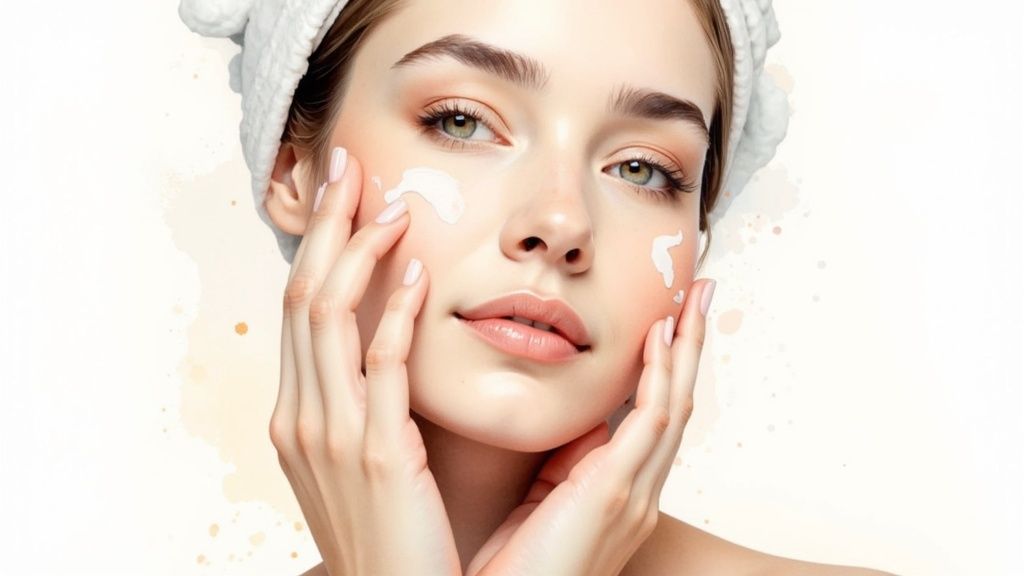
Even the best mineral sunscreen can’t do its job if it isn't applied right. Nailing your application technique is what turns a great product into amazing protection, giving you that full SPF value without any white cast, patchiness, or those annoying little balls of product.
A lot of us simply don't use enough sunscreen. That old advice about using a "pea-sized amount" is a stubborn myth that leaves skin dangerously exposed. To get real, even coverage, you need way more than you probably think.
The Two-Finger Rule for Perfect Coverage
Let's take the guesswork out of it. The easiest way to measure the right amount of sunscreen for your face and neck is the two-finger rule. It's a total game-changer for making sure you’re properly protected every single time.
Here's how simple it is:
- Squeeze a line of sunscreen down your index finger, from the base to the tip.
- Do the same thing on your middle finger.
- That's your magic amount. Apply all of it to your face, ears, and neck.
This simple method helps you apply roughly 1/4 to 1/2 teaspoon of sunscreen, which is the amount dermatologists recommend to actually get the SPF on the bottle. It might feel like a lot at first, but trust us, your skin will thank you.
Layering Skincare Without Pilling
One of the biggest frustrations is when your sunscreen starts to ball up, or "pill," over your other skincare products. This isn't the sunscreen's fault! It's usually a sign that the layers underneath haven't had enough time to dry.
The secret to a smooth finish is all about absorption time. Think of it like painting a wall—you have to let the primer dry completely before you can put the paint on top. If you rush it, you get a streaky mess.
Apply your serums, then your moisturizer. After that, just wait. Give your skin a good 5-10 minutes to absorb everything fully before you even think about reaching for your sunscreen. This little pause creates the perfect canvas for your final, protective layer.
The Art of Reapplication
Your morning application is just the beginning. Sunscreen isn’t a one-and-done deal. Its protective shield wears down over time, especially when you're sweating or out in the sun. To stay protected all day, you have to top it off.
The golden rule is to reapply your mineral sunscreen every two hours when you’re in direct sunlight. And it’s non-negotiable to reapply right after you swim, sweat a lot, or towel off.
What about a normal workday inside? One good application in the morning is usually enough if you’re away from windows. But if you sit near a window or pop outside for lunch, a quick reapplication is a very smart move.
Reapplying over makeup sounds tricky, but it’s totally doable:
- Sunscreen Sticks: A mineral sunscreen stick is a fantastic, mess-free tool. Gently swipe it over your makeup, then tap it in lightly with your fingertips.
- Powder Sunscreens: Mineral powders with SPF are perfect for touch-ups, especially if you have oily skin. You can just brush them on without messing up your makeup.
- Cushion Compacts: These are great for patting a fresh layer of tinted mineral sunscreen over your makeup without smudging anything.
One last tip: before you commit to a new sunscreen, always do a patch test. Dab a small amount on a hidden spot, like behind your ear or on your inner arm, and wait 24 hours. This simple step can save you from a whole lot of irritation, especially if your skin is sensitive or eczema-prone.
Thinking Beyond Everyday Sun Protection
Choosing a great mineral sunscreen for your face is a brilliant first step, but its real power goes far beyond your morning routine. A high-quality formula is a true workhorse, supporting your skin's health in more ways than one and becoming a cornerstone of smart, holistic skincare.
Think of your sunscreen as more than just a shield. It's your first line of defense against premature aging, a trusted travel companion, and a gentle guardian for the most sensitive members of your family.
More Than a Shield—It Soothes and Nurtures
One of the most overlooked perks of a mineral sunscreen is hidden in its main active ingredient. Non-nano zinc oxide isn't just a powerful UV blocker; it's also famous for its skin-calming properties. For centuries, zinc has been used to soothe irritation, dial down redness, and support the skin’s own healing process.
This means every time you apply your sunscreen, you’re not just protecting your skin—you’re actively nurturing it. This dual-action benefit makes it a perfect match for anyone with reactive, sensitive, or eczema-prone skin. Your daily sun protection becomes a daily dose of gentle care.
The Ultimate Anti-Aging Product
Many people pour money into serums and creams to fight the signs of aging, but the truth is much simpler. Up to 90% of visible skin aging—think wrinkles, fine lines, and dark spots—is caused by sun exposure. This makes a broad-spectrum mineral sunscreen the single most effective anti-aging product you can own.
By forming a physical barrier that reflects damaging UVA rays, your sunscreen stops the breakdown of collagen and elastin before it even starts. Consistent daily use is the most powerful preventative step you can take to keep your skin looking firm and youthful for years to come.
This growing awareness is fueling major market demand. The global hydrating mineral sunscreen market was valued at $2.5 billion in 2025 and is projected to grow at a Compound Annual Growth Rate of 7% through 2033. This surge comes from consumers looking for effective, gentle, and environmentally friendly products. You can find more insights about this trend at archivemarketresearch.com.
Protection for the Whole Family
The very things that make a mineral sunscreen ideal for your face also make it the go-to choice for your entire family. Children have thinner, more delicate skin that is extra vulnerable to sun damage and can be easily irritated by the chemical filters in typical sunscreens.
A non-nano zinc oxide formula offers gentle but effective protection that sits on top of the skin instead of being absorbed. This makes it a safe, reliable option for everyone, from toddlers to grandparents.
Your Smartest Travel Companion
Trying to get through airport security with a bag full of liquids is always a headache. This is where solid mineral sunscreen sticks and balms really shine. They offer a huge advantage for travelers:
- TSA-Friendly: Solid formulas don’t count toward your liquid allowance, freeing up precious space in your clear bag.
- No-Spill Guarantee: You never have to worry about a bottle leaking all over your clothes or inside your luggage.
- Easy Application: Sticks are perfect for quick, mess-free touch-ups on the go, whether you're on a plane, a beach, or a hiking trail.
Having a reliable, travel-friendly mineral sunscreen means your skin stays protected no matter where your adventures take you. It simplifies your packing and your routine, proving that great skincare can also be incredibly practical.
Answering Your Top Mineral Sunscreen Questions
Even after you know what to look for, switching up your skincare routine can feel like a leap of faith. You might still have some questions floating around, and that's perfectly normal. We've been there. This is where we clear up the common worries that pop up when you're choosing a mineral sunscreen for your face.
We've pulled together the questions we hear all the time to give you that last bit of clarity. Think of this as your go-to guide for busting myths and feeling completely confident in your choice.
Will Mineral Sunscreen Make My Acne Worse
This is probably the number one fear for anyone with acne-prone or combination skin, and it’s a good question to ask. The last thing you want is a sunscreen that triggers a breakout. But here’s the good news: the right mineral sunscreen is often a much better friend to breakout-prone skin than a chemical one.
The trick is to find a formula that’s clearly labeled "non-comedogenic." That’s just a fancy way of saying it’s designed not to clog your pores. High-quality mineral sunscreens, especially those with lighter, whipped textures, are a world away from the thick, greasy pastes of the past.
A huge, often-missed benefit is that non-nano zinc oxide—the hero of mineral formulas—is naturally anti-inflammatory. It can actually help calm the redness and irritation that comes with acne, making it a truly two-in-one ingredient that protects and soothes.
To stay in the clear, always choose lightweight lotions over heavy creams. And the most important step? Make sure you wash your face thoroughly every single night. Getting rid of all the sunscreen, makeup, and daily grime is your best defense against clogged pores.
What Is the Difference Between UVA and UVB Rays
To protect your skin, you have to know what you’re up against. The sun sends out different kinds of ultraviolet (UV) rays, but the two we need to worry about are UVA and UVB. They affect your skin in very different ways, which is why your sunscreen absolutely has to block both.
Here’s a simple way to remember which is which:
- UVA is for 'Aging'. These long-wave rays go deep into your skin's thickest layer. They’re the main driver behind long-term damage like wrinkles, fine lines, and dark spots. They also play a major part in causing skin cancer.
- UVB is for 'Burning'. These are shorter-wave rays that hit the skin's surface. They’re what cause painful sunburns and are a direct trigger for most skin cancers.
That SPF number on the bottle? It mostly refers to protection from UVB rays. This is why you must, must, must choose a sunscreen labeled "broad-spectrum." That label is your assurance that it’s been tested and proven to shield you from both the burning and the aging rays. Dermatologists love non-nano zinc oxide because it’s one of the best ingredients out there for true, reliable broad-spectrum protection.
Is the SPF in My Makeup Good Enough
It’s so tempting to see "SPF 20" on your foundation and think you’re covered for the day. But dermatologists are all on the same page here: you can't rely on makeup alone for sun protection. It's a nice little extra, but it's not doing the heavy lifting.
The issue really comes down to how much you use. To get the SPF protection advertised on the bottle, you'd have to cake on a shockingly thick layer of foundation—about seven times the amount anyone actually applies. That small pump or dab you use for coverage only gives you a tiny fraction of the promised protection.
The best approach is to see your sunscreen and makeup as two totally separate steps in your morning routine.
- Finish your skincare (cleanser, serum, moisturizer).
- Apply your dedicated mineral sunscreen as the very last step. Use the two-finger rule to make sure you're applying enough.
- Give it a minute or two to set.
- Apply your makeup right on top.
Think of the SPF in your makeup as a little bonus insurance, not your primary policy. Your dedicated, broad-spectrum mineral sunscreen is the real, non-negotiable shield your skin needs every day.
At The Goats Field, we believe sun protection should be simple, effective, and gentle enough for the whole family. Our mineral sunscreen is crafted with non-nano zinc oxide and soothing goat milk to protect and nourish your skin without compromise. Discover your new daily essential at https://thegoatsfield.com.