

Achieving clear, radiant skin involves more than just topical creams and cleansers. The foundation of a healthy complexion is built from within, nourished by essential vitamins and minerals that protect, repair, and regenerate. While a balanced diet is paramount, targeted supplementation and smart skincare can elevate your results, leading to a complexion that is not only beautiful but also resilient.
This guide is designed to be your definitive resource, moving beyond generic advice to provide a clear, actionable roadmap. We'll explore the 8 best vitamins for skin health, breaking down the science behind each one in an easy-to-understand format. You will learn precisely how to incorporate them into your routine through diet, supplements, and topicals for maximum impact.
We'll provide specific recommendations for all skin types, with a special focus on practical tips for those with sensitive or eczema-prone conditions. Furthermore, we'll explain how gentle, natural ingredients, like those in The Goats Field's goat milk skincare, work in harmony with these powerful nutrients. This synergy helps soothe and support your skin's delicate barrier, creating a truly holistic approach to lasting skin wellness. Get ready to discover how to nourish your skin from the inside out.
1. Vitamin C (Ascorbic Acid)
Vitamin C, or ascorbic acid, is a powerhouse antioxidant essential for maintaining skin vitality and one of the best vitamins for skin health. Its primary role is to neutralize free radicals, unstable molecules generated by UV radiation and pollution that cause oxidative stress, leading to premature aging, fine lines, and dullness. By scavenging these damaging molecules, Vitamin C provides a crucial layer of environmental defense.
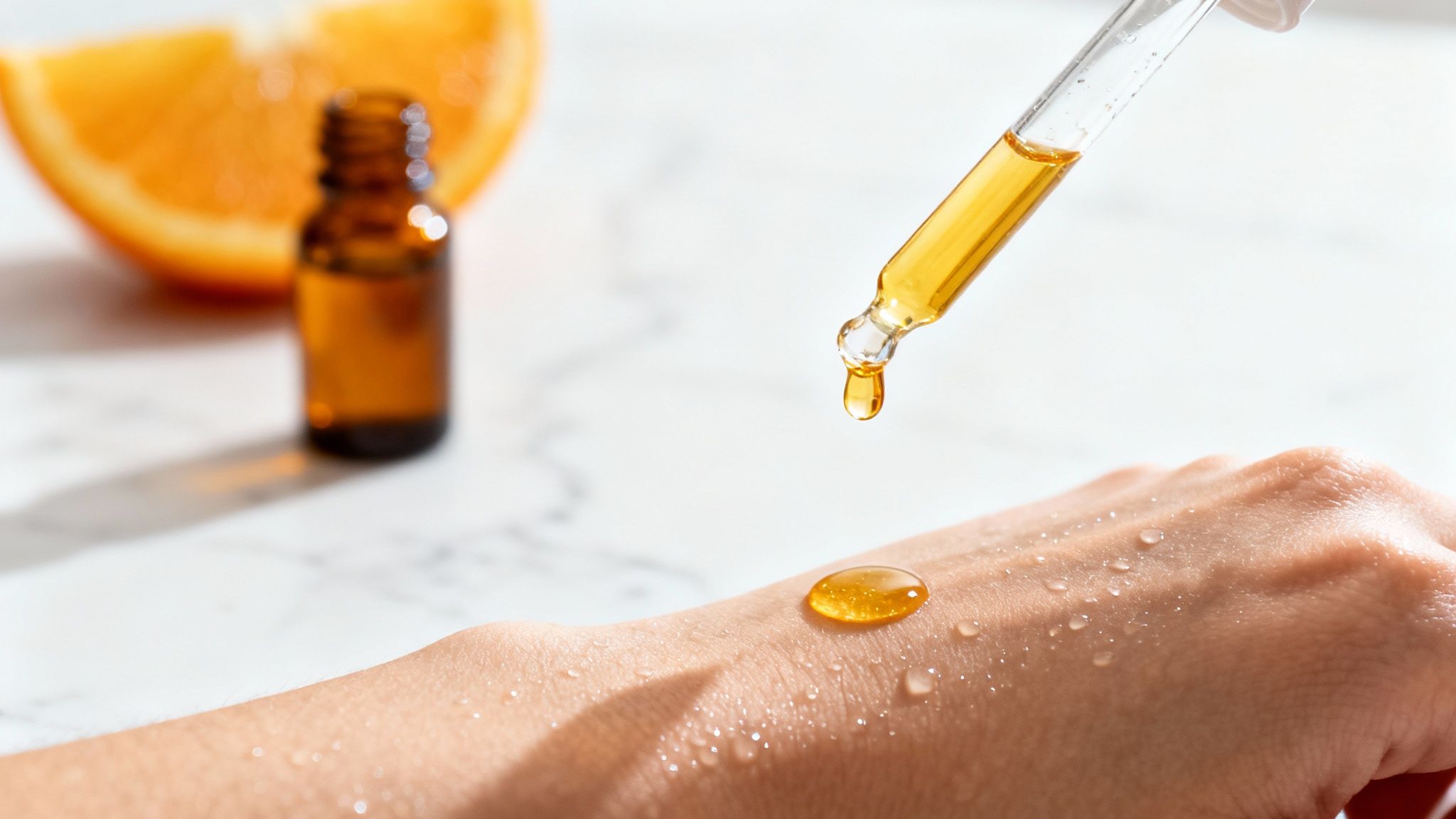
Beyond its protective qualities, Vitamin C is indispensable for collagen synthesis. It acts as a cofactor for enzymes that stabilize and link collagen molecules, which provides the skin with its structure and firmness. This process helps reduce the appearance of wrinkles and maintains a youthful, plump complexion. Furthermore, it inhibits melanin production, making it highly effective at fading hyperpigmentation, dark spots, and post-acne marks for a brighter, more even skin tone.
How to Incorporate Vitamin C
Topical Application:
Serums containing L-ascorbic acid are the most direct way to deliver Vitamin C to the skin. Start with a lower concentration (10%) and gradually increase to 15-20% as your skin adapts. Popular and effective options include the iconic Skinceuticals C E Ferulic, the budget-friendly Timeless 20% Vitamin C + E Ferulic Acid Serum, and the innovative Drunk Elephant C-Firma Fresh Day Serum.
Dietary Intake:
Boost your internal levels by consuming citrus fruits (oranges, lemons), bell peppers, strawberries, and broccoli. For those interested in exploring different forms of this powerful antioxidant, delve deeper into the unique liposomal vitamin C benefits for enhanced absorption.
Practical Tips for Best Results
- Apply in the Morning: Use your Vitamin C serum on clean, dry skin in the morning to leverage its antioxidant properties against daily environmental aggressors.
- Pair with SPF: Vitamin C and sunscreen are a dynamic duo. Vitamin C neutralizes free radicals that get past your sunscreen, offering comprehensive protection.
- Proper Storage is Key: Light and air degrade Vitamin C. Store your serum in a cool, dark place (like a cabinet or refrigerator) to maintain its potency.
- Start Slowly: If you have sensitive or eczema-prone skin, introduce a Vitamin C serum just 2-3 times per week to build tolerance before moving to daily use.
2. Vitamin E (Tocopherol)
Vitamin E, or tocopherol, is a crucial fat-soluble antioxidant renowned for its protective and reparative qualities, making it one of the best vitamins for skin health. Its primary function is to defend the skin against oxidative damage caused by environmental stressors like UV radiation and pollution. By neutralizing harmful free radicals, Vitamin E helps prevent cellular damage that leads to premature signs of aging, such as fine lines and wrinkles.
Beyond its antioxidant power, Vitamin E is integral to maintaining a strong, healthy skin barrier. It helps to seal in moisture, keeping the skin hydrated, soft, and resilient. This vitamin also possesses significant anti-inflammatory properties, making it effective at soothing irritation, calming redness, and promoting wound healing. Its ability to work synergistically with Vitamin C enhances the photoprotective capabilities of both, offering a more robust defense against sun damage.
How to Incorporate Vitamin E
Topical Application:
Look for creams and oils that list tocopherol or tocopheryl acetate. For intense hydration, CeraVe Moisturizing Cream with Vitamin E is a great choice for the face and body. Budget-conscious users can opt for The Ordinary's 100% Plant-Derived Squalane which contains mixed tocopherols, while Kiehl's Creamy Eye Treatment with Avocado delivers targeted nourishment to the delicate eye area.
Dietary Intake:
Increase your consumption of Vitamin E through foods like sunflower seeds, almonds, spinach, and avocados. Nuts and seeds are particularly rich sources that can easily be incorporated into your daily diet to support skin health from within.
Practical Tips for Best Results
- Combine with Vitamin C: Apply a Vitamin E product after your Vitamin C serum in the morning to create a powerful antioxidant duo that amplifies protection against environmental damage.
- Apply to Damp Skin: For enhanced absorption, apply Vitamin E-rich creams or oils to slightly damp skin immediately after cleansing or showering.
- Use as a Final Step: In your evening routine, use a moisturizer or oil with Vitamin E as the last step to lock in hydration and support overnight skin repair.
- Patch Test First: Vitamin E can be comedogenic for some. If you have oily or acne-prone skin, test a new product on a small area before applying it all over your face.
3. Retinol (Vitamin A)
Retinol, a derivative of Vitamin A, is widely considered the gold standard in anti-aging skincare and one of the best vitamins for skin health. Its primary function is to accelerate skin cell turnover, a process where old, dead skin cells are shed to make way for new, healthy ones. This cellular renewal helps unclog pores, reduce acne, and improve overall skin texture. Retinol converts to retinoic acid within the skin, which is the active form that communicates with skin cells.
Beyond exfoliation, retinol stimulates the production of collagen, the protein responsible for the skin's firmness and elasticity. By boosting collagen synthesis, it effectively diminishes the appearance of fine lines and wrinkles, leading to a smoother, more youthful complexion. It also works to fade hyperpigmentation and even out skin tone by regulating melanin production, making it a powerful, multi-tasking ingredient for a variety of skin concerns from aging to acne.
How to Incorporate Retinol
Topical Application:
Retinoids are most effective when applied directly to the skin. This can range from prescription-strength Tretinoin (Retin-A), considered the most potent form, to over-the-counter options. Great starting points include The Ordinary Retinol 0.5% in Squalane for an affordable entry, the popular Olay Regenerist Retinol24 Night Moisturizer, or a premium formula like Skinceuticals Retinol 0.5.
Dietary Intake:
You can support your skin from within by consuming foods rich in Vitamin A. Look for orange and yellow vegetables like carrots, sweet potatoes, and pumpkin, as well as dark leafy greens like spinach and kale. Animal sources such as liver, eggs, and dairy products also provide a form of Vitamin A.
Practical Tips for Best Results
- Start Low and Go Slow: Begin with a low concentration (0.25%-0.5%) just 1-2 times per week to build tolerance before increasing frequency.
- Nighttime Use Only: Retinol makes your skin more sensitive to the sun (photosensitive), so it should only be applied as part of your evening routine.
- Always Use Sunscreen: Daily application of a broad-spectrum SPF 30 or higher is non-negotiable when using retinol to protect your skin from sun damage.
- Buffer for Sensitivity: If you have sensitive or eczema-prone skin, apply a thin layer of moisturizer before your retinol to create a buffer and reduce potential irritation.
- Apply to Dry Skin: Wait about 20 minutes after cleansing to ensure your skin is completely dry before applying retinol, which helps minimize irritation.
4. Niacinamide (Vitamin B3)
Niacinamide, a form of Vitamin B3, is a multitasking superstar ingredient and undeniably one of the best vitamins for skin health. This water-soluble vitamin works with the natural substances in your skin to visibly improve the appearance of enlarged pores, uneven skin tone, and a weakened skin surface. It’s particularly celebrated for its ability to strengthen the skin's barrier function, boosting ceramide production which helps retain moisture and protect against environmental damage.
Beyond its barrier-boosting benefits, niacinamide is a powerful anti-inflammatory, making it ideal for calming redness associated with conditions like acne and rosacea. It also regulates sebum production, which can help prevent breakouts in oily and acne-prone skin. Furthermore, studies show it can interrupt the process that causes hyperpigmentation, leading to a brighter, more even complexion over time and reducing the appearance of fine lines and wrinkles.
How to Incorporate Niacinamide
Topical Application:
Niacinamide is widely available in serums, moisturizers, and toners, making it easy to add to any routine. Concentrations typically range from 2% to 20%, with 5-10% being effective for most concerns. Standout products include the viral The Ordinary Niacinamide 10% + Zinc 1%, the gentle CeraVe PM Facial Moisturizing Lotion, and the potent Paula's Choice 10% Niacinamide Booster.
Dietary Intake:
You can support your skin from within by consuming B3-rich foods like poultry, fish, brown rice, nuts, and green vegetables. A balanced diet ensures your body has the building blocks it needs for healthy skin function.
Practical Tips for Best Results
- Apply to Damp Skin: For enhanced absorption, apply your niacinamide serum to clean, slightly damp skin before heavier creams or oils.
- Use Morning or Night: Niacinamide is stable and gentle enough to be used once or twice daily, fitting seamlessly into both morning and evening routines.
- Layer with Other Actives: It pairs well with most other skincare ingredients, including retinol, vitamin C, and hyaluronic acid, often helping to mitigate potential irritation from stronger actives.
- Be Patient: While some benefits like reduced oiliness can be seen quickly, improvements in hyperpigmentation and fine lines typically take 8-12 weeks of consistent use.
5. Hyaluronic Acid (Humectant)
While not technically a vitamin, Hyaluronic Acid (HA) is a superstar humectant so essential for skin hydration that it has earned its place among the best vitamins for skin health. Naturally found in our skin, HA acts like a magnet for moisture, capable of holding up to 1,000 times its weight in water. This incredible ability provides intense, plumping hydration that visibly reduces the appearance of fine lines and gives the skin a dewy, youthful glow.

As we age, our natural HA levels decline, leading to dryness, loss of elasticity, and more prominent wrinkles. Replenishing it topically helps to restore the skin's moisture barrier, improving resilience and creating a smoother, softer texture. Because of its gentle, hydrating nature, it is exceptionally well-tolerated, even by those with sensitive or eczema-prone skin, making it a universal ingredient for maintaining skin comfort and suppleness.
How to Incorporate Hyaluronic Acid
Topical Application:
Serums and essences are the most effective way to deliver a concentrated dose of HA to the skin. Look for products with multiple molecular weights of HA for multi-level hydration. Popularized by innovative Japanese skincare brands and made accessible by others, standout options include the budget-friendly The Ordinary Hyaluronic Acid 2% + B5, the powerful Hada Labo Goku-jyun Premium Lotion, and the dermatologist-recommended CeraVe Hydrating Hyaluronic Acid Serum.
Dietary Intake:
While topical application is more direct for skin benefits, you can support your body's natural HA production by consuming bone broth, soy-based foods, and starchy root vegetables like potatoes and sweet potatoes. Supplements are also available for those looking to boost their internal levels.
Practical Tips for Best Results
- Apply to Damp Skin: Hyaluronic acid needs water to work. Always apply it to damp or even wet skin to give it moisture to draw into your skin cells.
- Layer Correctly: Use your HA serum after cleansing and toning but before heavier creams or oils. This allows it to hydrate the skin effectively.
- Lock It In: Always follow up with a moisturizer. This creates an occlusive seal, preventing the hydration from evaporating from your skin, which is especially crucial in dry climates.
- Use Morning and Night: For sustained hydration and plumpness, incorporate a hyaluronic acid product into both your AM and PM skincare routines.
6. Zinc
While not a vitamin, Zinc is an essential mineral that plays a crucial role in skin health, earning its spot as a top supplement for a clear, resilient complexion. It acts as a powerful anti-inflammatory agent, calming irritation and redness associated with conditions like acne, rosacea, and eczema. Zinc is also vital for regulating oil production, helping to balance sebum levels in the skin, which can prevent clogged pores and reduce breakouts.
Beyond its anti-acne benefits, Zinc is fundamental for wound healing and skin repair. It supports cell turnover and the production of new skin tissue, accelerating the healing of blemishes and lesions while minimizing the risk of scarring. It also possesses antimicrobial properties that help keep acne-causing bacteria in check and functions as an antioxidant, protecting skin from environmental damage and supporting overall skin immunity.
How to Incorporate Zinc
Topical Application:
Topical zinc is excellent for targeted treatment and daily maintenance, especially for oily and acne-prone skin. It's often combined with other ingredients for enhanced effects. Popular products include The Ordinary Niacinamide 10% + Zinc 1%, a serum that tackles blemishes and congestion, the spot-treating Mario Badescu Drying Lotion, and the pore-clearing La Roche-Posay Effaclar K(+).
Dietary Intake:
Ensure you're getting enough zinc through your diet by consuming foods like oysters, beef, pumpkin seeds, lentils, and chickpeas. Zinc supplements are also available but should be taken with caution and ideally under a doctor's supervision to avoid exceeding the recommended daily allowance.
Practical Tips for Best Results
- Target Breakouts: Apply zinc-based spot treatments, like the Mario Badescu lotion, directly onto active pimples to help dry them out overnight.
- Pair with Niacinamide: Using a serum that combines zinc and niacinamide is a highly effective strategy for controlling oil and reducing the appearance of blemishes and pores.
- Don't Overdo It: While effective, topical zinc can be drying. Always follow up with a non-comedogenic, hydrating moisturizer to maintain your skin's moisture barrier.
- Consult a Professional: If considering oral zinc supplements for persistent acne, consult a dermatologist to determine the correct dosage and ensure it doesn't interfere with other medications.
7. Vitamin D
Vitamin D, often called the "sunshine vitamin," plays a critical role in overall wellness and is one of the best vitamins for skin health. Its primary function in the skin is to regulate cell growth and differentiation, which is crucial for maintaining a healthy skin barrier. This barrier protects the body from environmental stressors and locks in moisture. Vitamin D also has powerful anti-inflammatory and antimicrobial properties, helping to calm irritated skin conditions like eczema and psoriasis, and potentially reducing acne breakouts.
Beyond its role in skin barrier function, Vitamin D is essential for the skin's immune system. It helps modulate the skin’s immune response, preventing overreactions that can lead to inflammation and damage. As many people are deficient, particularly during winter months or in regions with less sun exposure, understanding its importance is key. Proper levels of Vitamin D contribute to preventing premature skin aging by supporting cellular repair and turnover.
How to Incorporate Vitamin D
Topical Application:
While less common, some specialized creams and lotions contain forms of Vitamin D (like calcitriol) to treat specific skin conditions such as psoriasis. However, dietary and supplemental intake are the most effective ways to boost overall levels for general skin health benefits.
Dietary and Supplemental Intake:
Incorporate fatty fish like salmon and mackerel, and fortified foods such as milk, plant-based milks, and cereals into your diet. Since food sources are limited, supplements are often necessary. Popular options include the affordable Naturemade Vitamin D3 softgels and fast-absorbing liquid vitamin D drops.
Practical Tips for Best Results
- Test Your Levels: Ask your doctor for a blood test to determine if you are deficient and to establish an appropriate supplement dosage for your specific needs.
- Take with Fat: Vitamin D is a fat-soluble vitamin, so take your supplement with a meal containing healthy fats like avocado or nuts to enhance absorption.
- Safe Sun Exposure: Aim for 15-30 minutes of midday sun exposure on your arms and legs a few times a week, when possible, to stimulate natural production. Be mindful not to burn.
- Consider a Supplement: Most healthcare providers recommend a daily intake of 1000-4000 IU for adults, but you should always consult your doctor before starting a new supplement regimen.
8. Collagen (Amino Acids: Glycine, Proline, Hydroxyproline)
Collagen is the most abundant protein in the body and the primary structural component of your skin, providing the essential framework for firmness, elasticity, and hydration. As we age, our natural collagen production declines, leading to common signs of aging like wrinkles and sagging skin. While often grouped with vitamins for skin health, collagen's power comes from its amino acid building blocks: glycine, proline, and hydroxyproline.

While topical collagen molecules are too large to effectively penetrate the skin's surface, ingesting collagen peptides (hydrolyzed collagen) allows these critical amino acids to be absorbed into the bloodstream. From there, they are transported throughout the body to support and stimulate the skin's own collagen-producing cells. This internal approach has been shown to improve skin elasticity, boost hydration, and reduce the appearance of fine lines, promoting a smoother, more resilient complexion from within.
How to Incorporate Collagen
Topical Application:
While not a primary delivery method, some skincare products use collagen for its moisturizing and film-forming properties, which can temporarily improve skin texture and hydration on the surface.
Dietary Intake:
The most effective way to boost collagen is through supplementation with hydrolyzed collagen peptides. Popular brands that have pioneered the "beauty from within" movement include the widely available Vital Proteins Collagen Peptides, the affordable Sports Research Marine Collagen, and the established NeoCell Super Collagen. These supplements are easily dissolved in liquids and provide the necessary amino acids for your body to build its own collagen.
Practical Tips for Best Results
- Choose Hydrolyzed Peptides: Ensure your supplement contains "hydrolyzed collagen" or "collagen peptides" for optimal absorption and bioavailability.
- Combine with Vitamin C: Vitamin C is a crucial cofactor for collagen synthesis. Taking your collagen with a source of Vitamin C can enhance its effectiveness.
- Stay Consistent: Take 10-20 grams daily for at least 8-12 weeks to see noticeable improvements in skin hydration and elasticity.
- Mix Smart: Dissolve collagen powder in warm (not boiling) beverages, smoothies, or oatmeal to preserve its integrity.
- Prioritize Sourcing: When possible, opt for products from grass-fed, pasture-raised (for bovine) or wild-caught (for marine) sources for higher quality.
Top 8 Skin-Health Nutrients Comparison
| Ingredient | 🔄 Complexity | ⚡ Resource needs | ⭐ Effectiveness / Key benefits | 📊 Typical results / Timeline | 💡 Ideal use cases / Tips |
|---|---|---|---|---|---|
| Vitamin C (Ascorbic Acid) | Moderate — requires stabilized L‑ascorbic acid, low pH and airtight packaging | Medium — quality serums (10–20%), proper storage (dark, cool) | ⭐⭐⭐⭐ — strong antioxidant; brightening, collagen support | 📊 Visible improvement in 2–4 weeks; ongoing photoprotection with daily use | 💡 Morning antioxidant; pair with Vitamin E + ferulic acid and SPF; start slowly if sensitive |
| Vitamin E (Tocopherol) | Low — simple topical oils/creams; fat‑soluble application best on damp skin | Low — oils/creams, stable formulations (≥5%) | ⭐⭐⭐ — barrier protection, anti‑inflammatory, complements other antioxidants | 📊 Gradual hydration and barrier improvement over weeks | 💡 Use as last step or mix with oils; combine with Vitamin C for synergy; test if acne‑prone |
| Retinol (Vitamin A) | High — phased introduction, concentration ramp‑up, prescription forms available | Medium–High — buffered formulations, nightly use, mandatory SPF daytime | ⭐⭐⭐⭐⭐ — gold standard for anti‑aging, acne, and texture | 📊 Noticeable changes in 3–6 months; initial retinization common | 💡 Night use only; start low (0.25%) and increase; avoid in pregnancy; pair with moisturizer to reduce irritation |
| Niacinamide (Vitamin B3) | Low — water‑soluble, broadly compatible with other actives | Low — serums 2–10%, easily layered | ⭐⭐⭐⭐ — regulates oil, reduces inflammation, strengthens barrier | 📊 Results in 4–8 weeks for pore size, redness, and tone | 💡 Versatile morning/evening use; great for oily/sensitive skin; safe to combine with most actives |
| Hyaluronic Acid (Humectant) | Low — simple application but depends on molecular weight for penetration | Low — serums/essences (0.5–2%), apply to damp skin and seal with moisturizer | ⭐⭐⭐⭐ — excellent immediate hydration and plumping | 📊 Immediate visible hydration; effects temporary unless sealed with occlusive | 💡 Apply to damp skin and follow with moisturizer; choose low MW for deeper hydration |
| Zinc | Low — topical or oral; topical often 1–2% (zinc PCA/gluconate/oxide) | Low — creams, spot treatments, oral supplements; may leave residue topically | ⭐⭐⭐ — effective for acne, inflammation, wound healing | 📊 Fast relief on inflamed breakouts (days); clearer skin in weeks with consistent use | 💡 Use directly on breakouts; combine with niacinamide; monitor oral dosage to avoid GI side effects |
| Vitamin D | Low — primarily oral supplementation; dosing guided by blood levels | Medium — supplements or safe sun exposure; fat‑containing meal improves absorption | ⭐⭐⭐ — supports barrier, immune function, reduces inflammation (systemic effect) | 📊 Skin/immune benefits seen in 4–12 weeks after correcting deficiency | 💡 Test blood levels before high‑dose supplementation; take with food; important in winter or low‑sun regions |
| Collagen (Oral peptides) | Moderate — hydrolyzed peptides preferred; long‑term daily use | Medium — daily powders/capsules (10–20 g), quality/source varies | ⭐⭐⭐ — improves elasticity and firmness when taken consistently | 📊 Noticeable elasticity/texture improvement in ~8–12 weeks | 💡 Choose hydrolyzed collagen + Vitamin C for synthesis; consistent daily dosing for best results |
Creating Your Integrated Skincare Ritual for Lasting Health
Navigating the world of skincare can feel complex, but as we've explored, the foundation of vibrant, resilient skin lies in a consistent, holistic approach. The journey to a healthier complexion isn't about finding a single miracle product; it's about creating a synergistic system that nourishes your body from the inside out and protects it from the outside in. The best vitamins for skin health are your internal and external building blocks for achieving this balance.
Think of your skin as an ecosystem. Vitamins C and E act as powerful antioxidants, defending your cells from environmental stressors. Retinol (Vitamin A) and Niacinamide (Vitamin B3) work diligently to refine texture and fortify your skin's natural barrier. Meanwhile, Zinc and Vitamin D play crucial roles in calming inflammation and supporting overall cellular function, which is especially vital for those with sensitive or eczema-prone skin.
Your Actionable Path to Radiant Skin
To translate this knowledge into a practical routine, start by identifying your primary skin concerns. Are you focused on anti-aging, hydration, or soothing irritation? Your answer will guide your choices.
- Internal Nourishment First: Prioritize a diet rich in colorful fruits, vegetables, lean proteins, and healthy fats. This food-first approach ensures you’re getting a broad spectrum of the nutrients we've discussed, from Vitamin A in sweet potatoes to Zinc in legumes.
- Targeted Topical Application: Layer your skincare thoughtfully. A gentle, nourishing cleanser and moisturizer should be the foundation of every routine. Then, introduce active ingredients one at a time. For instance, you might use a Vitamin C serum in the morning for antioxidant protection and a Retinol cream at night for cellular turnover.
- Listen to Your Skin: Pay close attention to how your skin responds. If you introduce a new active ingredient and experience redness or irritation, scale back. Sometimes, less is more, especially for sensitive skin types that thrive on simplicity and consistency.
Unifying Your Routine with Gentle, Effective Formulas
For those looking to streamline their topical regimen, combining powerful ingredients into a single, well-formulated product can be highly effective. For an integrated approach to topical skin care that combines multiple beneficial ingredients, consider a product like the Naka Collagen + Vitamin C Retinol Hyaluronic Acid Cream. This type of formula delivers a multi-pronged attack on common skin concerns, simplifying your routine without sacrificing results.
Ultimately, your skincare ritual should be a source of self-care, not stress. By pairing the best vitamins for skin health from your diet and targeted supplements with a gentle, supportive topical routine, you empower your skin to function at its best. This integrated strategy is the key to unlocking a complexion that is not just beautiful, but truly healthy and resilient for years to come.
Ready to build the gentle foundation of your skincare ritual? Explore the farm-to-skin difference with The Goats Field. Our handcrafted goat milk skincare is naturally rich in vitamins A, D, and E, providing the perfect soothing base to complement your vitamin-powered routine and support a healthy, calm complexion. Discover your new skincare essentials at The Goats Field.