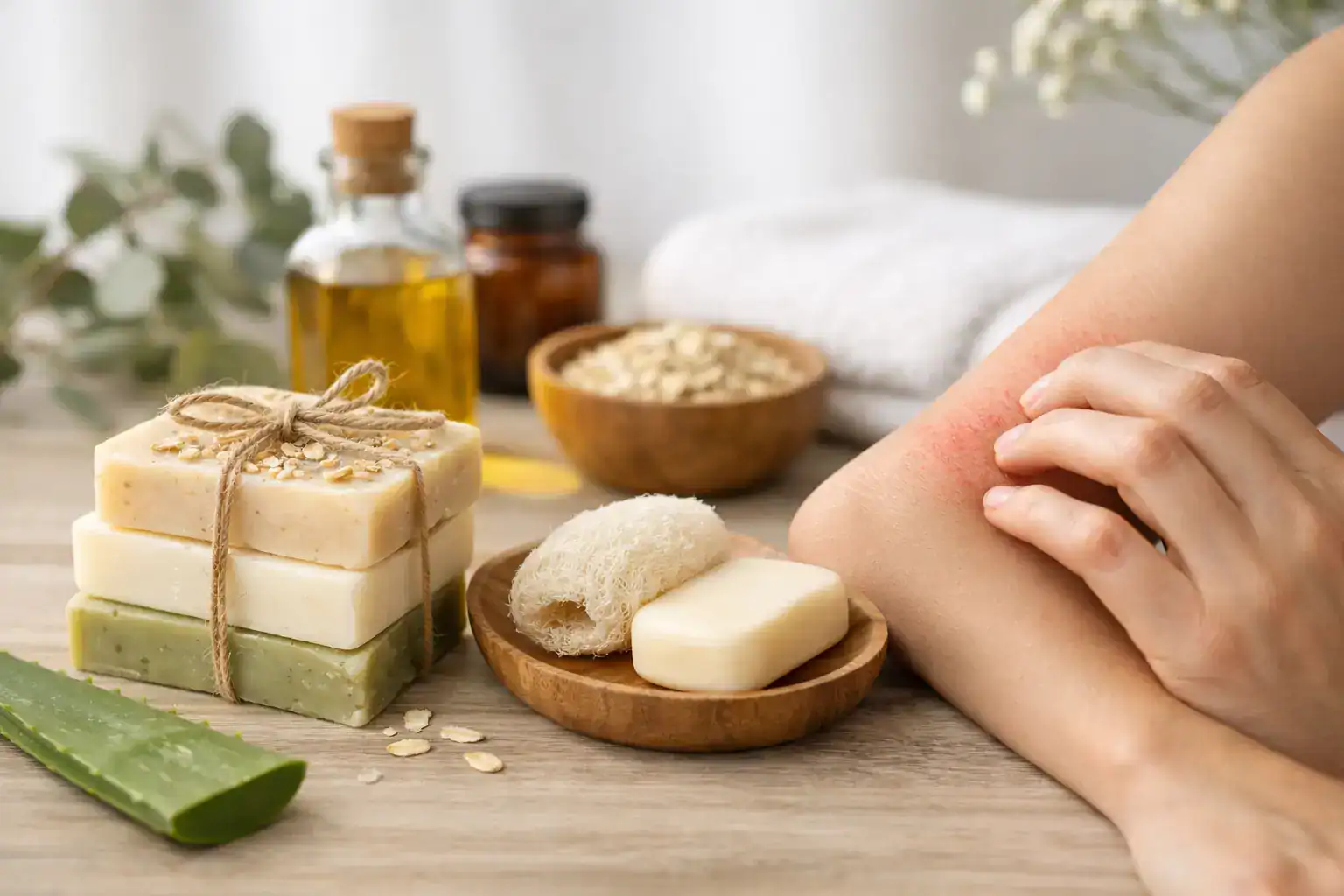
If you have ever stepped out of the shower feeling tighter, itchier, and more irritated than when you stepped in, you already know why a real guide to natural soap for eczema prone skin matters. For skin that is dry, reactive, or dealing with eczema flare-ups, soap is not a small detail. It is something your skin faces every single day, and the wrong bar can keep the irritation cycle going.
People with eczema-prone skin usually need fewer surprises, not more. Heavy fragrance, harsh detergents, bright dyes, and long ingredient lists can all turn a simple wash into a problem. A better soap should cleanse without stripping, support the skin barrier, and leave skin feeling calm instead of squeaky.
Why soap matters so much for eczema-prone skin
Eczema-prone skin tends to have a weaker skin barrier. That means moisture escapes more easily, while irritants can get in faster. When a cleanser is too strong, it can remove the oils and moisture your skin was already struggling to hold onto.
This is why many people say their skin feels worse right after washing. It is not always the water alone. Often, it is the combination of hot water, frequent washing, and a cleanser made with ingredients that are simply too aggressive for sensitive skin.
A natural soap can be a better fit, but only if it is truly gentle. Natural does not automatically mean eczema-friendly. Some natural ingredients are soothing and nourishing. Others, even plant-based ones, can still be irritating depending on your skin and the formula.
A guide to natural soap for eczema prone skin: what to look for
The best natural soaps for eczema-prone skin tend to be simple, moisturizing, and thoughtfully made. Shorter ingredient lists are often easier to evaluate, especially when your skin reacts easily.
One of the first things to look for is a rich, skin-supportive base. Goat milk soap is a favorite for many families with dry or sensitive skin because it is naturally creamy and moisturizing. Goat milk contains fats that help soften skin and can make a bar feel gentler during washing. Many people also find that goat milk soap leaves less of that stripped, tight feeling than conventional soap.
Oils matter too. Ingredients like olive oil, coconut oil in balanced amounts, shea butter, and castor oil are commonly used in handcrafted bars. The exact mix makes a difference. Coconut oil can create a good cleanse and a nice lather, but in a very high amount it may feel drying on some eczema-prone skin. Olive oil and shea butter are often appreciated for their softer, more conditioning feel.
Another helpful sign is whether the soap is scented lightly or not at all. Even essential oils, while natural, can be too much for highly reactive skin. Lavender, peppermint, citrus, and spice oils may smell wonderful, but if your skin is flaring, a plain unscented bar is often the safest place to start.
Handcrafted soap also tends to retain naturally occurring glycerin, which helps draw moisture to the skin. That can be a meaningful benefit for dry skin that needs all the support it can get.
What to avoid in natural soap if your skin flares easily
The ingredient list matters just as much for what is left out as for what is included. If your skin is eczema-prone, the biggest red flags are usually strong fragrance, artificial colorants, harsh detergents, and overly complicated formulas.
Fragrance is one of the most common troublemakers. That includes synthetic fragrance blends and, for some people, strong essential oil combinations. If a soap smells intense, your skin may not appreciate it, even if the scent comes from plants.
You will also want to watch for exfoliating add-ins like seeds, coffee grounds, or rough botanicals. These can be too abrasive for skin that is already inflamed or cracked. Pretty bars are not always the most comfortable bars.
Preservatives and surfactants are more relevant in liquid cleansers than in true bar soap, but they still matter if you are comparing products. Some people with eczema do better with traditional cold-process bars than with body washes made to foam heavily. More foam is not better for compromised skin.
Goat milk soap and eczema-prone skin
For many households, goat milk soap becomes the bar they keep coming back to because it feels simple, nourishing, and reliable. That is especially true when it is made in small batches with clean ingredients and without a lot of extras.
Goat milk brings a creamy quality that can make washing feel less harsh. It does not cure eczema, and no honest brand should promise that. But it can help create a gentler cleansing experience, which is often exactly what irritated skin needs. When skin is dry and uncomfortable, even small improvements in your daily routine can matter.
This is one reason families often look for products crafted by hand from pure goats milk right on the farm. There is comfort in knowing what is in the bar, why it is there, and that it was made with sensitive skin in mind. At The Goats Field, that personal connection is part of what makes goat milk skincare feel more trustworthy to customers who are tired of trial and error.
How to test a new soap without making skin angrier
Even a gentle natural soap can be the wrong fit for your skin. That is why patch testing matters. Try the soap on a small area first, such as the inner arm, and give it a day or two before using it all over.
When you do start using it, keep the rest of your routine as steady as possible. If you switch your soap, lotion, detergent, and shampoo all at once, it becomes hard to tell what helped and what hurt.
Pay attention to how your skin feels after washing, not just during it. Some bars feel fine at first but leave your skin tight, itchy, or red an hour later. A good soap for eczema-prone skin should leave you feeling clean, but still comfortable.
How to wash eczema-prone skin more gently
The soap you choose matters, but so does how you use it. Hot water can make irritation worse, so lukewarm water is usually the better option. Shorter showers are often kinder to dry skin too.
Instead of lathering heavily all over your body, focus on the areas that truly need cleansing. For some people, using soap only where needed and rinsing the rest with water helps reduce dryness. This depends on your lifestyle, climate, and how often you sweat, but it is worth considering if your skin feels constantly stripped.
After washing, pat skin dry instead of rubbing. Then apply a moisturizer while your skin is still slightly damp. This step can make as much difference as the soap itself because it helps seal in moisture before it evaporates.
When unscented is the best choice
A lot of shoppers love natural skincare because it smells fresh and botanical. There is nothing wrong with enjoying that. But when eczema is active, comfort comes first.
If your skin is red, cracked, stinging, or flaring often, unscented soap is usually the wisest place to begin. Once your skin is calmer, you may decide to test mild essential-oil bars one at a time. Some people tolerate them well. Others do not. It really depends on your skin and how reactive it is.
That is one of the biggest lessons in any guide to natural soap for eczema prone skin: there is no single perfect ingredient for everyone. Gentle formulas matter, but your own skin still gets the final vote.
Choosing a bar you can actually stick with
The best soap is not the fanciest one. It is the one your skin tolerates well enough to use every day without dread. That usually means a bar that feels mild, rinses clean, lasts well in the shower, and does not leave you reaching for relief the moment you towel off.
It also helps to buy from brands that speak plainly about ingredients and make products for real family use, not just shelf appeal. When a soap is designed for sensitive skin, that intention often shows up in the details – fewer irritants, balanced oils, and a gentler overall feel.
If your skin has been through a string of disappointing products, start simple. Choose a natural goat milk bar or another mild unscented soap with a short ingredient list. Give your skin a little time to respond. Sometimes the most helpful change is not adding more to your routine. It is finally taking away what never needed to be there in the first place.