
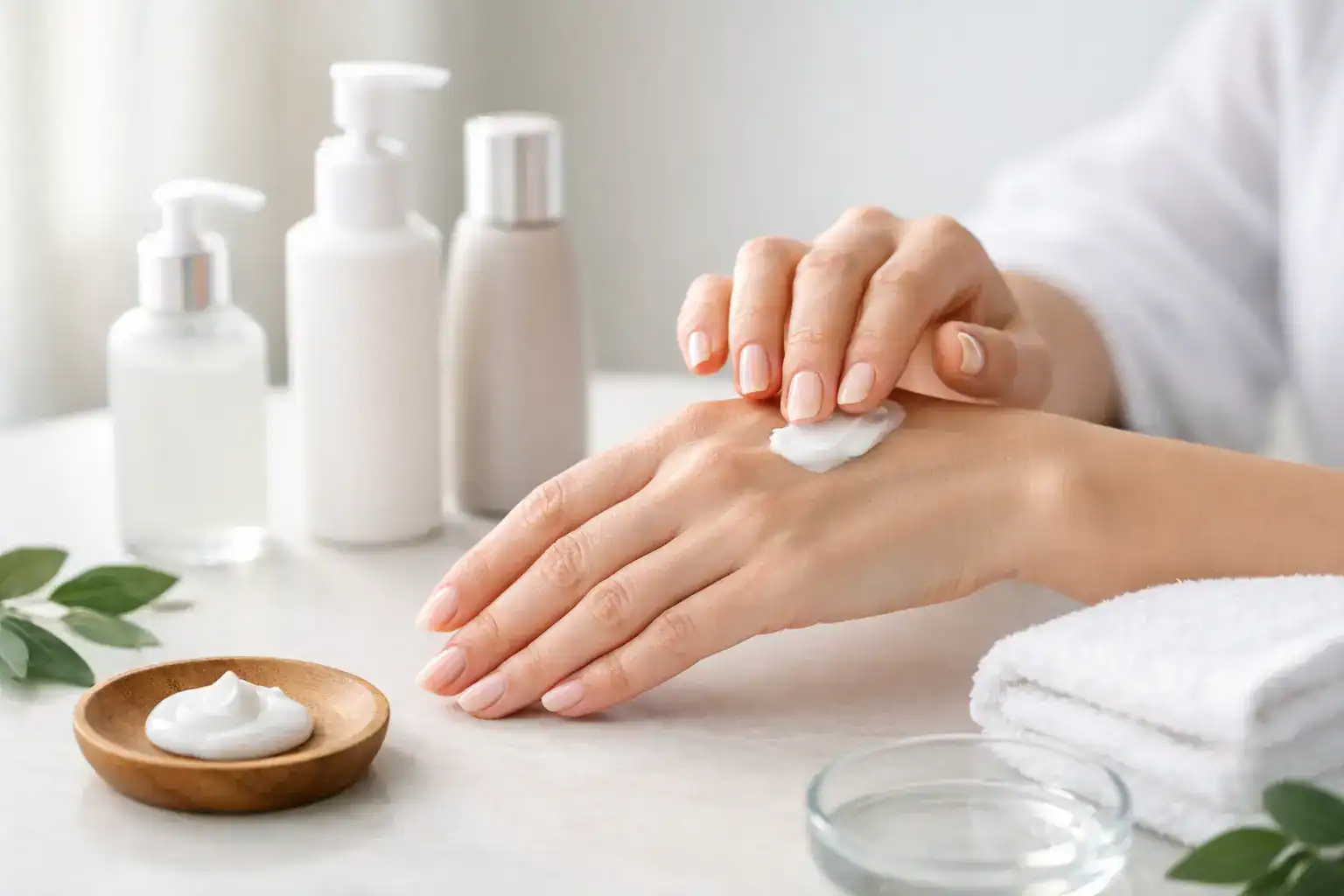
You notice it right away when a hand lotion is wrong for you. Your palms feel slick, your phone screen gets smudged, and even after a few minutes your hands still seem coated instead of comforted. If you are wondering how to pick non greasy hand lotion, the answer is not just “choose a lighter product.” It comes down to the balance of ingredients, how your skin actually behaves, and whether the lotion absorbs in a way that leaves hands soft instead of shiny.
For many people, especially those washing their hands often, working in healthcare, caring for kids, gardening, cooking, or dealing with dry sensitive skin, this matters more than it sounds. You need real moisture, not a temporary layer that makes daily tasks harder. A good hand lotion should help your skin feel calm, flexible, and protected without making you want to wash it off.
What makes a hand lotion feel greasy
A greasy feel usually comes from one of two things. Either the formula is too heavy for your skin and sits on top, or it relies on ingredients that create a strong occlusive layer without enough balance from lighter, fast-absorbing moisturizers. That does not automatically make those ingredients bad. Sometimes very dry or cracked skin benefits from richer protection, especially overnight. But for daytime use, too much heaviness can feel uncomfortable.
Texture matters just as much as the ingredient list. Two lotions may contain similar moisturizing ingredients and still feel completely different on the skin depending on the ratio, the emulsifying system, and how the product is made. That is why one cream can feel silky and absorbed in a minute, while another leaves fingerprints on everything you touch.
How to pick non greasy hand lotion by reading the label
Start with the first several ingredients. Those tell you the most about the lotion’s character. Water-based lotions with well-chosen emollients often feel lighter and absorb faster than thick balms heavy in waxes or petrolatum. Again, that is not a hard rule. Some rich ingredients are excellent for repairing dry skin. But if your top priority is a non-greasy finish, the overall formula should include moisture-binding and skin-softening ingredients that do more than just coat the surface.
Goat milk is a good example of an ingredient that can help hands feel nourished without that waxy after-feel. It contains fats, vitamins, and gentle skin-supporting properties that many people with dry or sensitive skin appreciate. In a well-crafted lotion, it can add creaminess and comfort while still allowing the product to sink in nicely.
Look for ingredients that support hydration and softness, such as glycerin, aloe, and lightweight plant oils. These often help bring water to the skin and smooth roughness without leaving a thick residue. If a lotion leans too heavily on dense waxes or overly heavy oils, it may protect well but feel less practical for daytime use.
If fragrance is a concern for your skin, pay attention there too. Even a lotion with a beautiful texture may not be the right fit if added fragrance causes irritation. Sensitive hands often do best with simple, clean formulas where each ingredient has a purpose.
The best texture for your routine may depend on when you use it
One reason people struggle to find the right hand lotion is that they expect one bottle to do every job. That can work, but it does not always. A lotion you love at bedtime may feel too rich before driving, typing, or folding laundry. A very light lotion may feel perfect after washing your hands during the day but not quite strong enough for winter dryness.
That is why it helps to think in terms of use. If you want an everyday hand lotion for frequent application, choose one that absorbs quickly and leaves a soft finish. If your skin is very dry, you may still want a richer cream at night. Non-greasy does not have to mean barely moisturizing. It simply means the product does its job without leaving your hands coated.
Ingredients that often feel better on busy hands
For daytime comfort, many people prefer lotions built around humectants and lighter emollients. Glycerin helps draw moisture into the skin. Aloe can feel soothing. Goat milk can offer a creamy, comforting base that supports softness without making the formula feel heavy. Some botanical oils, when used thoughtfully, add nourishment while still allowing a lotion to absorb well.
On the other hand, ingredients like petroleum jelly, heavy waxes, or very thick butters may feel too rich if you need to get back to work quickly. That does not mean you must avoid them forever. It just means they may be better suited to targeted repair or overnight use than to a midday hand lotion you apply five times.
This is where small-batch skincare often stands out. When a lotion is designed with daily use in mind, the goal is not just moisture on paper. It is how your hands feel ten minutes later.
How to tell if a lotion is moisturizing or just sitting there
The easiest test is simple. Apply a small amount to clean, dry hands and give it two minutes. A well-balanced lotion should spread easily, absorb without constant rubbing, and leave your skin feeling soft rather than slippery. You should still be able to grip a steering wheel, open a jar, or scroll your phone without that coated feeling.
Then check your hands again in twenty to thirty minutes. If they feel comfortable, less tight, and smoother, the lotion is doing real work. If they feel greasy right away but dry again soon after, it may be creating more surface slip than lasting hydration.
This matters especially for people with sensitive or problem-prone skin. Dry hands need both moisture and support for the skin barrier. A lotion that disappears instantly but does not relieve tightness is not enough. A lotion that leaves a film but never truly comforts the skin is not the answer either.
How to pick non greasy hand lotion for sensitive skin
If your hands react easily, keep the formula as straightforward as possible. Look for lotions designed for sensitive skin, with gentle ingredients and fewer unnecessary extras. Essential oils can be lovely in some formulas, but if your skin is especially reactive, it is worth paying attention to how you respond. Natural does not always mean irritation-free. It depends on your skin.
A good non-greasy lotion for sensitive hands should feel calming from the start. No stinging. No heat. No strong lingering residue. It should make your skin feel more comfortable after handwashing, not more overwhelmed.
This is one reason many families look for handcrafted, clean formulas made with nourishing ingredients they recognize. At The Goats Field, that practical comfort matters. A hand lotion should feel good enough to use often, because frequent, gentle care is usually what dry hands need most.
Don’t confuse thin with non-greasy
A very thin lotion can still feel sticky, and a richer lotion can still absorb beautifully. The goal is not the thinnest product on the shelf. The goal is a formula with a soft finish. That finish should leave your hands moisturized, touchable, and ready for real life.
This is where reviews and personal experience help. People often describe the right hand lotion in the same plain language. They say it “soaks in fast,” “leaves my hands soft,” or “doesn’t leave that greasy feeling.” Those simple comments are often more useful than flashy claims on the front label.
A few signs you found the right one
When you find the right hand lotion, you stop thinking about it. You use it after washing your hands, before heading out the door, after yard work, or before bed, and it fits naturally into your day. Your skin feels softer. Dry patches are less noticeable. Your hands look healthier, but just as importantly, they feel comfortable.
If you have been disappointed by lotion after lotion, do not assume your standards are too high. It is completely reasonable to want moisture without residue. The best hand lotion for you will respect both needs.
Choose one that matches how you live, how often you wash your hands, and how sensitive your skin tends to be. When the formula is balanced well, your hands feel cared for, not covered. That is usually the difference between a lotion that sits in the drawer and one you reach for every day.