
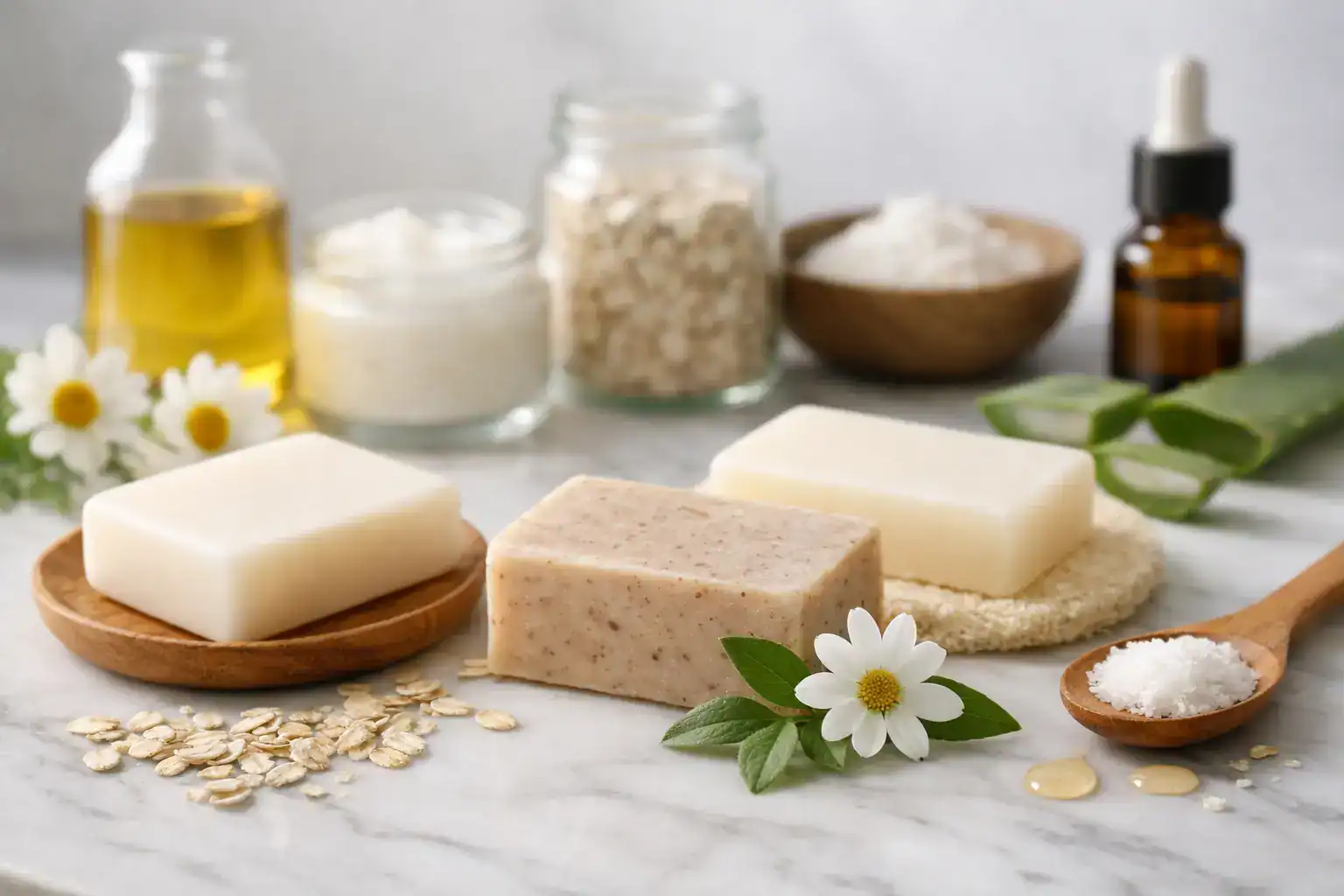
If your skin feels tight after washing, turns red from heavily scented products, or seems to react to almost everything, the problem is often not soap itself. It is the ingredient list. The right sensitive skin soap ingredients can help your skin feel calm, clean, and comfortable. The wrong ones can leave it dry, itchy, or irritated before the day even starts.
For people with sensitive skin, every wash matters. A product that sits on the skin for only a few seconds can still affect your skin barrier over time, especially if you use it on your hands, face, or body every day. That is why ingredient quality matters more than flashy claims on the front label.
Why sensitive skin soap ingredients matter so much
Sensitive skin is not always the same from one person to the next. Some people are dealing with dryness and tightness. Others have eczema-prone skin, fragrance sensitivity, redness, flaking, or a reaction history that makes shopping stressful. In many cases, the skin barrier is already working overtime.
When that barrier is weakened, harsh cleansing ingredients can strip away too much natural oil. That leaves skin more vulnerable to moisture loss and irritation. A gentle bar or cleanser should wash away dirt and oil without making your skin feel squeaky, raw, or uncomfortable. Clean skin should still feel like skin.
This is also where many mass-market products miss the mark. A soap may smell nice, lather heavily, and leave a strong clean feeling, but that does not always mean it is a good choice for delicate skin. Sometimes that extra-strong clean feeling is actually a sign that your skin has lost more than it needed to.
The best sensitive skin soap ingredients to look for
The most helpful ingredients tend to be simple, moisturizing, and easy to understand. That does not mean every natural ingredient is automatically gentle, but it does mean straightforward formulas are often easier for sensitive skin to tolerate.
Goat milk
Goat milk is one of the most loved ingredients for sensitive skin for good reason. It is naturally creamy and moisturizing, which helps a soap feel gentler during washing. Many people with dry or problem-prone skin prefer goat milk soap because it cleanses without leaving that stripped, papery feeling behind.
Goat milk contains fats that help support softness, and its naturally mild character makes it a good fit for family use. For skin that gets irritated easily, a handcrafted goat milk soap can feel more comforting than a detergent-heavy bar. This is one reason so many customers come to goat milk skincare after struggling with mainstream products.
Olive oil, coconut oil, and other skin-loving oils
Good soap often begins with good oils. Olive oil is especially valued for its conditioning feel. It helps create a gentle, nourishing bar that suits dry and sensitive skin well. Coconut oil is common in soap too, though balance matters. It helps cleanse and create lather, but in high amounts it can feel too drying for some people.
That is why well-made soap formulas usually combine oils rather than relying heavily on one. Castor oil can help with creamy lather. Sunflower oil and avocado oil are often included for added conditioning. The goal is not just to cleanse, but to leave skin feeling cared for.
Colloidal oats or oatmeal
Oat-based ingredients are widely known for their soothing feel. In soap, oatmeal can help comfort skin that feels itchy, dry, or reactive. Finely ground oats can also add a soft, comforting texture, though rough exfoliating bars may not be ideal if your skin is actively irritated.
For very sensitive skin, the gentlest choice is usually a smooth bar with soothing ingredients rather than anything scrubby. Oats can be a great addition, but the rest of the formula still matters.
Shea butter and other rich moisturizers
Shea butter is often included in sensitive skin products because it adds richness and helps reduce that dry-after-washing feeling. Cocoa butter and mango butter can offer similar benefits. These ingredients do not turn soap into lotion, of course, but they can make a real difference in how comfortable your skin feels after cleansing.
If your skin tends to feel dry in winter, after frequent handwashing, or after showering, a soap with added butters may be especially helpful.
Ingredients that can be a problem for sensitive skin
Not every skin trigger is the same, but a few categories come up again and again.
Synthetic fragrance
Fragrance is one of the most common reasons sensitive skin reacts badly to a soap. Even when a scent smells fresh or pleasant, it can still be too much for reactive skin. If you know fragrance is a trigger for you, unscented or very lightly scented products are often the safer choice.
Essential oils can be a better fit for some people than synthetic fragrance, but natural does not always mean irritation-free. Lavender, peppermint, citrus, and other essential oils can still bother very sensitive skin, especially in stronger amounts. If your skin is highly reactive, simpler is usually better.
Harsh detergents and foaming agents
Some cleansing bars are not true soap at all. They are made with detergent-based surfactants that can be more aggressive on delicate skin. Ingredients such as sulfates may create lots of foam, but they can also leave skin feeling dry and tight.
For some people, these ingredients are manageable. For others, especially those with eczema-prone or very dry skin, they are a fast path to irritation. If your skin feels worse the more often you wash, harsh cleansing agents are worth watching for.
Artificial dyes and unnecessary extras
Colorants, glitter, and strong perfume blends may make a product look appealing, but sensitive skin rarely benefits from extras. The more complicated a formula becomes, the harder it can be to pinpoint what your skin is reacting to. A plain, thoughtfully made soap is often the better choice.
How to read a soap label without overthinking it
You do not need a chemistry degree to choose a gentle soap. Start by looking for a short, understandable ingredient list with moisturizing oils and fewer common irritants. If the first things you notice are heavy fragrance, bright dyes, or a long list of unfamiliar additives, that may be a sign to keep looking.
It also helps to think about your personal pattern. Some people do well with lightly scented bars but cannot tolerate exfoliants. Others are fine with a simple essential oil blend but react to synthetic fragrance every time. Sensitive skin is personal. The best soap for your neighbor or sister may not be the best one for you.
Patch testing can help when you are trying something new. Use a small amount for a few days before making it part of your full routine. That is especially wise if you have a history of eczema flare-ups or ingredient allergies.
What a good sensitive skin soap should feel like
A good soap for sensitive skin should leave you clean, but not squeaky. Soft, but not coated. Calm, not tingly. After washing, your skin should not feel like it is asking for rescue.
This is why many families end up sticking with one dependable bar once they find it. When a soap is gentle enough for everyday use, practical enough for the whole household, and moisturizing enough to keep skin comfortable, it becomes part of the routine in the best way. At The Goats Field, that is exactly why handcrafted goat milk soap matters so much to us. It is not about making skincare complicated. It is about making daily care feel safe, simple, and kind to your skin.
Choosing the right soap depends on your skin
There is no single perfect ingredient list for everyone. If your skin is mostly dry, richer oils and butters may help most. If fragrance is your main trigger, unscented is likely the better path. If you are washing your hands constantly for work or home care, a creamy, moisturizing formula may matter more than anything else.
The best place to start is with gentle ingredients, a simple formula, and a product made with sensitive skin in mind. When your soap supports your skin barrier instead of working against it, the difference is usually easy to feel.
Your skin does not need a long list of promises. It needs ingredients that do their job gently, every single day.