
If you've ever wanted to create a gentle, creamy soap that feels amazing on sensitive skin, you've come to the right place. Making your own soap with fresh goat milk is a rewarding process that relies on a simple chemical reaction called saponification—the magic that happens when fats (like oils and the cream in goat milk) meet an alkali (lye).
The natural goodness of goat milk takes a simple bar of soap and turns it into something truly special.
The Real Benefits of Using Goat Milk in Soap
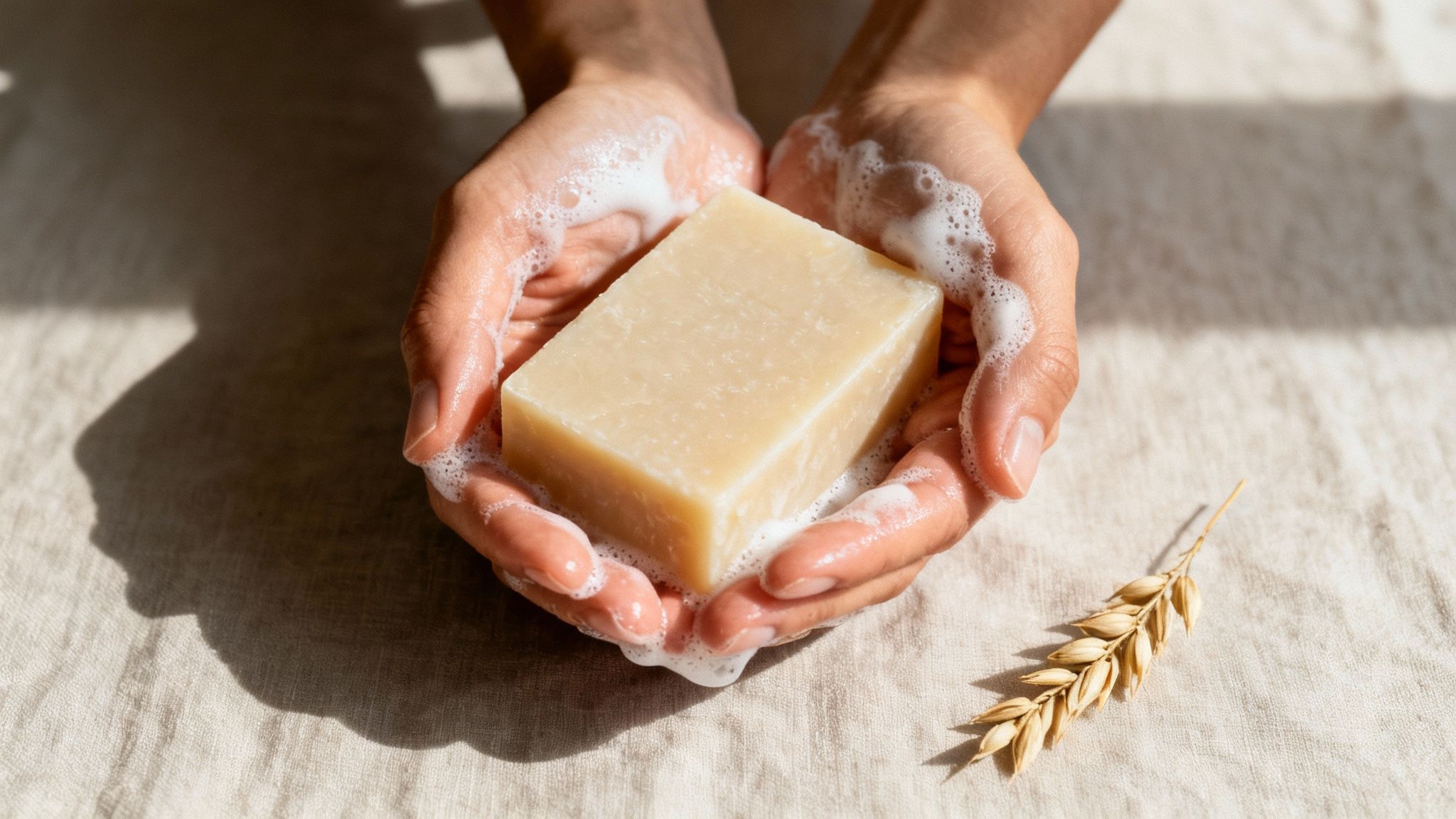
People often think of goat milk soap as a rustic luxury, but its real value is rooted in skin science. While many commercial soaps can leave your skin feeling tight and stripped, soap making with goat milk results in a bar that cleanses and actively nourishes.
The secret is all in the milk. Goat milk is naturally loaded with alpha-hydroxy acids (AHAs), especially lactic acid. This incredible compound works as a gentle exfoliant, helping to slough off dead skin cells. The result? A brighter, smoother complexion without needing harsh, synthetic scrubs.
A Closer Look at the Skincare Advantages
The perks don't stop with exfoliation. Goat milk has a high concentration of fatty acids and triglycerides, which give it that wonderful creaminess. During saponification, these fats help create a rich, stable lather that moisturizes deeply. This is a game-changer for anyone dealing with conditions like eczema or psoriasis, where protecting the skin's natural moisture barrier is everything.
Here’s what goat milk brings to your handmade soap:
- Vitamins and Minerals: It's full of nutrients like Vitamin A, which is essential for repairing damaged skin and keeping it healthy.
- Deep Moisturization: The fat molecules in goat milk are smaller than those in cow's milk, which means they can penetrate the skin more easily.
- Gentle Cleansing: Its pH level is very similar to our own skin. This helps keep your skin's microbiome in balance instead of stripping away its natural, protective oils.
The secret is out, and the market reflects it. The global goat milk cosmetics market was valued at USD 4.04 billion in 2024 and is expected to climb to USD 8.28 billion by 2033. This boom shows a clear shift from consumers wanting natural skincare that actually works. Learn more about these cosmetic market findings.
At the end of the day, choosing goat milk isn't just about one ingredient; it's about crafting a superior soap that works in harmony with your skin. Once you've created a great guide on this topic, learning about effective content repurposing strategies can help you share this valuable knowledge more widely.
Setting Up Your Soap Making Workspace
A great batch of soap starts long before you ever mix a single ingredient. It begins with creating a safe, organized space dedicated to your craft. Think of it like a chef preparing their kitchen—getting everything in its proper place, or mise en place, makes the whole process smoother and, more importantly, safer. This isn't just a suggestion; it's a non-negotiable step when you're working with lye.
First things first, pick your location. A well-ventilated kitchen is a common choice, but a clean garage or workshop can also work beautifully. The most important thing is good airflow to help any fumes dissipate quickly. You also need a spot where kids and pets won't come wandering through unexpectedly. I always lay down old newspapers or a cheap plastic tablecloth to protect my counters from the inevitable drips and spills.
Your Essential Soap Making Toolkit
Gathering the right tools is half the battle. While you can get fancy with molds and cutters later on, a few items are absolutely essential for making soap safely and getting a good result.
The single most important piece of equipment you'll own is a reliable digital scale that measures in grams. Soap making is chemistry, not cooking—precision is everything. Even a tiny miscalculation of lye or oils can ruin a whole batch or, worse, create a soap that's harsh and unsafe to use. Never try to eyeball your ingredients.
Next, you’ll need the right containers. Lye (sodium hydroxide) is highly reactive, so what you mix it in matters. A lot.
- For mixing lye: Only use heavy-duty, heat-resistant plastic (look for the #5 recycling symbol, which is polypropylene) or stainless steel. Never, ever use aluminum. Lye reacts with aluminum to create flammable hydrogen gas, which is incredibly dangerous.
- For mixing oils: A large stainless steel pot or a sturdy plastic bucket is perfect. This is where you'll melt your oils and butters before combining them with your lye solution.
- Utensils: Stick with silicone spatulas and stainless steel spoons. Wood is porous and can trap lye, making it unsafe for any other use, so it's best to avoid it altogether.
Safety First, Always
Personal protective equipment isn't optional when you're handling lye. Always wear safety goggles to shield your eyes from splashes, long sleeves to protect your skin, and chemical-resistant gloves. I also like to keep a bottle of plain white vinegar handy to neutralize any lye spills on my countertops—never on skin, though!
Before we move on, here’s a quick-reference table to make sure you've got everything you need. Think of this as your pre-flight checklist for a successful soaping session.
Essential Equipment for Cold Process Soap Making
| Equipment Item | Material Requirement | Primary Purpose |
|---|---|---|
| Digital Scale | Measures in grams | For precise measurement of all ingredients. |
| Safety Goggles | Full-coverage | To protect eyes from lye splashes. |
| Chemical-Resistant Gloves | Nitrile or rubber | To protect hands from lye burns. |
| Stick/Immersion Blender | Stainless steel shaft | To emulsify oils and lye solution quickly. |
| Lye Mixing Pitcher | #5 Plastic or Stainless Steel | To safely dissolve lye in frozen goat milk. |
| Large Soap Pot | Stainless Steel or #5 Plastic | For melting and mixing oils and butters. |
| Silicone Spatulas | Heat-resistant silicone | For scraping every last bit of soap batter. |
| Soap Mold | Silicone, wood, or plastic | To shape the soap as it hardens. |
Having these items ready to go will make your soap making day much more enjoyable and, most importantly, safe.
Choosing Your Soap Making Ingredients
With your workspace set up and your tools at the ready, it's time for the fun part: picking the building blocks for your soap. The specific oils you choose will have a huge impact on the final bar—everything from its hardness and lather to how moisturizing it feels on your skin.
Start by thinking about what you want your soap to be like. Coconut oil is a soap making workhorse, known for creating big, fluffy bubbles and a hard bar that lasts a long time. On the other hand, olive oil is the classic choice for sensitive skin because it produces a very gentle, conditioning lather. Most of my favorite recipes are a blend of different oils, often with something like shea butter for extra creaminess or a splash of castor oil to give the lather a boost.
Here's a quick look at what some popular oils bring to the table:
| Oil Type | Primary Contribution | Feel in Soap |
|---|---|---|
| Coconut Oil | Big, cleansing lather and hardness. | Very cleansing, can be drying in high amounts. |
| Olive Oil | Gentle, conditioning lather. | Mild and moisturizing. |
| Shea Butter | Creamy texture and conditioning properties. | Luxurious and rich. |
| Castor Oil | Boosts and stabilizes lather. | Creates a slick, bubbly feel. |
Selecting the Right Goat Milk
Finally, let’s talk about our star ingredient. When you’re soap making with goat milk, you have a few options, and each one works great.
Fresh goat milk, especially from a local farm like The Goats Field, is a fantastic choice for its purity. The key is to freeze it completely solid before you even think about adding lye. I use ice cube trays for this. Freezing the milk prevents the lye's intense heat from scorching the natural milk sugars, which can turn your soap a funky orange color and give it an unpleasant ammonia-like smell.
Frozen goat milk from the grocery store is a perfectly good and convenient alternative. It behaves exactly like fresh frozen milk in the soap making process.
Powdered goat milk is another excellent route. You can either mix it with distilled water and freeze it just like fresh milk, or you can add the powder directly to your oils before blending. I've found that the second method often produces a whiter final bar of soap and gives you a bit more control. No matter which form you choose, treating the goat milk with care is the secret to a creamy, gentle soap.
Mastering the Cold Process Goat Milk Method
This is where the real art of soap making with goat milk begins. The cold process method puts you in complete control of every single ingredient, letting you craft a unique bar of soap that’s genuinely yours. Yes, it involves working with lye, but if you follow the steps carefully and precisely, you'll find the process is safe, incredibly rewarding, and easier than you might think.
The number one hurdle for beginners? Temperature control. I see it time and time again. The reaction between the lye (sodium hydroxide) and the frozen goat milk can get hot, fast. If it does, the heat will scorch the natural milk sugars, turning your beautiful white soap batter a disappointing brown and giving off a funky, ammonia-like smell. The trick is to go slow.
This infographic breaks down the main stages, from getting your gear ready to the final mix, to help you visualize the flow.
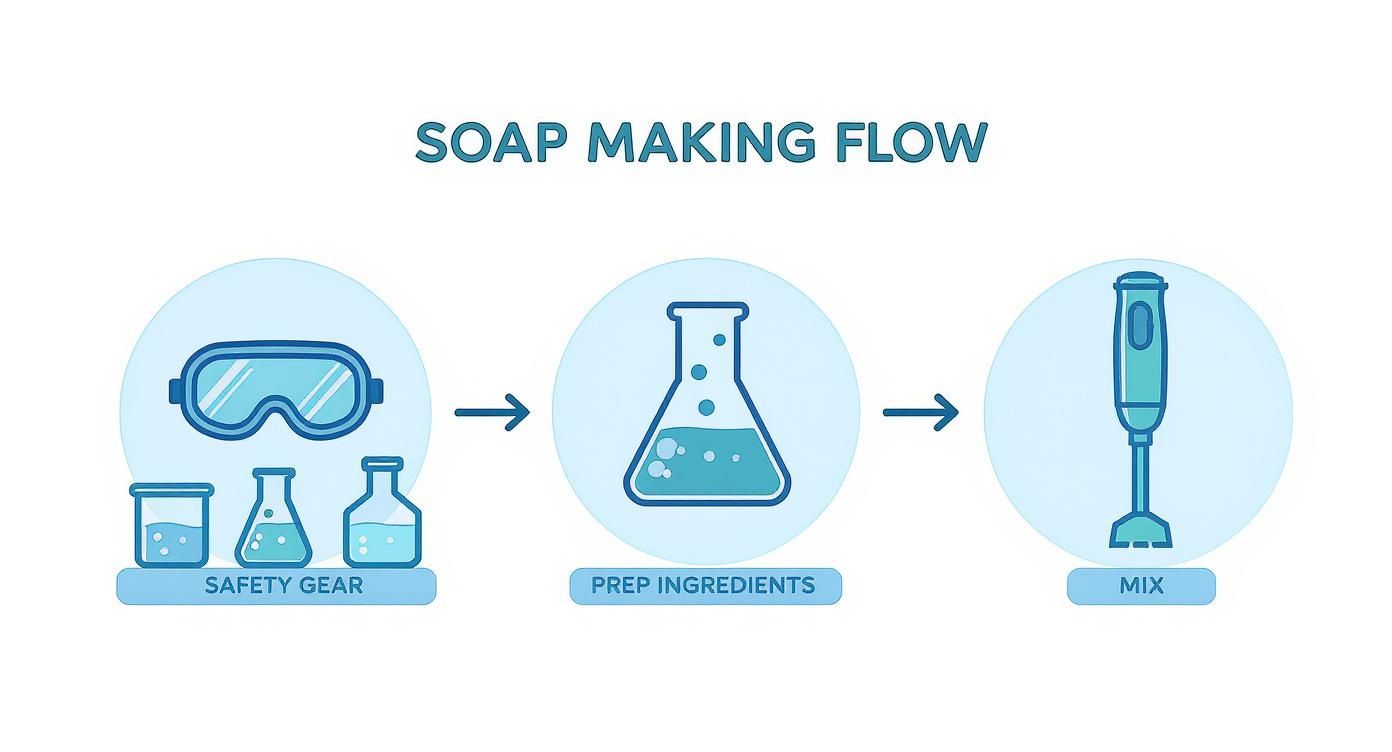
As you can see, a successful batch starts with a solid foundation of safety and prep work long before you mix anything. Let's walk through how to get it right.
The Critical First Step: Lye and Frozen Milk
First things first: your goat milk needs to be frozen solid in ice cube trays. This isn't just a suggestion—it's the secret to getting a creamy, perfectly white bar of soap. Pop your frozen milk cubes into a heavy-duty, heat-resistant plastic pitcher or a stainless steel container.
Now, with your safety goggles and gloves securely on, measure out your lye on a digital scale. Take a deep breath and start adding the lye to the frozen milk very, very slowly. Just sprinkle a little bit at a time while stirring gently with a silicone spatula. You’ll notice the milk cubes start to melt as the mixture warms up.
Pro Tip: I always keep an ice bath ready. If the outside of your pitcher starts to feel too warm, just set it inside a larger bowl of ice water for a few minutes. This simple trick gives you total control over the temperature and prevents any scorching.
Patience is your best friend here. The whole process might take 10-15 minutes, but it’s worth it. You’ll end up with a smooth, cool lye-milk solution that keeps all the wonderful, nourishing qualities of the goat milk intact. Once all the lye has dissolved, set your mixture aside in a safe spot to cool down a bit more.
Combining Your Oils and Reaching Trace
While the lye solution is cooling, it’s oil time. Use your digital scale to weigh your solid fats, like coconut oil and shea butter, and melt them in a large stainless steel pot over low heat. As soon as they’re melted, take the pot off the heat and pour in your liquid oils, such as olive and castor oil. Give it all a good stir to combine and help bring the temperature down.
Your target is to have both the lye-milk mixture and your oils at a similar, cool temperature—somewhere between 85-100°F (29-38°C) is the sweet spot. A digital thermometer is essential here. Keeping them within about 10 degrees of each other is key for a smooth, stable emulsion.
Ready to mix? Carefully pour the lye-milk solution into your pot of oils. I like to pour it down the shaft of my stick blender to keep splashing to a minimum. Start by just stirring gently with the blender still turned off.
Then, it's go time. Blend in short bursts of 10-15 seconds, then stop and stir with the blender head. You're watching for that magical moment called trace. This is when your soap batter thickens just enough that if you drizzle a little from the blender, it leaves a faint trail on the surface before sinking back in.
Understanding the Stages of Trace
Learning to spot trace is a skill you'll develop with practice. It’s not just one thing; it’s more of a spectrum. The consistency you're aiming for really depends on what you want to do next.
- Light Trace: Think thin pancake batter. The batter has just come together, and any trails on the surface are faint and disappear quickly. This is the perfect time to add fragrances or essential oils because you have plenty of time to stir them in.
- Medium Trace: Now it looks like a thin pudding. The trails are clearer and hold their shape for a second or two. This is a great all-purpose consistency for a simple, single-color soap you want to pour smoothly.
- Thick Trace: The batter is now like a heavy pudding, holding its shape and becoming difficult to pour. You'd only want it this thick for advanced techniques like layering or creating textured tops. For a basic goat milk loaf, you want to pour well before this point.
For a simple loaf soap, I always recommend stopping at a light to medium trace. It's so easy to over-blend, which can cause your soap to "seize" and harden up right in the pot.
Once you hit trace and have mixed in any extras, pour the batter into your prepared mold. Tap it firmly on the counter a few times to work out any air bubbles. Cover it with parchment paper and a light towel, and tuck it away somewhere safe and undisturbed for 24-48 hours. The saponification magic is now officially underway.
The passion for this craft is growing, and it shows in the market. The global goat milk market was valued at USD 10,123.25 million in 2024 and is projected to reach USD 15,183.96 million by 2033. With North America holding over 38% of the market share, it's clear that people are valuing natural, high-quality products like the ones you're learning to create. You can read more about these global goat milk market trends.
A Simpler Start with Melt and Pour Soap
If handling lye sounds a bit much for your first try, don’t worry. There’s a wonderfully fun and easy way to begin your journey with soap making goats milk. The melt and pour method is the perfect starting point, letting you get creative right away without the tricky chemistry of cold process soap making.
Think of it like using a really good cake mix instead of baking from scratch. You start with a high-quality, pre-made soap base where all the complex science (saponification) has already been done for you. Your job is the fun part: melting it down, adding your own personal flair with colors and scents, and pouring it into a mold.
This approach means you can skip the heavy-duty safety gear like goggles and chemical-resistant gloves. It's even a fantastic project to do with older kids, as long as there's an adult supervising. The whole process is much quicker, too—your beautiful new soaps are often ready to use in just a few hours.
Choosing and Using Your Goat Milk Soap Base
The secret to a great melt and pour soap lies in the base. They aren't all created equal. When you're shopping, look for a goat milk soap base where goat milk is one of the first ingredients listed. It's also a good idea to steer clear of bases with harsh detergents like Sodium Lauryl Sulfate (SLS).
A quality base will melt down smoothly without getting clumpy and will give your finished soap a rich, creamy lather. Here’s how you get started with it:
- Chop it up: Cut the soap base into small, uniform cubes, roughly one inch each. This ensures it melts evenly and prevents scorching.
- Melt it gently: You can use a double boiler on the stove or pop the cubes in the microwave in short 20-30 second bursts. Give it a good stir after each interval until it's completely liquid and smooth. Be careful not to overheat it, or the soap can turn rubbery.
- Add your magic: Once it's melted, let the base cool for a minute or two before stirring in your favorite fragrance oils, essential oils, or skin-safe colorants. This little step keeps the delicate scents from evaporating away.
This simple method opens up a world of creativity. You can embed beautiful dried botanicals like lavender buds, mix in some exfoliating oatmeal, or even create stunning layered designs.
The love for goat milk soap is more than just a passing trend; it's a real shift in the market. The global goat milk soap market was valued at around USD 150 million in 2024 and is expected to double to USD 300 million by 2033. This shows just how much people are seeking out natural skincare. You can learn more about the growth of the goat milk soap market.
Melt and Pour vs Cold Process Which Is Right for You
Deciding between melt and pour and cold process really depends on what you want to get out of soap making. One isn't better than the other; they just serve different creative needs.
Here's one way to think about it: cold process is like being a master baker who measures every ingredient from scratch, giving you absolute control. Melt and pour is more like using a premium baking mix—the complex work is done, so you can focus on the artistic decoration.
This quick comparison should help you figure out where you want to start:
| Feature | Melt and Pour Method | Cold Process Method |
|---|---|---|
| Safety Concerns | Minimal; no active lye to handle. | High; requires goggles, gloves, and ventilation. |
| Creative Control | Limited to additives; can't alter base recipe. | Full control over all oils, liquids, and superfat. |
| Time Commitment | Fast; soap is ready to use in hours. | Slow; requires a 4-6 week cure time. |
| Skill Level | Perfect for beginners and kids. | Intermediate; requires precision and safety knowledge. |
For most people, melt and pour is the perfect gateway. It’s a low-risk way to learn about blending scents, playing with colors, and perfecting your design skills. Once you've got the hang of it and find yourself wanting more control over the base recipe, you can always graduate to the cold process method.
Curing and Troubleshooting Your Handmade Soap
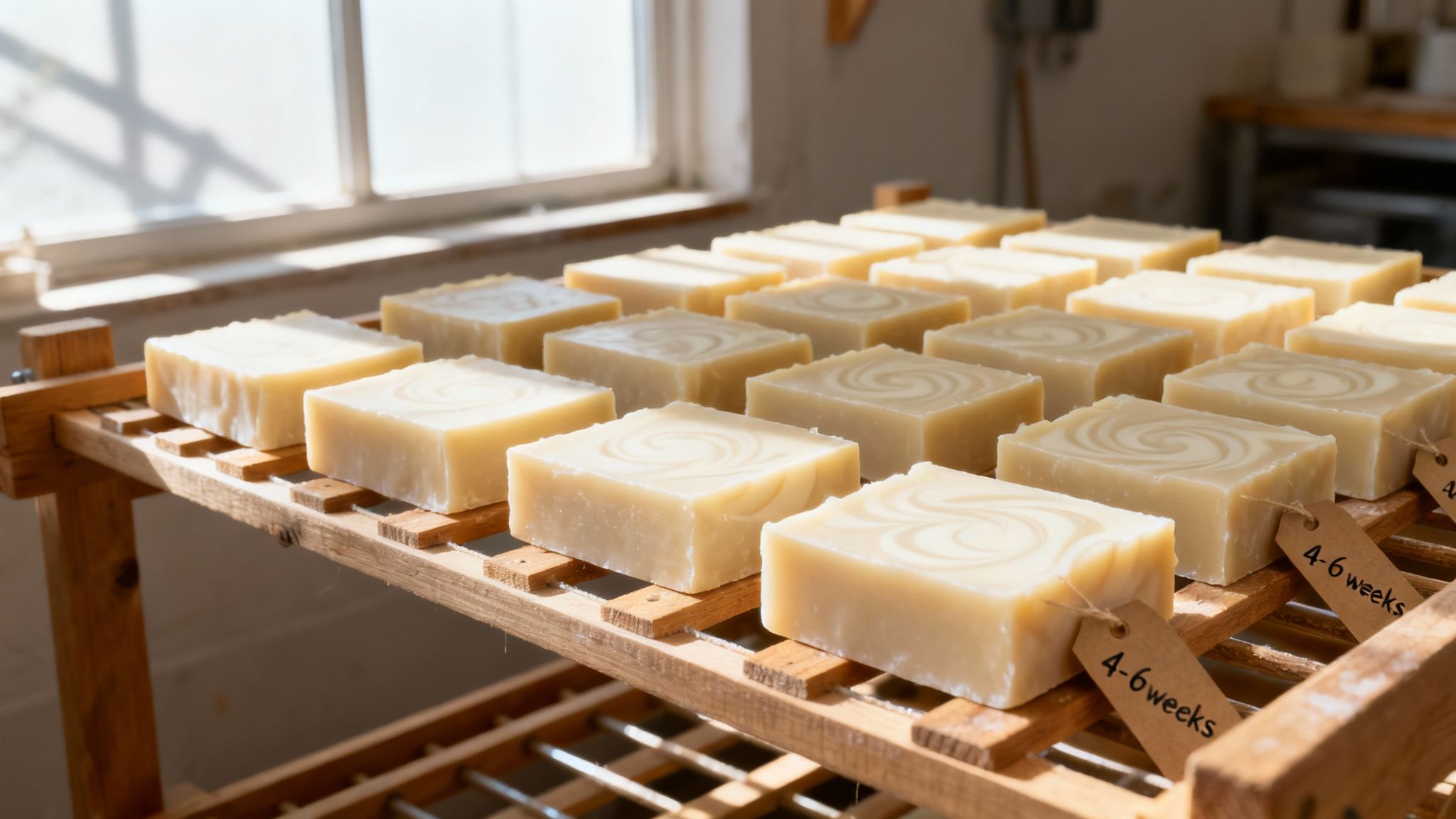
Pouring your soap into the mold feels like the end of the road, but one of the most important parts of soap making goats milk is just getting started. The transformation from a soft, fresh block into a hard, gentle, and long-lasting bar happens during a quiet waiting game called curing. For cold process soap, this step is absolutely non-negotiable.
Think of it like aging a fine cheese or wine. During the cure, two big things happen. First, all the water in the recipe slowly evaporates, which creates a much harder, more durable bar that won't turn into a pile of mush in your shower. A properly cured bar can easily last twice as long as one that's rushed.
Second, the saponification process wraps up its final act. As it does, the soap's pH level drops, making it incredibly mild and gentle on the skin. A fresh bar can feel harsh, but a fully cured bar is a completely different, much kinder product.
The Ideal Curing Environment
To get the absolute best results, your soaps need a good place to hang out for the next four to six weeks. You don't need any fancy equipment—just a spot with good airflow and a consistent temperature, away from direct sunlight.
I use simple wooden shelving racks in a spare closet, but a baker's cooling rack set on top of a dresser works just as well. The trick is to arrange the bars so air can circulate around every single side.
- Give Them Space: Leave at least an inch between each bar. Don't let them get crowded.
- Flip Them Often: I make it a habit to flip my bars once a week. This ensures they dry out evenly and stops one side from staying too damp.
- Keep It Dry: Stay away from humid spots like a steamy bathroom or a damp basement. The soap can pull moisture from the air and develop a sticky, glycerin-dew feel.
Your patience here really pays off. A properly cured bar of goat milk soap offers a rich, creamy lather and a gentleness that store-bought soap just can't touch.
This waiting period isn't just about drying; it's about chemistry. The soap's crystalline structure is still changing and hardening during these weeks. Rushing this is the single most common mistake beginners make, and it always leads to a soft bar that dissolves way too fast.
Solving Common Soap Making Problems
Even when you follow every step perfectly, things can sometimes go sideways. Don't panic! Most soap making "failures" are just fantastic learning opportunities that every single soaper goes through. Here are a few common hiccups and how to handle them.
A frequent worry is a batch that still seems too soft to unmold after 48 hours. This can happen for a few reasons. Maybe you used a recipe high in soft oils like olive oil, or perhaps your measurements were a tiny bit off. If this happens, just give it more time. Let it sit in the mold for another few days before you even think about cutting it.
Another headache is the appearance of Dreaded Orange Spots (DOS). These little orange or brown spots mean the oils in your soap have started to go rancid. It's usually caused by using oils that were a little old or by curing the bars in a place that’s too hot or humid. Unfortunately, once DOS shows up, there’s no fixing that bar, but you can prevent it next time by always using fresh oils and making sure your curing space has great airflow.
Your Go-To Troubleshooting Chart
Here's a quick guide to some of the most common issues you might run into on your soap making goats milk journey.
| Problem | Likely Cause | Actionable Solution |
|---|---|---|
| White Ash on Top | Air exposure during the first 24 hours. | This is purely cosmetic. You can steam it off with an iron or just plane it away with a vegetable peeler. |
| Soap Separated | False trace; the batter wasn't fully emulsified. | Don't give up! Just keep stick blending until it comes back together. A little bit of gentle heat can help, too. |
| Soap is Crumbly | Too much lye or not enough liquid. | Double-check your recipe with a trusted lye calculator. This batch is likely lye-heavy and should be discarded. |
| Holes or Tunnels | Overheating during the gel phase. | Keep your soap cooler after pouring. Avoid insulating it too much, especially with milk soaps that heat up fast. |
Every batch teaches you something new. By figuring out what went wrong, you'll be that much better equipped to nail it next time, steadily improving your craft with each beautiful bar you create.
Common Questions About Making Goat Milk Soap
Even with the best guide, questions always bubble up once you get your hands dirty. It's part of the fun of your soap making goats milk adventure. We get it. Getting straight answers builds confidence and helps make sure that first batch is something you're proud of. Let's tackle some of the most common questions we hear from new soap makers.
One of the first things people wonder is if they have to find a local farm just to get started. While fresh-from-the-farm milk is amazing, it's not a deal-breaker.
Can I Use Pasteurized Goat Milk From the Grocery Store?
Yes, absolutely. You can definitely use store-bought goat milk for your soap. The key, especially for the cold process method, is to freeze it into cubes first. This is the single most important trick to prevent the lye from scorching the milk's natural sugars, which can turn your beautiful white soap an unappealing brown and give it a whiff of ammonia.
Working with frozen milk cubes lets you control the temperature as you slowly introduce the lye. It keeps the whole mixture cool and protects all the wonderful properties you want from the milk in your final bar.
You'll hear the term "superfatting" thrown around a lot in soap making. It's not as technical as it sounds, but it’s absolutely essential for creating a gentle, luxurious bar. Understanding this concept is what elevates your soap from just "cleansing" to truly "nourishing."
Superfatting simply means using a little more oil in your recipe than the lye can turn into soap. This leaves a small percentage of free-floating oils in the final bar, which is exactly what you want.
What Is Superfatting and Why Is It Important?
For a creamy, conditioning goat milk soap, a superfat level of 5-8% is the sweet spot. We highly recommend sticking to this range. This small amount of excess oil is what gives the soap its moisturizing power, making it so much gentler on your skin. A soap with 0% superfat, on the other hand, would be harsh and incredibly drying.
When you're building your recipes, any good online soap calculator will let you adjust this percentage easily, giving you control over how luxurious your final soap feels.
My Goat Milk Soap Turned Orange. What Went Wrong?
Ah, the dreaded orange soap. This is a classic beginner's hurdle, but thankfully, it's an easy one to fix. An orange or brownish tint is almost always a sign that the milk sugars got too hot when you added the lye. It's scorched.
To make sure this doesn't happen to you, stick to these crucial steps:
- Always start with frozen goat milk. Don't even think about using liquid milk for the cold process method—the chemical reaction with lye is just too hot and fast.
- Add the lye s-l-o-w-l-y. A little sprinkle at a time, while stirring constantly, is the way to go.
- Work over an ice bath. Put your mixing container into a bigger bowl filled with ice water. This acts as a coolant and helps keep the temperature from spiking.
If you notice your mixture getting warm, just take a break. Let it chill in the ice bath for a few minutes before you add any more lye. Patience is key here.
How Do I Keep Fragrance Oils From Fading?
It’s so disappointing when that amazing scent you added disappears after a few weeks of curing. To make your fragrance last, you have to start with high-quality essential oils or fragrance oils specifically made for cold process soapmaking. Some scents, especially bright citrus essential oils, are notorious for fading no matter what you do.
To help them stick around, you can "anchor" them by blending them with base-note scents like cedarwood or patchouli. More importantly, always add your fragrance at a very light trace—that's right before you pour the soap batter into the mold. Adding it at this late stage minimizes its exposure to the intense heat and high pH of saponification, which is usually what burns off the scent.
At The Goats Field, we believe in the power of pure, farm-sourced ingredients to create skincare that truly nourishes. Our small-batch goat milk soaps are crafted with this philosophy in mind, offering a gentle touch for even the most sensitive skin. Explore our collection today.