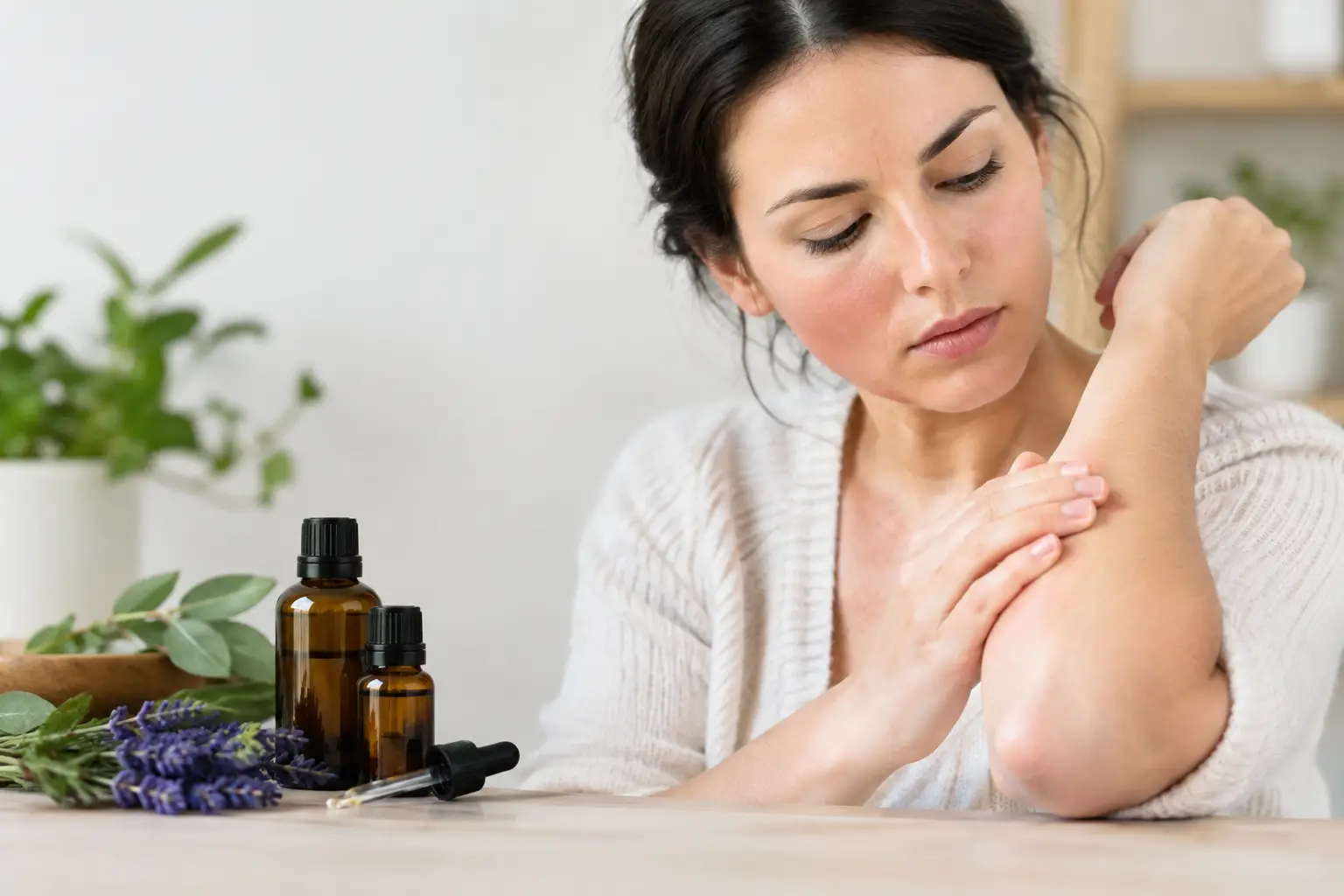
A soap, lotion, or balm can smell lovely and still be the reason skin suddenly feels itchy, hot, or uncomfortable. This guide to essential oil allergies is for anyone who wants the comfort of naturally made personal care without guessing what their skin will tolerate. Essential oils can be a beautiful part of a simple routine, but natural does not automatically mean allergy-free.
For families with dry skin, eczema-prone skin, or a history of reactions, learning the difference between a true allergy and simple irritation can make choosing products feel much less stressful. It also helps you know when to pause a product, when to patch test, and when a call to a healthcare professional is the wisest next step.
What Is an Essential Oil Allergy?
Essential oils are concentrated aromatic compounds taken from plants. Lavender, peppermint, tea tree, citrus, eucalyptus, and cinnamon are familiar examples. They are used in personal care for their scent and the pleasant ritual they bring to a bath or shower.
An essential oil allergy is usually a form of allergic contact dermatitis. Your immune system recognizes a substance as a problem after skin exposure and creates an inflammatory reaction. A reaction may happen after the first use, but it can also develop after many uses of a product that once seemed perfectly fine. That is one reason a favorite bar of soap or lotion deserves a second look if your skin begins acting differently.
An allergy is not the same as irritation. Irritation happens when something overwhelms or damages the skin barrier, often because a product is too strong, used too often, or applied to already compromised skin. An allergic reaction involves the immune system and can occur even with a small amount of an ingredient a person has become sensitized to.
Both deserve care. The practical first step is the same: stop using the suspected product until you understand what your skin is telling you.
Signs to Watch for After Using Essential Oils
Reactions do not always look dramatic. They may show up right where the product was used, such as the hands after washing, the neck after applying perfume, or the face after trying a new moisturizer. Symptoms can begin within minutes, but delayed reactions that appear hours or even a day or two later are also common with contact allergies.
Watch for these changes, especially after starting a new scented product:
- Itching, burning, stinging, or tenderness
- Redness, warmth, swelling, or a bumpy rash
- Dry, scaly, cracked, or weeping patches of skin
- Hives or a rash that spreads beyond the area where the product was applied
The location can offer useful clues. A rash around the eyelids may come from hand cream, shampoo, or hair products transferred by your hands. Cracked fingertips can be related to repeated exposure to fragranced soap or cleaning products. A rash under a necklace, on the wrists, or behind the ears may point toward perfume, body lotion, or essential-oil blends.
Severe symptoms need prompt medical attention. Seek emergency care for trouble breathing, wheezing, swelling of the lips, tongue, mouth, or throat, faintness, or widespread hives. Do not try to manage those symptoms at home with another skincare product.
Why “Natural” Can Still Cause a Reaction
Plant-based ingredients can be gentle and useful, yet they still contain active compounds. Essential oils are especially concentrated. A few drops represent a large amount of plant material, and that concentration is part of why careful formulation matters.
Some oils are more likely to cause sensitization or irritation than others. Fragrant oils such as cinnamon, clove, lemongrass, peppermint, ylang-ylang, tea tree, and citrus oils can be troublesome for some people. Oxidized oils may be more likely to cause reactions, too. When oils are exposed to air, heat, or light over time, their chemical makeup can change.
There is no need to fear every essential oil or avoid every scented product forever. The right choice depends on your personal history, the condition of your skin barrier, the concentration used in the formula, and how often you use the product. Someone with healthy, resilient skin may enjoy a lightly scented soap without trouble, while someone in the middle of an eczema flare may need the simplest possible routine.
How to Read Labels More Carefully
Start with the full ingredient list, not just the front-label scent description. A product may say “lavender” or “fresh citrus,” while the ingredient list offers a clearer picture of whether it contains essential oils, fragrance, or known fragrance components.
If you have reacted before, keep a small note on your phone with the product name, the date you used it, where you applied it, and what happened afterward. Save the ingredient list if possible. Over time, patterns become easier to spot. For example, a person who reacts to several products containing peppermint may have a useful clue, even before formal allergy testing.
“Fragrance-free” and “unscented” are not always interchangeable. Fragrance-free generally means no fragrance was added to create a scent. Unscented may still contain ingredients that mask the natural smell of a formula. If fragrance sensitivity is a concern, read the complete label and choose products with clear, straightforward ingredient information.
A Sensible Way to Patch Test a New Product
A home patch test cannot diagnose an allergy, and it cannot guarantee a product will never cause a reaction. It is simply a cautious way to introduce a new leave-on product, such as lotion, balm, or face cream.
Apply a pea-sized amount to a small area of intact skin, such as the inner forearm or the bend of the elbow. Leave it on as directed, and avoid washing that spot right away. Check the area over the next 24 to 48 hours for itching, burning, redness, bumps, or swelling.
If your skin reacts, gently wash the product off and do not apply it again. If there is no reaction, use the product sparingly at first rather than covering large areas of skin immediately. Keep in mind that rinse-off products, like soap and shampoo, can be harder to assess this way because their use is brief but repeated.
Never patch test a product on broken, sunburned, actively flaring, or infected skin. For a child with eczema, a person with a history of severe reactions, or anyone who has had swelling or hives from personal care products, ask a dermatologist or allergist for individualized guidance first.
What to Do When You Think a Product Caused a Reaction
Stop using the suspected product and rinse the area gently with lukewarm water. Skip scrubs, exfoliants, fragranced body care, and hot water while the skin is irritated. A plain, fragrance-free moisturizer may help support a dry, uncomfortable skin barrier, but use only something you already know your skin tolerates.
Take a clear photo of the reaction and write down when it started. This can be helpful if you need medical advice later, particularly because rashes often look different after a day or two. If symptoms are mild but do not improve, keep returning, or affect your daily comfort, contact a healthcare professional.
A dermatologist can help distinguish allergic contact dermatitis from eczema, psoriasis, fungal infections, and other skin concerns that can look similar. For recurring reactions, formal patch testing may identify specific allergens. This is more precise than trying one product after another and hoping for a different result.
Building a Gentler Routine for Sensitive Skin
When skin is unsettled, fewer products are often better. Choose a mild cleanser, a moisturizer that works for you, and sun protection you tolerate. Introduce new products one at a time so you can tell what is helping and what is not.
For many sensitive-skin households, scent is a preference, not a requirement. A lightly scented product may be enjoyable when skin is doing well, while an unscented option may be the better choice during a flare, after shaving, or for use on a baby or child with reactive skin. There is room for both, as long as comfort comes first.
At The Goats Field, we believe ingredient transparency and small-batch care matter because families deserve to know what they are putting on their skin. Whether you choose an essential-oil-based product or keep your routine fragrance-free, listen to your skin and give it the gentle, patient care it asks for.
Your skin does not need to “push through” a product that makes it feel worse. A simple routine, clear labels, and a willingness to pause when something is not working can go a long way toward finding everyday care that feels comforting again.