
When your skin reacts to just about everything, finding the right sunscreen can feel impossible. You know you need serious protection from the sun, but so many formulas leave you dealing with stinging, breakouts, or a nasty red flush that just won't quit.
If that sounds familiar, this guide is for you. We're here to cut through the noise and end that frustrating cycle for good.
Your Guide to Calm and Protected Skin
Let's start with a simple truth: for sensitive skin, mineral-based formulas are your best friends. These sunscreens, often featuring gentle ingredients like non-nano zinc oxide, are almost always the way to go.
Unlike chemical sunscreens that absorb into your skin to work, mineral options create a physical barrier right on the surface. This simple difference dramatically cuts down the risk of irritation, redness, and that all-too-familiar stinging sensation.
Think of mineral sunscreen as a gentle shield for your skin. It sits on top and reflects harmful rays away, like a tiny mirror, instead of causing a chemical reaction that could trigger a flare-up.
Why Your Sunscreen Choice Matters
This is about so much more than just preventing a sunburn. It’s about protecting and nurturing your skin's delicate barrier. The right formula won’t just shield you from UV rays; it will also help calm and support your skin's overall health, making it feel comfortable enough for everyday wear.
And you're definitely not alone in this search. The demand for gentle sun protection has exploded, with the global sensitive skin sunscreen market valued at around $14.54 billion in 2025. It's projected to nearly double, showing a huge shift as more people look for kinder, safer formulas.
Get ready to feel confident in your sun care again. We'll walk through the key ingredients to look for, application tips, and what to avoid, so you can finally enjoy the sun without the worry. If you need a quick list of great options, our best natural sunscreen cheat sheet for 2023 is a fantastic starting point.
Mineral vs Chemical Sunscreen Explained
When you're trying to find the best sunscreen for sensitive skin, the biggest choice you'll make is between a mineral and a chemical formula. The easiest way to think about it is this: mineral sunscreens act like a mirror, while chemical sunscreens work like a sponge. Getting this one difference right is the secret to calm, happy, protected skin.
Mineral sunscreens create a physical shield right on the surface of your skin. They use natural active ingredients like zinc oxide and titanium dioxide to physically block and bounce UV rays away before they can even think about getting in. This is why you'll often hear them called "physical sunscreens."
Chemical sunscreens, on the other hand, have to be absorbed into your skin to do their job. They work by sparking a chemical reaction that turns UV radiation into a tiny bit of heat, which then gets released from the skin. While that process works, the reaction itself can be a major trigger for redness, stinging, and flare-ups if your skin is sensitive.
Why Mineral Sunscreen Is a Safer Bet
For skin that's easily upset, that "mirror" approach is so much gentler. Because the ingredients sit on top of your skin instead of sinking in, there’s much less of a chance for a bad reaction. This makes them the clear winner for anyone with reactive skin, eczema, or rosacea.
As more people learn about what’s in their products, the demand for these kinder formulas has really taken off. The big swing toward mineral-based sunscreens is all about their reputation for being gentle and effective without causing irritation. You can discover more insights about this trend and the sensitive skin sunscreen market.
This visual sums up the core features that make mineral sunscreens the perfect match for sensitive complexions.
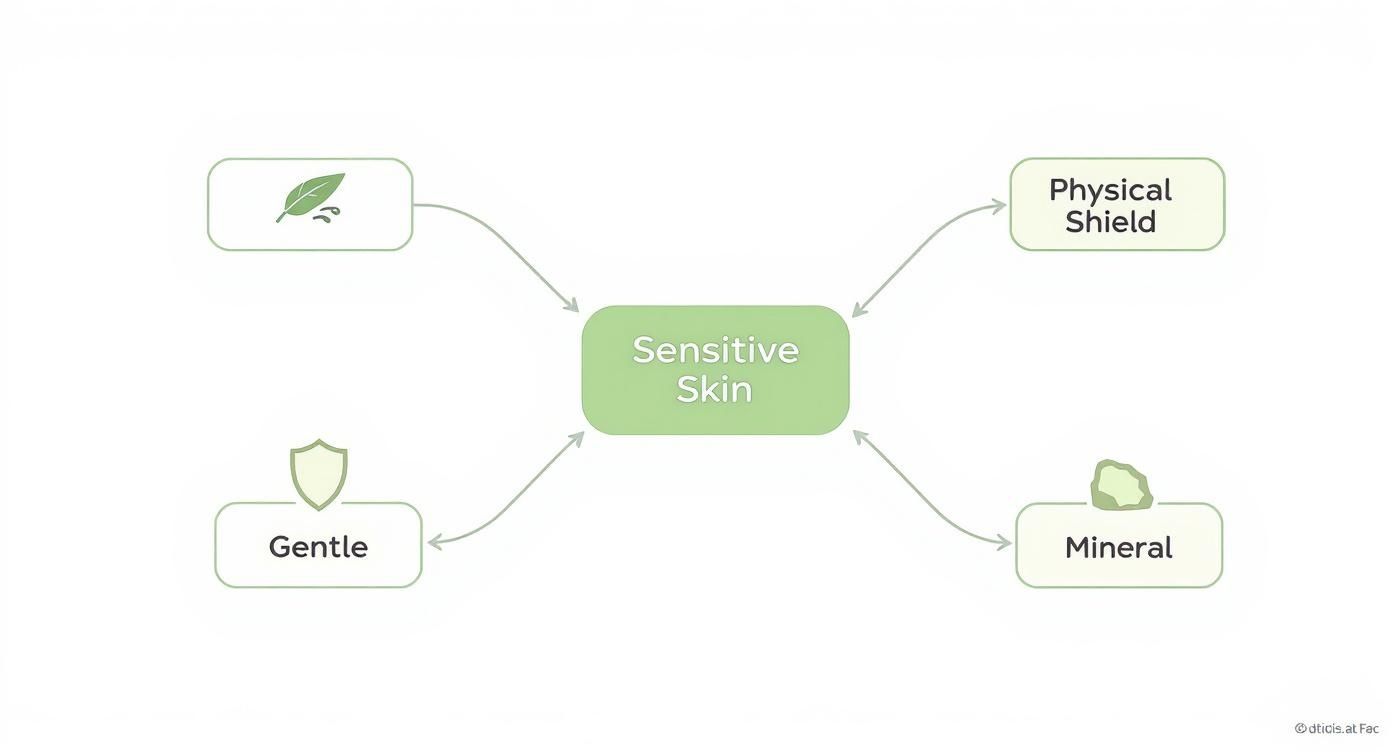
As you can see, it's that simple combination of being a gentle, physical shield made from natural minerals that creates sun protection you can actually feel good about wearing.
Mineral vs Chemical Sunscreen at a Glance
To make the choice crystal clear, let's put these two sunscreen types side-by-side. They protect your skin in completely different ways, and for anyone with sensitive skin, those differences are everything.
Here’s a simple table to break it down.
| Feature | Mineral Sunscreen (Physical) | Chemical Sunscreen |
|---|---|---|
| How it Works | Sits on top of the skin and acts like a mirror to reflect UV rays. | Absorbs into the skin and works like a sponge, converting UV into heat. |
| Active Ingredients | Zinc Oxide, Titanium Dioxide. | Oxybenzone, Avobenzone, Octinoxate. |
| Best For | Sensitive, acne-prone, and reactive skin. | Tolerant, non-reactive skin types. |
| Activation Time | Works immediately the moment you put it on. | Needs about 20 minutes to absorb and become effective. |
At the end of the day, picking a mineral formula—especially one with non-nano zinc oxide—gives you immediate, broad-spectrum protection without the irritation that chemical filters can cause. For many, this simple switch is the single most important step toward a sun care routine that truly works with their skin, not against it.
How to Read Sunscreen Labels Like a Pro
Trying to pick a sunscreen can feel like you need a chemistry degree just to get through the aisle. With so many bottles shouting for your attention, the secret to finding the best one for your sensitive skin is learning what the label is really telling you. This is how you go from a confused shopper to a confident expert who can grab the perfect protection every single time.
The demand for gentle, effective sunscreens has absolutely exploded. The market for sensitive skin formulas is expected to hit $15.63 billion in 2025 and is on track to reach a massive $35.5 billion by 2033. You can read the full research about this market growth to see just how many people are looking for the same solutions as you.
More options are great, but it also means more labels to figure out. Let's break down the most important terms you need to know.
Decoding SPF and Broad-Spectrum Protection
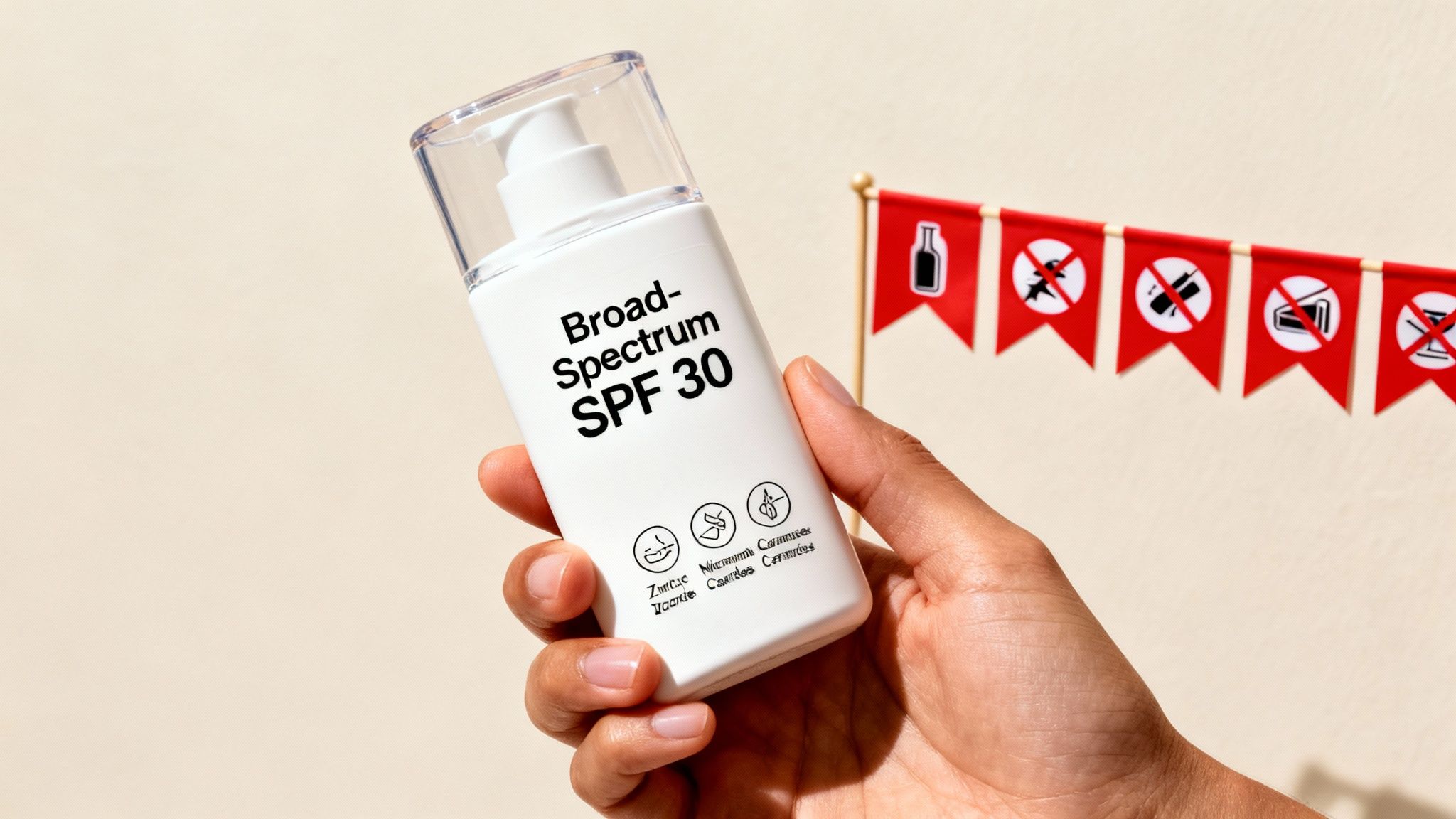
First things first, let's talk about the two non-negotiables you'll find on every bottle: SPF and Broad-Spectrum.
Think of the sun's damaging rays as coming in two main flavors: UVB and UVA. An easy way to keep them straight is UVB rays cause Burning while UVA rays cause Aging. The SPF number, or Sun Protection Factor, is all about measuring how well a sunscreen shields you from those burning UVB rays.
A lot of people believe a super-high SPF offers way more protection, but that's a common myth. An SPF 30 blocks about 97% of UVB rays, and an SPF 50 blocks 98%. The real lesson here? Applying an SPF 30 correctly and consistently is far better than slapping on a higher number every now and then.
But protecting against sunburn isn't the whole story. You also need to defend your skin from UVA rays, which go deeper and are the main culprits behind wrinkles and other signs of aging. That’s where Broad-Spectrum protection comes into play. If you see "Broad-Spectrum" on the label, it means the product is proven to guard against both UVA and UVB rays. For sensitive skin, this is an absolute must.
Ingredients to Look For and Avoid
The ingredients list is where the real detective work happens. This is how you can tell if a product will be a friend or foe to your sensitive skin. The goal is simple: find a short list full of calming, protective ingredients and steer clear of common troublemakers.
Green Flags (Ingredients to Seek Out):
- Zinc Oxide: This is the gold standard for sensitive skin, and for good reason. It's a mineral filter that sits on top of your skin to provide amazing broad-spectrum protection, which means less chance of irritation.
- Niacinamide (Vitamin B3): A true superstar for calming the skin. It helps dial down redness and supports your skin's natural barrier, keeping it happy and resilient.
- Ceramides: Think of these as the mortar that holds your skin barrier together. These lipids lock in moisture and fortify your skin, preventing the dryness that often leads to sensitivity.
Red Flags (Ingredients to Avoid):
- Fragrance: A single word like "fragrance" or "parfum" can hide a cocktail of dozens of potential chemical irritants. It's one of the top causes of skin reactions.
- Alcohol (SD Alcohol, Denatured): While it helps formulas feel light on the skin, this type of alcohol can be incredibly drying and stir up irritation.
- Oxybenzone and Avobenzone: These are popular chemical filters that get absorbed into the skin. For many, they are a one-way ticket to stinging, redness, and allergic reactions.
By keeping an eye out for these key terms and ingredients, you can walk down the sunscreen aisle with confidence, ready to choose a product that will protect and soothe your skin.
Finding the Right Sunscreen Format for You
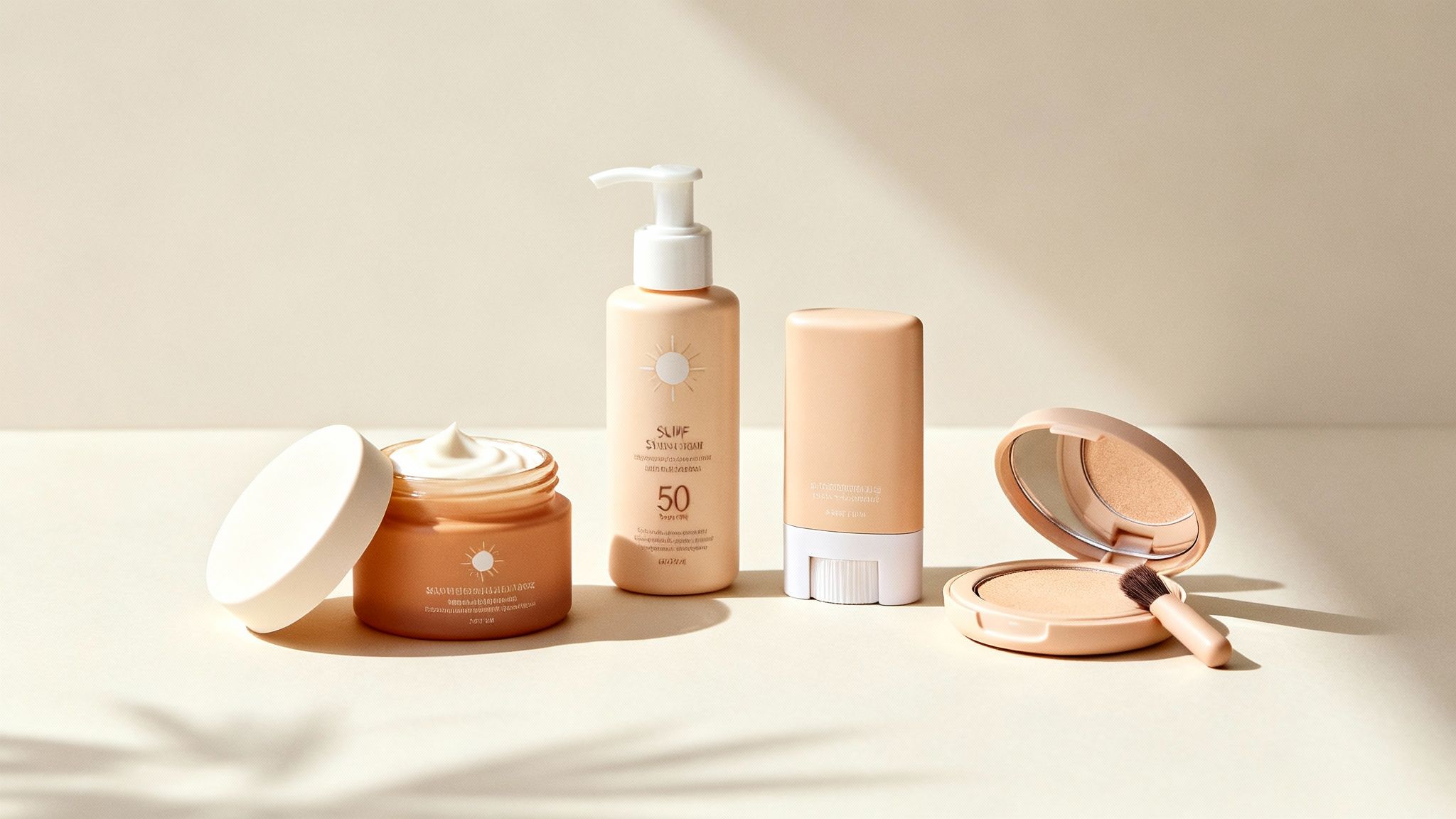
Let’s be honest, the best sunscreen for your sensitive skin is the one you’ll actually enjoy using every single day. While getting the ingredients right is a huge part of the puzzle, the product's format—whether it’s a rich cream, a silky lotion, a handy stick, or a finishing powder—can make or break your daily habit.
When you find a texture that just clicks with your lifestyle, putting on sunscreen stops feeling like a chore and becomes an effortless part of your routine. The perfect fit usually comes down to your unique skin type and what your day looks like. Each format brings something different to the table, helping you build a sun protection habit that is both seamless and totally irritation-free.
Creams and Lotions The Daily Drivers
For most of us, traditional creams and lotions are the bread and butter of sun protection. They’re familiar, easy to spread evenly, and great for making sure you get full coverage without missing any spots.
- Creams: If your skin is dry or reactive, a cream is a fantastic choice. They are richer and more emollient, often doubling up as a moisturizer to give you hydration and protection in one simple step. A gentle, nourishing cream can feel incredibly soothing on a compromised skin barrier.
- Lotions: Because they have a higher water content, lotions tend to feel more lightweight. They sink in quickly without that heavy feeling, making them perfect for normal, combination, or slightly oily skin types that don't need intense moisture.
Sticks and Powders For Targeted Application and Reapplication
Beyond your morning application, sticks and powders are brilliant problem-solvers for life on the go. These mess-free formats have become incredibly popular because they’re just so convenient for specific situations.
A solid sunscreen stick is a total game-changer for protecting those tricky, delicate spots. Think around your eyes (without the sting!), on your ears, and along your hairline. They're portable, spill-proof, and an absolute must-have for your bag.
Pro Tip: Sunscreen powders are one of the smartest ways to reapply protection over makeup during the day. A quick dusting of a mineral-based powder with SPF can cut down shine and refresh your UV shield without smudging a thing.
At the end of the day, it's all about finding a format so comfortable and easy that you never have to think twice about putting it on. You might even find that a combination works best—maybe a lotion in the morning and a stick for touch-ups. That’s a perfect strategy for keeping your sensitive skin safe, calm, and happy all day long.
Applying Sunscreen Without Irritation
Finding the perfect sunscreen for your sensitive skin is a huge win, but how you put it on is just as crucial. Even the kindest formula can cause trouble if you're not careful. Learning a few simple tricks will make sure your skin gets all the protection it needs without any of the drama.
Before you even think about slathering a new sunscreen all over your face, you need to do a patch test. Think of it as your personal safety check to avoid a full-blown reaction. It’s a super simple step that people often skip, but it's one of the most important.
Just dab a small bit of the sunscreen on a hidden spot, like the inside of your elbow or behind your ear. Give it 24 hours. Keep an eye on that spot for any redness, itching, or swelling. If your skin is still happy and calm, you've got the green light.
Gentle Application for Maximum Protection
When it's time for the real deal, your technique is everything. Sensitive skin really doesn't like being pulled or rubbed aggressively, so a gentle touch is your best friend.
- Use the Right Amount: You’d be surprised how many of us don’t use enough sunscreen. For your face and neck, you’ll need about a nickel-sized blob. For your whole body, picture a full shot glass worth of product.
- Dot, Don't Drag: Instead of squeezing a big glob into your hands and rubbing like crazy, dot small amounts of the sunscreen all over your face first.
- Pat and Press: Now, gently pat and press the sunscreen into your skin until it disappears. This method is so much kinder than rubbing and helps you get a nice, even layer of protection.
Reapplication isn’t just a suggestion; it’s non-negotiable for real sun safety. You need to reapply your sunscreen at least every two hours, and even sooner if you’ve been swimming, sweating buckets, or drying off with a towel.
Trying to reapply over makeup can be tricky. A mineral powder sunscreen or a lightweight spray can be a lifesaver here, helping you top up your protection without making your foundation pill. By making these gentle habits part of your routine, you turn your sunscreen into a soothing shield, not another source of irritation.
Sun Care for Extremely Delicate Skin Conditions
When you're dealing with conditions like eczema and rosacea, or looking after the super-delicate skin of babies and children, grabbing just any sunscreen off the shelf won't cut it. Your skin barrier is already working overtime, so it needs protection that not only shields but actively soothes and supports it.
In these situations, mineral-only sunscreens are the clear winner. Formulas built around non-nano zinc oxide are your best bet, creating a gentle physical shield that sits right on top of your skin. This is a huge deal, as it avoids the irritation that chemical filters—which sink into the skin—can cause on an already angry or immature skin barrier.
The Soothing Power of Smart Ingredients
But the zinc oxide is only half the story. The rest of the formula is just as important. The best sunscreens for sensitive skin are packed with calming, anti-inflammatory ingredients to help cool existing redness and keep flare-ups at bay.
This is where gentle, nourishing extras truly shine. For instance, a sunscreen made with goat milk can be a game-changer. Goat milk is naturally loaded with vitamins and fatty acids that help moisturize and mend the skin barrier, adding a soothing touch that perfectly backs up the protective work of zinc oxide. Products from The Goats Field are a great example of this, combining non-nano zinc oxide with the comforting benefits of goat milk skincare to create a sunscreen that truly nurtures the skin it protects.
Think of a compromised skin barrier as a shield with tiny cracks. A good mineral sunscreen not only deflects UV rays but also helps patch those cracks with calming ingredients, stopping moisture from escaping and preventing irritants from getting in.
A holistic approach is always best. Supporting your skin with a simple, gentle routine gives your sunscreen a healthier canvas to work with.
- Mild Cleanser: Start with a cleanser that's free of sulfates and fragrances. You want something that cleans away impurities without stripping your skin of its natural, protective oils.
- Supportive Moisturizer: After cleansing, apply a simple, calming moisturizer. This locks in hydration and strengthens your skin barrier right before you put on your sunscreen.
This quick two-step prep makes sure your skin is calm, hydrated, and ready for sun protection. By choosing a product with minimal, soothing ingredients and applying it to well-cared-for skin, you’re giving the most delicate complexions the highest level of comfort and safety.
Common Questions About Sunscreen for Sensitive Skin
Even when you've done your homework, a few questions always seem to come up when you're on the hunt for the perfect sunscreen. Getting clear, honest answers can make all the difference, helping you feel truly confident in your choice. Let's tackle some of the most common ones we hear.
Can I Use Body Sunscreen on My Face?
It’s tempting to use just one product for everything, but this is a shortcut you'll want to skip, especially if your skin is reactive. Body sunscreens are usually thicker and built to be more resilient for your arms and legs. That powerhouse formula can be too heavy for the delicate skin on your face, leading to clogged pores and unwelcome breakouts.
Facial sunscreens are made to be lightweight, non-greasy, and non-comedogenic—a fancy way of saying they won't clog your pores. Your safest bet is to stick with a product designed specifically for the face. It's the best way to avoid irritation and keep your complexion happy.
Why Do Some Mineral Sunscreens Leave a White Cast?
Ah, the infamous white cast. It comes directly from the mineral filters themselves—zinc oxide and titanium dioxide. Because these minerals work by sitting on top of your skin to create a physical barrier against UV rays, they can sometimes leave a whitish tint, especially the older, paste-like formulas many of us remember.
Thankfully, sunscreen technology has come a long way.
Modern mineral sunscreens have gotten much smarter. They often use micronized particles that are finer and blend beautifully into the skin, leaving little to no trace. Many brands also offer tinted mineral options that use natural pigments to cancel out any whiteness, giving you an even, healthy-looking glow instead.
Is a Higher SPF Always Better for Sensitive Skin?
Not really. It might be surprising, but the formulation of the sunscreen is much more critical for sensitive skin than chasing an ultra-high SPF number. The actual difference in protection between higher levels is pretty small. For instance, an SPF 30 blocks 97% of UVB rays, while an SPF 50 blocks 98%.
What truly matters is finding a sunscreen you'll wear consistently. It’s far better to use a gentle, mineral-based SPF 30 that your skin loves every single day than to occasionally use a harsh SPF 100 that you dread putting on. For sensitive skin, the real win is comfortable, consistent protection from a broad-spectrum formula.
Ready to find a sunscreen that feels as good as it protects? The Goats Field crafts a non-nano zinc oxide mineral sunscreen that combines gentle, effective protection with the soothing benefits of farm-fresh goat milk. Experience the difference a truly nourishing formula can make.
Explore our gentle sun care and skincare collection at thegoatsfield.com