
If you’ve ever stepped out of the shower feeling tighter and itchier than when you went in, your soap is almost certainly the culprit. So many commercial soaps are little more than harsh detergents in disguise, stripping away not just the day's grime but also your skin's essential, natural oils. This is the first big clue that you need a different kind of soap for dry skin—one that cleanses while actually nourishing.
Why Your Current Soap May Be Harming Your Skin
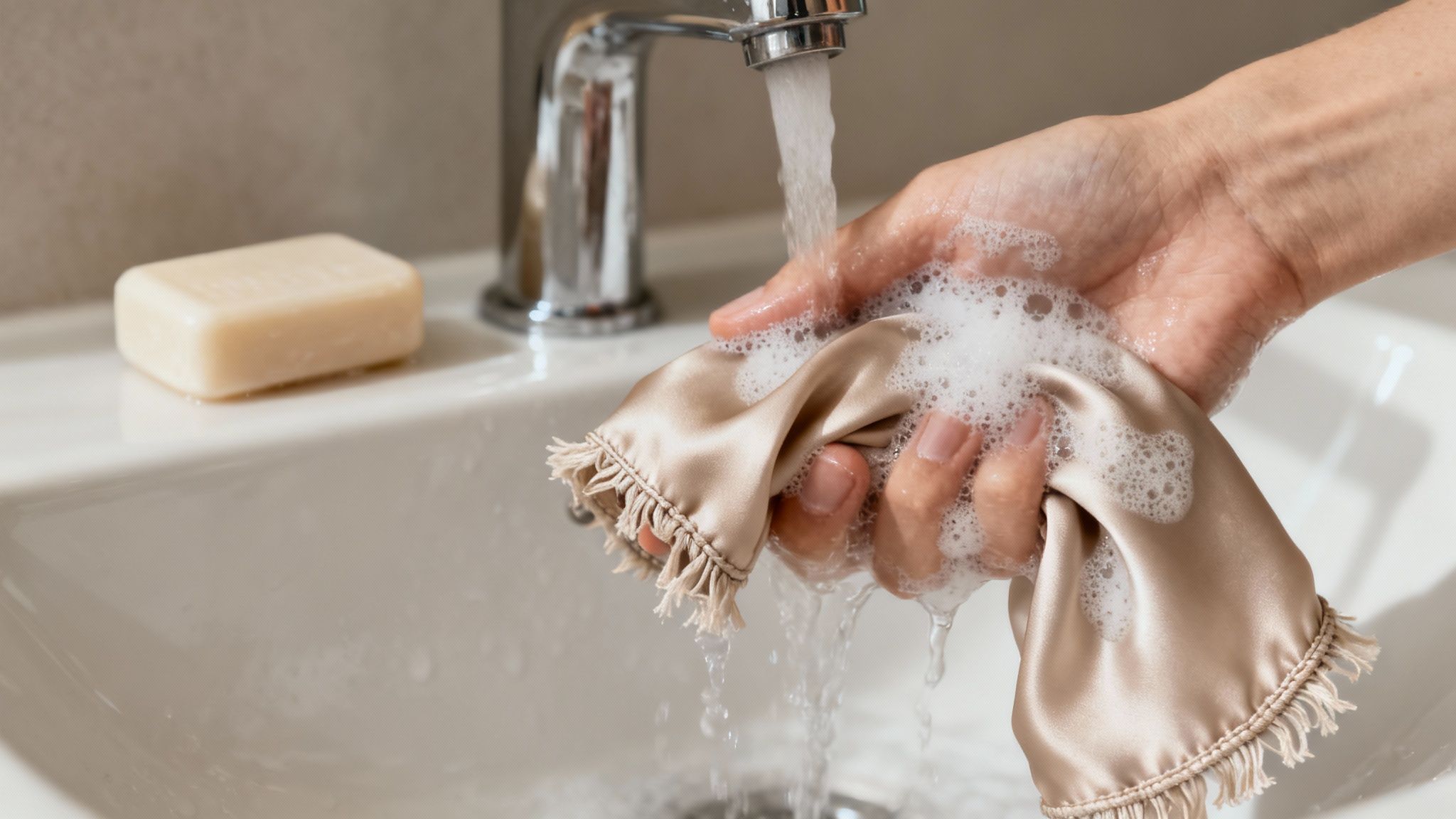
Think of your skin’s protective layer like a beautiful, delicate silk shirt. Now, imagine tossing that shirt in the wash with a heavy-duty laundry detergent meant for greasy work clothes. Sure, the detergent would get it clean, but it would also ravage the fibers, leaving the silk brittle, rough, and weak. This is exactly what a lot of mass-market soaps do to your skin.
These cleansers are often loaded with harsh surfactants and have high pH levels that completely dismantle your skin’s natural defense system, known as the lipid barrier. This barrier is your personal security guard, responsible for locking in moisture and keeping irritants out. When it gets compromised, your skin is left wide open, leading to that frustrating cycle of dryness, flaking, and irritation.
The Stripping Effect Explained
That "squeaky clean" feeling is a massive red flag. It’s a sign that your soap has wiped out everything on the surface, including the good stuff—the beneficial oils your skin produces to stay hydrated and healthy. This stripping action sends your skin into panic mode, often triggering even more dryness or, ironically, an overproduction of oil to try and compensate.
This is why finding the right soap for dry skin isn't just about piling on moisture afterward; it’s about preventing it from being stripped away in the first place.
A truly great soap for dry skin should cleanse without causing collateral damage. It needs to work with your body’s natural chemistry, not against it. The goal is to leave your skin feeling soft and comfortable, not tight and exposed.
Cleansing agents have been around for thousands of years, but the formulas have changed dramatically. The earliest soaps were pretty basic and often harsh. But as we learned more about cosmetic science, moisturizing fats and oils became the heroes of the story. You can learn more about the long history of soapmaking on Wikipedia.
A much better approach is to use soaps made with ingredients that actively support and nourish the skin barrier. Instead of breaking it down, these cleansers help build it back up. This is where gentle, nutrient-rich options like goat milk soap really shine, offering a way to clean your skin effectively while delivering a dose of essential hydration.
How Your Skin's Moisture Barrier Actually Works
To really get why some soaps are miracle workers for dry skin, we first need to look at your skin's built-in defense system. The very top layer of your skin, the epidermis, has a vital shield called the moisture barrier, or lipid barrier. Its job is simple but crucial: keep the good stuff (moisture) in and the bad stuff (irritants) out.
Think of it like a solid brick wall. Your skin cells are the "bricks," giving the wall its structure. But bricks alone won't keep the weather out, right? You need mortar to hold everything together.
That "mortar" is a mix of natural fats and oils your body produces—things like ceramides, cholesterol, and fatty acids. This lipid mortar seals the gaps between your skin cell "bricks," creating a waterproof shield that locks in hydration and protects the delicate layers underneath from everything the world throws at it.
How Harsh Soaps Dismantle This Barrier
Here’s the problem with most soaps you find at the drugstore: they’re loaded with harsh surfactants, like sulfates. These ingredients are great at dissolving oil and grime, but they can't tell the difference between dirt and the essential "mortar" holding your skin together.
When these aggressive cleansers hit your skin, they strip away that protective lipid mortar. This leaves tiny gaps in your defensive wall, allowing precious moisture to evaporate right out—a process known as transepidermal water loss. At the same time, the floodgates are open for irritants, allergens, and bacteria to sneak in, leading to inflammation, redness, and that tight, itchy feeling we all know too well.
A compromised moisture barrier is the real culprit behind most dry skin issues. When the "mortar" is gone, the "bricks" are left exposed. Your skin becomes vulnerable, dehydrated, and can no longer protect itself properly.
The Critical Role of Skin pH
There's one more piece to this puzzle: your skin's natural pH level. Healthy skin is naturally a bit acidic, usually sitting somewhere between a pH of 4.7 and 5.75. This acidity creates what’s known as the acid mantle, a fine film that helps stop harmful bacteria from growing and keeps the moisture barrier strong.
Unfortunately, many traditional bar soaps are the exact opposite—they are highly alkaline, with a pH of 9 or 10. Using an alkaline soap on your acidic skin is like trying to put out a fire with gasoline. It instantly throws your skin's natural balance out of whack. This disruption weakens your skin's defenses even more, making it harder for the barrier to function and repair itself.
Choosing a soap that is pH-balanced, or close to your skin's natural acidity, is a non-negotiable for dry skin. It means you can cleanse without stripping away that protective acid mantle, allowing your moisture barrier to stay intact and do its job. Understanding this is your first step to reading labels like a pro and finally finding lasting relief.
Decoding Soap Ingredients for Dry Skin
Walking down the soap aisle can feel like a pop quiz you didn't study for. The ingredient lists are long, confusing, and full of words you can barely pronounce. To find the best soap for your dry skin, you need to know which ingredients are heroes that heal and which are villains that strip away your skin's precious moisture.
It really comes down to two key players: humectants and emollients. Think of humectants as tiny moisture magnets; they pull water from the air and deeper skin layers to hydrate the surface. Emollients, on the other hand, are like protective sealants. They fill in the tiny cracks between skin cells to lock that moisture in, creating a soft, smooth surface.
A truly effective soap for dry skin needs a healthy balance of both.
Nourishing Ingredients to Look For
Certain ingredients are absolute superstars when it comes to replenishing a damaged moisture barrier. Glycerin, a natural byproduct of the soapmaking process, is a powerful humectant. It's so effective that it's found in over 60% of soaps marketed for dry skin because of its incredible ability to attract and hold onto moisture.
Beyond glycerin, natural oils and butters are fantastic emollients. Keep an eye out for names like:
- Shea Butter: Rich in fatty acids and vitamins that soften and soothe irritated skin.
- Coconut Oil: Provides deep moisturization and has natural antimicrobial properties.
- Olive Oil: A classic, gentle ingredient known for its powerful hydrating qualities.
It's no surprise that natural oils like coconut oil and shea butter are found in about 40% of dry skin soap formulas worldwide—they're trusted for a reason.
This diagram helps visualize how these good-guy ingredients support your skin's "brick and mortar" defense system.
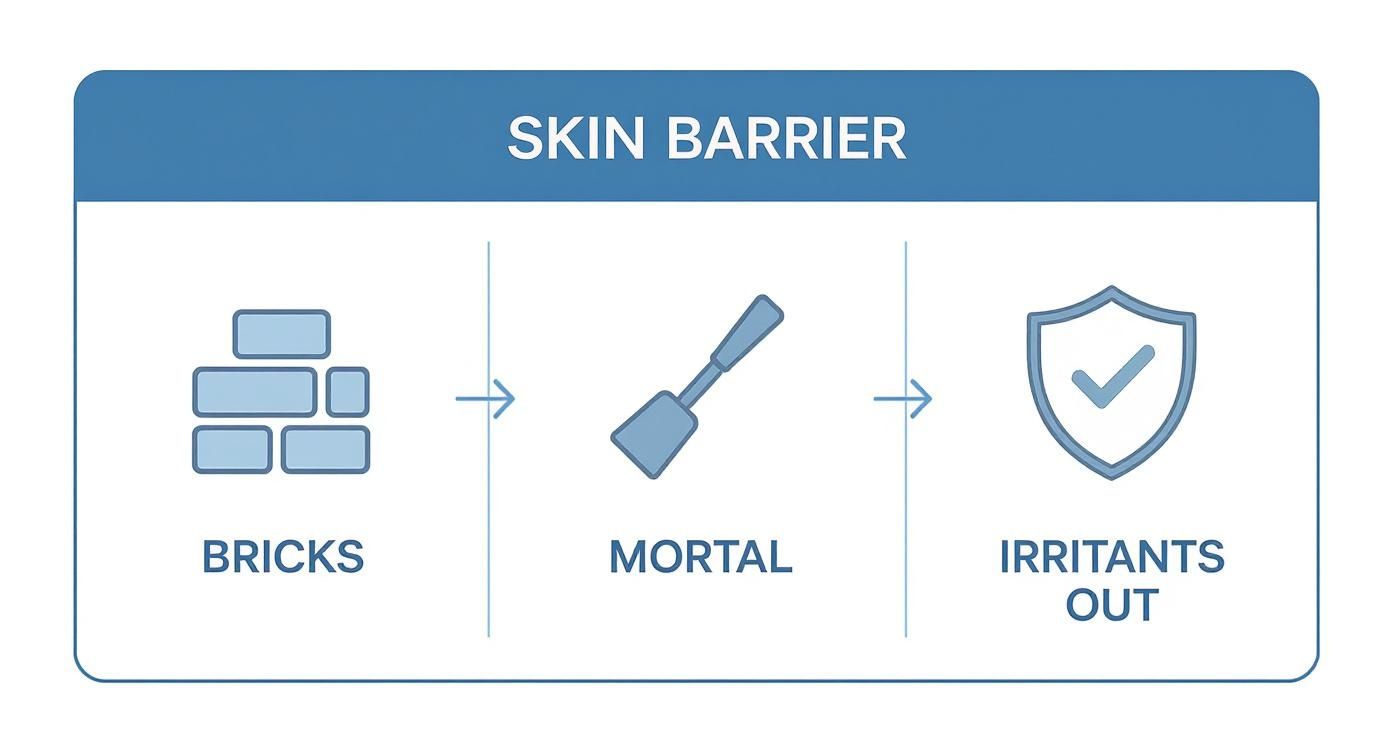
Think of your skin cells as the "bricks" and these nourishing ingredients as the "mortar" holding everything together, keeping moisture in and irritants out.
Common Irritants to Avoid
Knowing what to look for is only half the battle. You also need to know what to avoid. Many ingredients in commercial soaps are notorious for dismantling your skin's moisture barrier, leaving you with that tight, itchy feeling we all dread.
The biggest culprits are sulfates, specifically Sodium Lauryl Sulfate (SLS) and Sodium Laureth Sulfate (SLES). These are harsh detergents used to create a big, bubbly lather, but they do so by stripping away all of your skin's natural, protective oils.
If a soap leaves your skin feeling "squeaky clean," that's usually a red flag. It often means your natural oils have been completely removed, compromising your skin's barrier and leading to moisture loss.
Other ingredients to put on your "no" list include:
- Artificial Fragrances: Often listed simply as "fragrance" or "parfum," these can hide dozens of undisclosed chemicals that irritate sensitive skin.
- Certain Alcohols: While some fatty alcohols are actually good for your skin, harsh ones like isopropyl alcohol are extremely drying.
This simple table breaks down the heroes and villains of the soap world.
Beneficial vs. Harmful Soap Ingredients for Dry Skin
| Ingredient Type | Look For (The Heroes) | Avoid (The Villains) |
|---|---|---|
| Cleansers | Saponified Oils (Coconut, Olive), Glycerin | Sodium Lauryl Sulfate (SLS), Sodium Laureth Sulfate (SLES) |
| Moisturizers | Shea Butter, Goat Milk, Cocoa Butter, Natural Oils | Mineral Oil, Petrolatum (can clog pores for some) |
| Fragrances | Essential Oils (Lavender, Chamomile), Unscented | "Fragrance," "Parfum" (can hide irritants) |
| Additives | Oatmeal, Honey, Natural Clays, Lactic Acid | Parabens, Phthalates, Artificial Dyes |
| Alcohols | Cetyl Alcohol, Stearyl Alcohol (fatty alcohols) | Isopropyl Alcohol, SD Alcohol 40 (drying alcohols) |
By learning to spot these key players on the label, you can make an informed choice that truly supports your skin's health. For instance, understanding the role of essential oils in wellness can help you appreciate why natural fragrances are a better pick over synthetic ones. It’s all about becoming a savvy label-reader.
The Unique Benefits of Goat Milk Soap
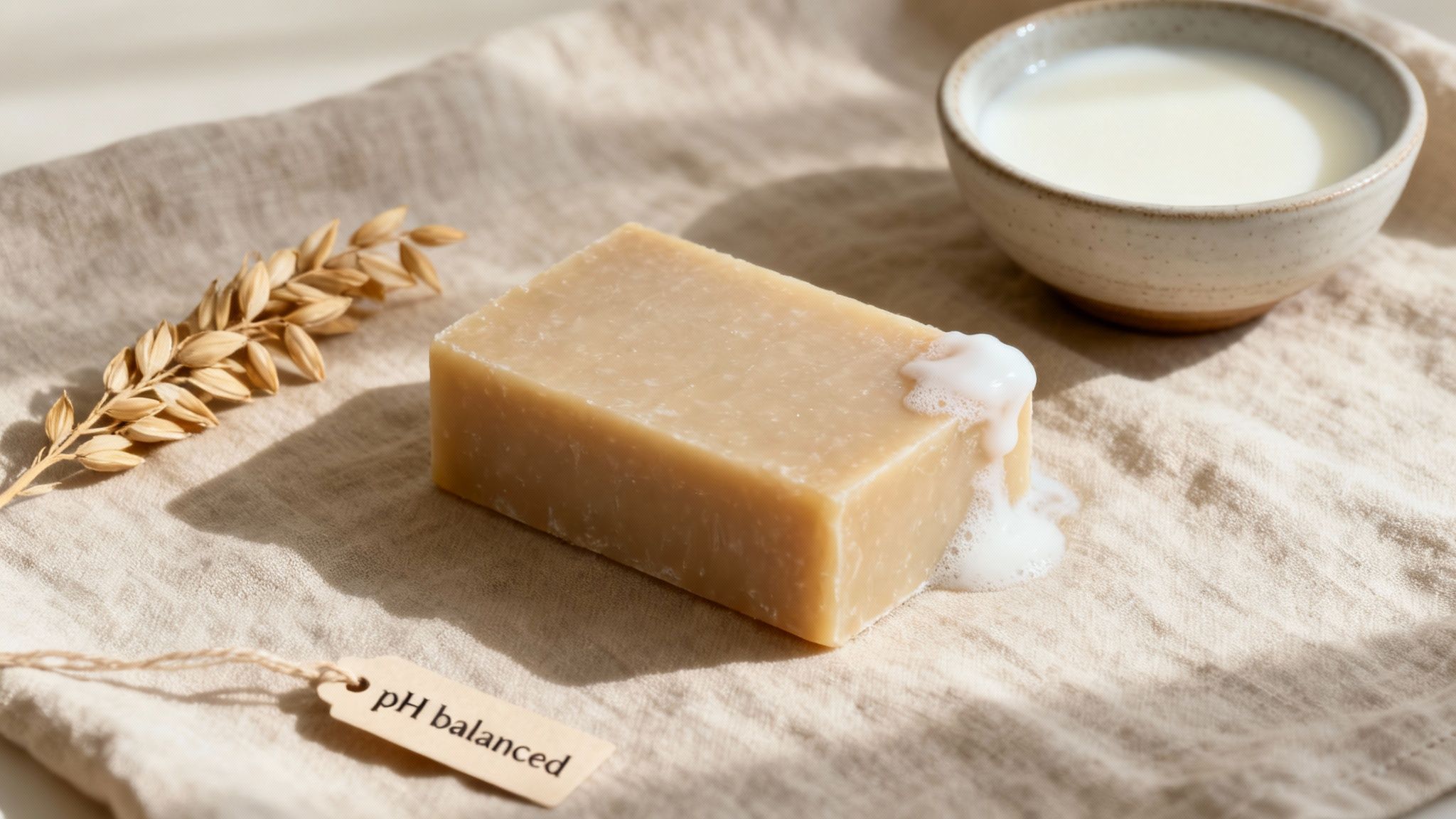
While plenty of natural ingredients can offer a bit of relief, goat milk is really in a class of its own when it comes to a superior soap for dry skin. Its magic isn’t just one thing; it’s a whole symphony of natural compounds that work in harmony with your skin’s own biology. This isn't just about cleaning. It’s about actively nourishing, restoring, and protecting with every single wash.
The secret starts with its incredibly high concentration of fatty acids. Remember our "brick and mortar" analogy for your skin's moisture barrier? Goat milk is loaded with the very "mortar"—caprylic and capric acids—your skin desperately needs to seal up those cracks, lock in moisture, and rebuild its natural defenses. These lipids are small enough to be easily absorbed, getting right to work replenishing what the environment and harsh soaps have stripped away.
Gentle Exfoliation Without Stripping
We all know dry, flaky skin can benefit from a good exfoliation, but aggressive scrubs often do more harm than good. This is where goat milk offers a much smarter path. It naturally contains lactic acid, an alpha-hydroxy acid (AHA) famous for its gentle touch.
Instead of physically scraping away dead cells, lactic acid works on a microscopic level to dissolve the "glue" holding them to the surface. This process uncovers the fresher, smoother skin underneath without causing redness or compromising your already delicate moisture barrier. It's a quiet, subtle renewal that helps reduce flakiness and makes your skin much better at soaking up moisture.
Goat milk soap doesn’t just moisturize on the surface. Its unique combination of fatty acids and lactic acid allows it to both rebuild the skin’s lipid barrier and gently clear away the dead cells that contribute to a dry, dull appearance.
A Perfect pH Match for Your Skin
One of the biggest—and most overlooked—advantages of goat milk soap is its pH level. Healthy skin is naturally a little acidic, and it turns out, goat milk has a remarkably similar pH. This is a game-changer for maintaining skin health.
When you use a pH-balanced soap, it cleanses away dirt and grime without throwing your skin's protective acid mantle into chaos. That means you can say goodbye to that tight, squeaky, uncomfortable feeling you get from alkaline soaps. A balanced soap ensures your moisture barrier stays strong and functional. It’s like using a key that fits the lock perfectly instead of trying to bust the door down.
This pH harmony is exactly why goat milk soap is such a fantastic choice for anyone dealing with sensitive conditions like eczema or psoriasis.
A Rich Source of Skin-Nourishing Vitamins
Beyond its structural and pH benefits, goat milk is a powerhouse of vitamins essential for skin repair and health. It’s especially rich in Vitamin A, a nutrient celebrated for its ability to support skin repair, soften the look of fine lines, and encourage healthy cell turnover.
But the goodness doesn't stop there. It also delivers a whole spectrum of other skin-loving nutrients:
- Vitamin D: Helps to protect and rejuvenate the skin.
- Vitamin E: A potent antioxidant that defends against environmental damage.
- B Vitamins: Includes riboflavin, which is key for keeping skin hydrated and healthy.
This nutrient-dense profile means that every time you wash, you’re not just cleaning—you’re delivering a dose of restorative goodness directly to your skin. This is what truly sets a nourishing soap apart from a basic cleanser. It gives back far more than it takes, leaving your skin healthier and happier after every use.
Building a Complete Routine for Dry Skin Relief
Switching to a nourishing soap is a brilliant first step, but real, lasting comfort for dry skin comes from building a whole routine around it. Think of your soap as the foundation of a house—it's absolutely critical, but it can't do the job alone. The real magic happens when you back it up with a few smart habits that lock in moisture and protect your skin’s delicate barrier.
The good news? This doesn't mean you need a bathroom counter cluttered with a dozen expensive products or a complicated, time-consuming regimen. It’s all about a few simple, powerful tweaks to how you wash and moisturize. These small changes turn your daily shower from something that can strip your skin into a true healing ritual, making sure you get the absolute most out of your soap.
Master the Lock and Seal Method
One of the most powerful tricks I've learned for fighting dryness is what I call the lock and seal method. The idea is wonderfully simple: your skin is like a sponge right after you wash it. That moment when it’s still slightly damp is your golden opportunity to trap all that wonderful moisture before it vanishes into thin air.
Here’s how you make it happen:
Turn Down the Heat: I know, a steaming hot shower feels amazing, but it's a huge culprit in stripping away your skin's natural, protective oils. Stick to lukewarm water instead. It cleans just as well without zapping your skin of its precious moisture.
Pat, Don’t Rub: Once you're done, fight the urge to scrub yourself dry with a towel. All that friction can irritate an already fragile moisture barrier. Instead, gently pat your skin, leaving it feeling slightly damp to the touch, not bone-dry.
Moisturize Right Away: This is the most important part of the whole process. Within about two to three minutes of patting dry, slather on your favorite moisturizer, lotion, or body butter. This creates a seal over your damp skin, effectively locking in the hydration from your shower.
This simple three-step process is a total game-changer for dry skin. By sealing in moisture when your skin is primed to receive it, you stop that awful post-shower tightness before it even starts.
This gentle approach is a must for any kind of sensitive skin. The core principles of gentle cleansing and immediate moisturizing are universal, which is why you’ll find similar advice in guides for soothing baby dry skin.
By making these habits part of your daily life, you transform cleansing from a potentially drying act into a restorative one. Your soap lays the gentle, nourishing groundwork, and your after-shower routine makes sure all that goodness gets sealed in for comfort that lasts all day. It’s a simple partnership that delivers big results.
Answering Your Questions About Soap for Dry Skin
When you're trying to finally get some relief for your dry skin, a lot of questions can pop up. It's totally normal. Let's tackle some of the most common ones so you can feel good about the soap you choose.
A big one we hear all the time is whether a bar of soap can actually moisturize. The answer is a huge yes—but only if it's the right kind of bar. Forget those harsh, detergent-based bars you find at the supermarket. A properly made goat milk soap is loaded with natural fats, skin-loving glycerin, and vitamins that clean your skin without stripping it bare.
How Long Until I See a Real Difference?
This is the question on everyone's mind. While a lot of people tell us they feel immediate relief—less of that tight, itchy feeling—right after the first wash, the real transformation takes a little time.
For your skin's moisture barrier to truly heal and find its balance again, you'll want to give it about 2 to 4 weeks of consistent, gentle care. You're not just putting a band-aid on the problem; you're helping your skin rebuild from the inside out.
What's the Deal with Unscented vs. Fragrance-Free?
This one trips a lot of people up, and it's super important to get it right. They might sound the same, but they are worlds apart.
- Fragrance-Free: This is the real deal. It means zero fragrances, natural or synthetic, have been added to the soap. For anyone with seriously sensitive or reactive skin, this is your safest bet.
- Unscented: Now, this term can be a bit sneaky. It often means a chemical has been added to mask the natural smell of the ingredients. It doesn't mean there are no added chemicals.
If your skin is quick to react, always go for a truly fragrance-free soap. It's the best way to avoid any surprise irritation. Knowing these little details can make all the difference in finding what works for you.
Ready to stop the cycle of dry, irritated skin? Discover how gentle and nourishing a real, farm-made soap can be. You can check out The Goats Field's all-natural goat milk soap collection at https://thegoatsfield.com and start giving your skin the relief it’s been waiting for.