
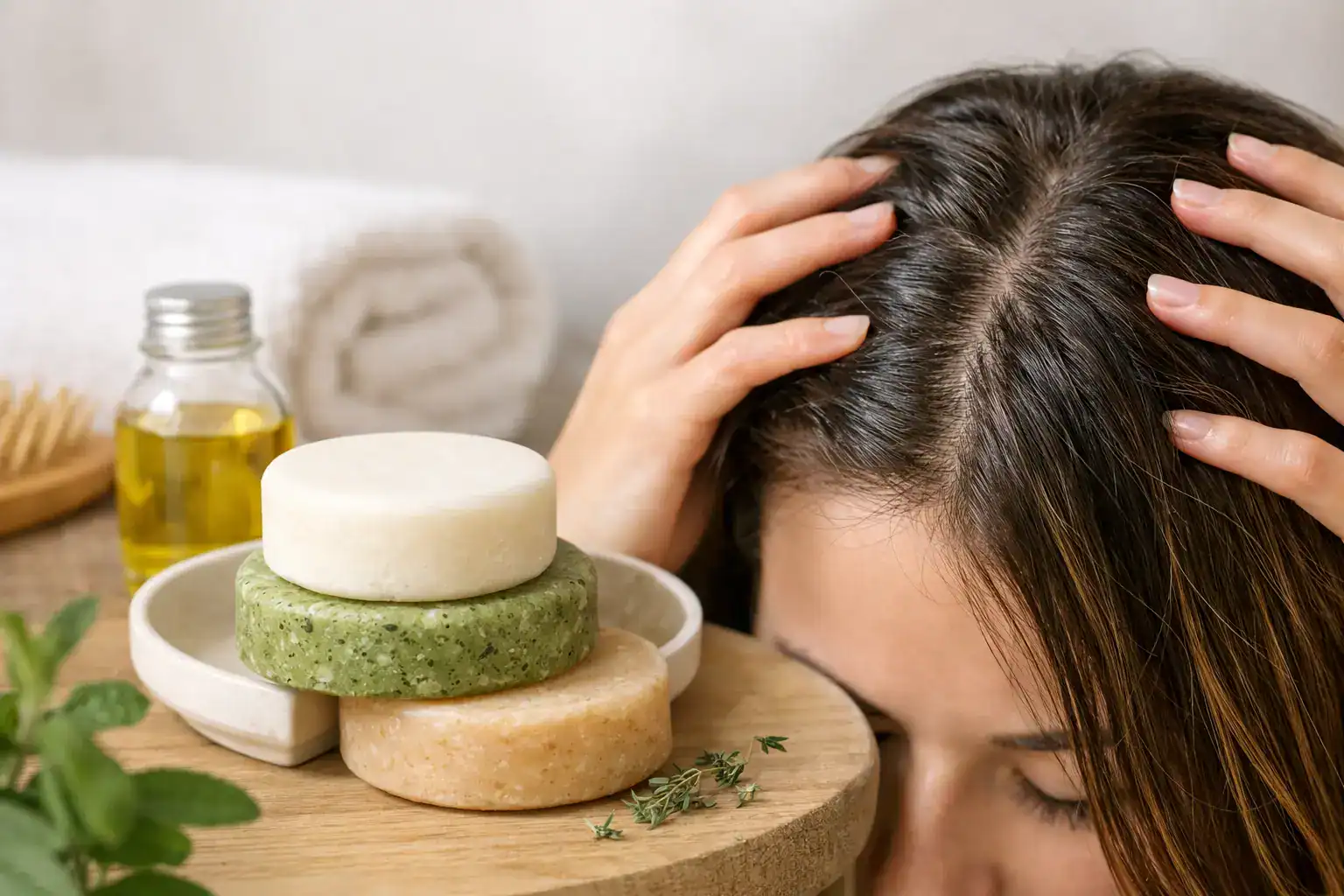
Can shampoo bars help oily roots? They can, but the bar itself is not a magic fix. What matters most is the formula, how thoroughly it rinses from your scalp, and whether your wash routine is accidentally leaving your roots stripped, coated, or both.
Oily roots can be frustrating, especially when the rest of your hair feels dry, textured, color-treated, or prone to breakage. You may wash in the morning and feel fresh for a few hours, only to see shine gathering at the crown by afternoon. A thoughtfully made shampoo bar can make wash day simpler and gentler, but oily hair needs balance rather than the harshest possible cleanse.
Why Roots Get Oily in the First Place
Your scalp produces sebum, a natural oil that helps protect skin and hair. It is not a sign that your hair is dirty or that you have done anything wrong. Some people simply make more sebum because of genetics, hormones, stress, warm weather, exercise, or a naturally fine hair texture that lets oil show quickly.
Routine can play a part, too. Heavy conditioners near the scalp, dry shampoo buildup, infrequent rinsing, and styling products can make roots look oily before they truly are. On the other hand, washing with a cleanser that is too aggressive may leave the scalp feeling tight and uncomfortable. Some scalps respond by becoming irritated or seeming even oilier as you try to wash away the problem more often.
The goal is not to remove every trace of your natural scalp oil. It is to clean away excess oil, sweat, and buildup while leaving your scalp comfortable and your lengths soft enough to manage.
How Shampoo Bars Can Help Oily Roots
A good shampoo bar is concentrated, easy to use, and free from the extra water found in many bottled shampoos. That does not automatically make every bar a good match for oily roots, but it can be a helpful option when the formula cleans effectively without relying on a heavy, residue-prone feel.
The best experience usually comes from using the bar where you need it most: at the scalp. Wet your hair completely, lather the bar in your hands or glide it lightly over the roots, then use your fingertips to work the lather across the scalp. Let the suds travel down the lengths as you rinse rather than repeatedly scrubbing the driest ends.
This approach gives oily roots the attention they need without roughing up the lower portion of the hair. It also helps a shampoo bar last longer, which is a practical benefit for families looking for a simple, low-waste hair care routine.
For many people with sensitive skin, a carefully formulated bar may also feel more comfortable than a strongly fragranced, detergent-heavy wash. At The Goats Field, our handcrafted approach begins with pure goat milk and gentle, thoughtfully chosen ingredients because everyday care should feel good for the whole family, not harsh or complicated.
The Formula Matters More Than the Format
Not all shampoo bars are alike. Some are made with gentle cleansing ingredients designed specifically for hair. Others are more soap-like in their makeup. Both can have a place, but they may perform differently depending on your water, hair texture, and scalp needs.
If a bar leaves your roots clean but your hair feels waxy, dull, stiff, or difficult to comb, it may not be rinsing cleanly in your water. Hard water can react with some soap-based formulas and leave behind a film that feels like buildup. That film can make hair look flat at the roots, even after washing.
Look for a bar with a straightforward ingredient list and a cleansing level that suits your routine. If your scalp is sensitive, avoid assuming that a strong essential-oil scent equals a deeper clean. Natural fragrance can be lovely, but more is not always better for easily irritated skin.
A moisturizing ingredient such as goat milk can be especially welcome for hair that has oily roots and dry ends. The trade-off is that you still need to rinse very well. Nourishing ingredients should support softness, not leave a coating behind at the crown.
Signs Your Shampoo Bar Is a Good Match
You do not need a complicated test to know whether a bar is working. After a few washes, your scalp should feel clean and comfortable, not squeaky, tight, itchy, or greasy again immediately. Your roots should have some lift, and your lengths should feel manageable once dry.
It is normal for hair to need a little time when you change products, especially if you have been using silicones, dry shampoo, or heavy styling creams. Still, do not force a product that clearly leaves buildup or irritation. Gentle care should not require you to tolerate an unhappy scalp.
How to Wash Oily Roots With a Shampoo Bar
Start with fully soaked hair. This is more important than it sounds because water helps distribute the lather evenly and keeps you from using too much product. Focus the bar and your fingertips on the scalp, particularly around the hairline, crown, and behind the ears, where oil and product often collect.
Massage with the pads of your fingers, not your nails. A firm but gentle massage loosens oil, sweat, and buildup without scratching sensitive skin. Then rinse longer than you think you need to. Thick hair, curly hair, and long hair can hold onto lather near the roots, so lift sections and let water reach the scalp.
If you use conditioner, keep it mainly from the mid-lengths to the ends. This one change can make a noticeable difference for people whose roots become oily quickly. Fine hair may need only a small amount, while dry, curly, or chemically treated ends may need more moisture. Your scalp and ends are allowed to need different things.
Adjust Your Routine Before Washing More Often
A shampoo bar may help oily roots, but it works best alongside a few sensible habits. Clean your brushes regularly, since they collect oil and styling residue that can transfer back to freshly washed hair. Rinse out conditioner thoroughly, and be mindful of leave-in creams or oils near the scalp.
Try not to constantly touch or brush your hair throughout the day. Hands naturally carry oil, and frequent brushing can spread scalp oil through fine strands. If you use dry shampoo between washes, give your scalp a thorough cleanse when you do wash. Layering dry shampoo day after day can leave roots feeling heavy and less responsive to any cleanser.
When a Shampoo Bar May Not Be Enough
Sometimes oily roots are tied to scalp concerns that need more than a change in shampoo. Persistent itching, flakes that are oily or yellowish, redness, soreness, sudden major changes in oil production, or noticeable hair shedding are good reasons to check in with a dermatologist. These symptoms can be related to conditions such as dandruff or seborrheic dermatitis, which may call for targeted treatment.
You may also need a different wash schedule. Some people do best washing every day or every other day, particularly if they exercise often or have very fine hair. Others find that two or three washes per week is plenty. There is no prize for stretching washes if your scalp feels uncomfortable, and there is no shame in washing more often with a gentle cleanser that agrees with you.
The kindest routine is the one that leaves your scalp calm, your roots fresh, and your hair feeling like itself. Give a new shampoo bar a fair try, pay attention to how your scalp responds, and let comfort guide the next wash day.