If you're constantly dealing with redness, itching, and general irritation, you know that finding the right cleanser is everything. For so many people, goat milk soap for sensitive skin has been a total turning point. It cleans your skin without stripping away its essential moisture. Its real power comes from its natural ingredients, offering deep hydration and a skin-friendly pH that supports your delicate skin barrier, rather than attacking it.
Why Goat Milk Soap Is a Game Changer for Sensitive Skin
Does finding a cleanser feel like a constant battle against dryness and discomfort? You're definitely not alone. Most commercial soaps are packed with harsh detergents and synthetic fragrances that throw your skin's natural balance completely out of whack, leading to flare-ups. This is where goat milk soap really shines. Instead of working against your skin, it works in harmony with it.
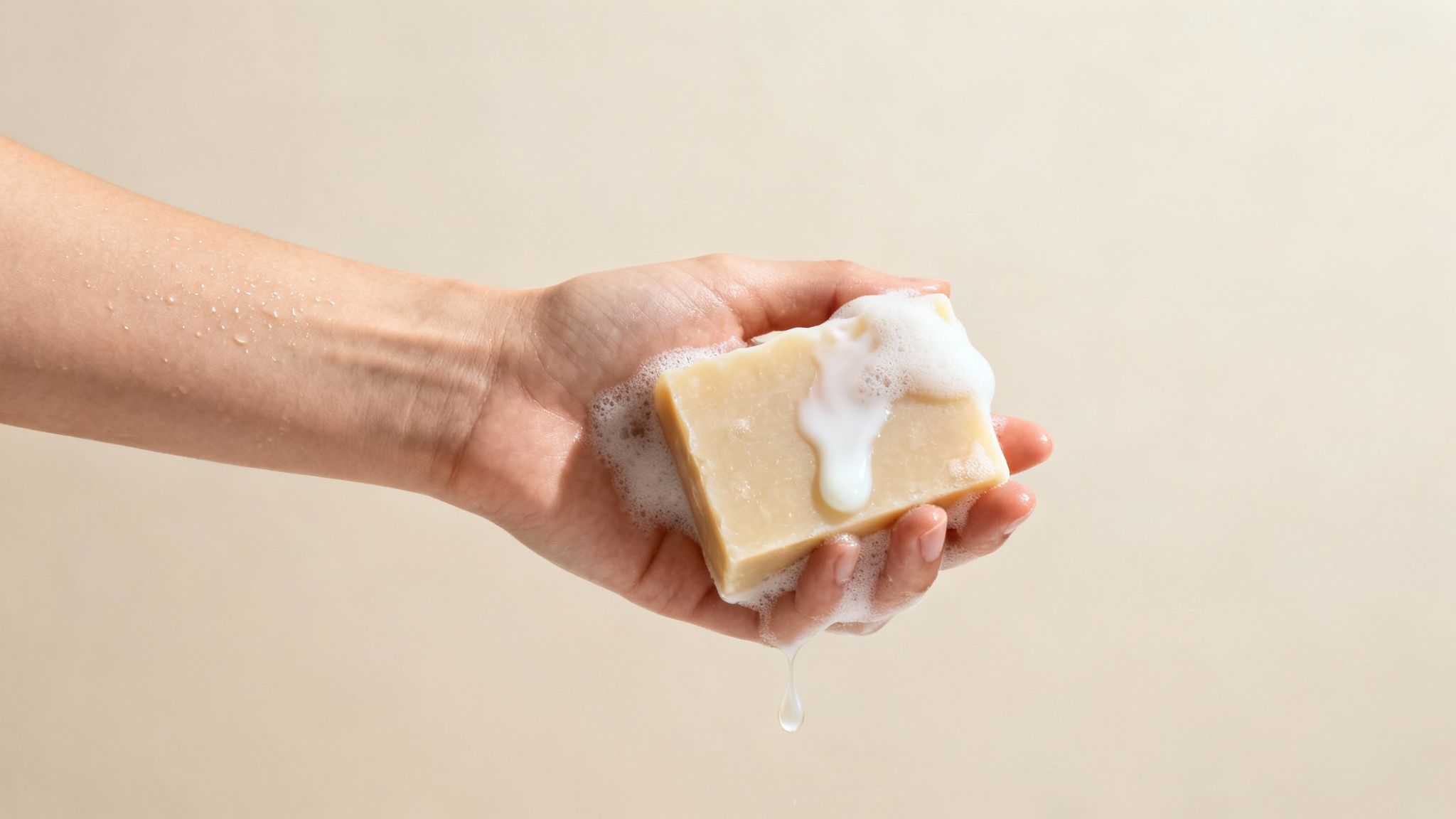
Think of your skin's moisture barrier like a brick wall. The "mortar" holding it all together is made of natural fats and oils. Harsh soaps can dissolve that mortar, leaving your skin exposed and vulnerable. Goat milk soap, packed with fatty acids, helps rebuild and reinforce that mortar, keeping precious hydration in and nasty irritants out.
Sometimes, just swapping your usual commercial bar for a nourishing goat milk soap is the first real step toward calmer, healthier-looking skin.
The Gentle Cleansing Difference
The secret to goat milk soap's magic isn't complicated—it's just a simple, powerful formula. It gives you a gentle clean while actively delivering nutrients your skin desperately needs.
- Deep Moisturization: Goat milk is loaded with fatty acids. These help replenish the lipids in your skin, which means less tightness and flakiness for you.
- Maintains Natural Oils: Unlike those harsh soaps that leave your skin feeling squeaky clean but totally stripped, goat milk soap cleanses without getting rid of the protective oils your skin needs to stay healthy.
- Skin-Friendly pH: Goat milk has a pH level that’s incredibly close to our own skin. This helps maintain the skin's natural acid mantle, which is your first line of defense against bacteria and other environmental stressors.
This winning combination is exactly why so many people with conditions like eczema, psoriasis, and general sensitivity finally find lasting relief.
By nourishing the skin's barrier and calming inflammation, goat milk soap doesn't just clean the skin—it actively participates in its healing and protection, making it an ideal choice for daily care.
A Clear Comparison for Sensitive Skin
Seeing the differences between goat milk soap and the typical bars on the shelf side-by-side really brings home why it’s a better choice for reactive skin. A quick look at their core features shows just how differently they treat your skin's delicate ecosystem.
Goat Milk Soap vs Commercial Soap A Comparison for Sensitive Skin
See the key differences in how each type of soap impacts the health of your sensitive skin barrier.
| Feature | Goat Milk Soap | Typical Commercial Soap |
|---|---|---|
| Cleansing Agent | Natural fats and oils | Synthetic detergents (Sulfates) |
| Moisture Effect | Hydrates and nourishes | Often strips natural oils, causing dryness |
| pH Level | Close to skin's natural pH | Highly alkaline, disrupting the skin barrier |
| Key Ingredients | Vitamins, fatty acids, lactic acid | Synthetic fragrances, dyes, preservatives |
The takeaway is pretty clear. While one is designed to work with your skin, the other often works against it. For anyone with sensitive skin, choosing a cleanser that supports your skin's natural function is the most important step you can take.
The Science Behind Goat Milk's Soothing Power
Ever wonder what makes goat milk soap for sensitive skin so incredibly effective? It isn’t some marketing gimmick or magic trick. The secret is pure, simple science—a unique blend of natural compounds that work in perfect harmony with your skin’s own biology.
Unlike commercial, water-based soaps that often strip your skin, leaving it tight and irritated, goat milk provides a rich, creamy base loaded with good stuff. It doesn’t just clean; it actively nourishes. That fundamental difference is what helps calm down angry skin and bring it back into balance.
The Power Trio: Fatty Acids, Vitamins, and Lactic Acid
Think of goat milk as having a dedicated support team for your skin barrier. Three key players work together, each with a distinct job that complements the others to keep your skin healthy and resilient.
- Fatty Acids for Barrier Repair: Goat milk is brimming with capric, caprylic, and caproic acids. These aren't just your average moisturizers; they are the literal building blocks of your skin's protective barrier. Imagine your skin cells are bricks—these fatty acids are the mortar holding everything together, sealing in moisture and locking out irritants like allergens and pollution.
- Vitamins for Cellular Health: It’s also loaded with skin-friendly vitamins, especially Vitamin A. This nutrient is basically a natural form of retinol, famous for encouraging healthy skin cell turnover. It helps your skin shed those dull, dead cells and replace them with fresh, healthy ones, giving you a smoother complexion without the harshness of synthetic retinoids.
- Lactic Acid for Gentle Exfoliation: Goat milk naturally contains lactic acid, a super-gentle alpha-hydroxy acid (AHA). Forget those harsh scrubs that can cause micro-tears in your skin. Lactic acid works by simply dissolving the "glue" that holds dead skin cells to the surface. This reveals softer, brighter skin underneath and even helps your skin absorb moisturizers better—all without causing redness.
This powerhouse combination of barrier repair, cell renewal, and gentle exfoliation is precisely why goat milk soap is such a complete solution for troubled skin.
Why Its pH Level Is So Important
One of the biggest scientific wins for goat milk is its pH level. It clocks in remarkably close to the natural pH of human skin, which is typically around 5.5. Why does this matter so much? Because that compatibility is everything for skin health.
Many mass-produced soaps are highly alkaline, which can completely throw off your skin's acid mantle. This acid mantle is a very thin, protective film on your skin's surface—your first line of defense against bad bacteria and environmental junk.
When harsh, alkaline products disrupt this barrier, it can trigger a whole host of problems: dryness, tightness, redness, and a sudden spike in sensitivity. Goat milk soap helps keep that delicate balance intact, cleaning your skin thoroughly without stripping away its natural defenses.
This scientific alignment helps ensure your skin stays calm, happy, and better equipped to do its job.
Growing Recognition and Supporting Evidence
The incredible benefits of goat milk soap aren't just a well-kept secret anymore; they're gaining some serious recognition. You can see it in online trends—Google searches for "goat milk soap" have nearly doubled since 2018 as more people look for gentle, effective solutions.
While formal scientific studies are still catching up, the existing evidence points to goat milk's anti-inflammatory, antibacterial, and moisturizing properties, making it a promising option for managing conditions like atopic dermatitis. You can discover more insights from research into goat milk's dermatological benefits.
This growing buzz reflects a wider shift toward natural solutions backed by solid science. For anyone wrestling with reactive skin, knowing the "why" behind goat milk soap provides the confidence that its soothing power is real, rooted in its very makeup, and a smart choice for daily care.
How To Read Labels And Choose The Right Soap
Jumping into the world of natural skincare can feel like a lot, especially when you realize not all "goat milk soaps" are created equal. The real secret to finding a bar that truly soothes and works for you is hiding in plain sight: the ingredient list. Learning to read these labels is the single best skill you can have to make sure the goat milk soap for sensitive skin you pick is the real deal.
It’s just like shopping for healthy food. You wouldn't grab a snack labeled "all-natural" if the first ingredients were sugar and a bunch of chemicals you can't pronounce, right? The same logic applies here. A top-notch soap will have a short, understandable ingredient list, while others might tuck harsh irritants behind their "natural" marketing.
Spotting The Good Stuff
True nourishment comes from simple, wholesome ingredients. When you're scanning a label, these are the "green flags" that signal a high-quality product made with sensitive skin in mind. The foundation you want to see is saponified oils—this just means the oils have gone through the natural soap-making process with lye.
- Saponified Natural Oils: Look for ingredients like olive oil, coconut oil, and sustainable palm oil. These create a creamy, moisturizing lather that cleans your skin without stripping it bare.
- Nourishing Butters: Additions like shea butter and cocoa butter bring an extra layer of deep hydration, helping to repair and protect your skin's delicate barrier.
- Pure Essential Oils: If the soap has a scent, you want to see pure essential oils like lavender or chamomile, which are known for their calming properties, not synthetic fragrances.
- Beneficial Additives: Gentle extras like oatmeal, honey, and calendula are fantastic for soothing inflammation and easing irritation.
When a product leads with these kinds of ingredients, you can be pretty confident it was made to support your skin's health, not just get it clean.
This graphic breaks down the science behind what makes goat milk such a powerhouse for sensitive skin.
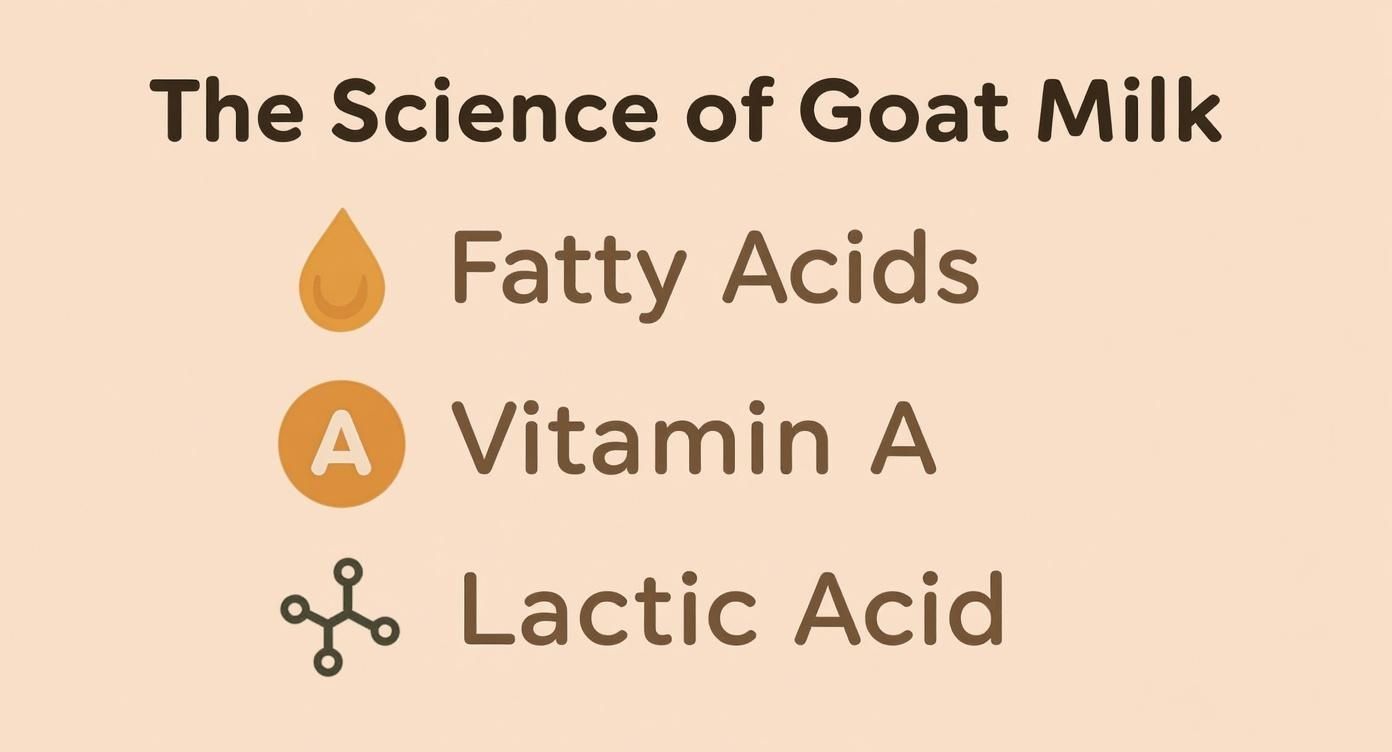
It really shows how those fatty acids, Vitamin A, and lactic acid all team up to repair, renew, and gently exfoliate the skin.
Recognizing The Red Flags To Avoid
Knowing what to look for is only half the battle. It's just as important to know what to steer clear of. Many common soap additives can completely cancel out the calming benefits of goat milk, leaving you with dryness, redness, and frustrating flare-ups. These are the "red flags" to watch out for.
A truly gentle soap is defined as much by what it leaves out as by what it puts in. For a healthy skin barrier, avoiding harsh chemicals isn't just a good idea—it's non-negotiable.
So many of these ingredients are thrown into commercial soaps to create a huge, bubbly lather or make the bar last longer, but they often do more harm than good for your skin.
- Synthetic Fragrances: Often listed simply as "fragrance" or "parfum," these are complex chemical cocktails and are one of the biggest culprits behind skin allergies and irritation.
- Sulfates (SLS/SLES): Sodium lauryl sulfate and sodium laureth sulfate are aggressive detergents. They make a ton of foam but also strip your skin of its essential, protective oils.
- Parabens: Used as preservatives, these are known skin irritants and can potentially disrupt hormonal balance.
- Harsh Preservatives: Keep an eye out for chemicals like formaldehyde-releasers, which can trigger allergic reactions in sensitive people.
To help you feel more confident at a glance, here’s a quick checklist for your next soap purchase.
Sensitive Skin Soap Ingredient Checklist
| Ingredient Category | Green Flags (Look For) | Red Flags (Avoid) |
|---|---|---|
| Cleansing Base | Saponified oils (olive, coconut, palm), natural butters (shea, cocoa) | Sulfates (SLS, SLES), synthetic detergents |
| Scent | Pure essential oils (lavender, chamomile), unscented/fragrance-free | "Fragrance," "Parfum," "Perfume" |
| Preservatives | Vitamin E (Tocopherol), Rosemary extract | Parabens, Formaldehyde-releasers |
| Additives | Oatmeal, honey, calendula, clay | Artificial colorants (e.g., FD&C dyes) |
Ultimately, choosing the right goat milk soap is about taking back control. Once you know how to read the label, you can see past the marketing hype and focus on what's actually in the bar. It's a simple skill that empowers you to give your sensitive skin the pure, gentle care it deserves, so it can finally heal and feel good. At The Goats Field, we believe in a transparent, simple ingredient list you can always trust.
Integrating Goat Milk Soap Into Your Routine
Making the switch to a natural soap is a brilliant first step, but how you use it is what really unlocks its potential. To get the absolute best results from your goat milk soap for sensitive skin, the key is building a gentle routine that supports your skin barrier from beginning to end. It's a mindful approach that ensures you're soaking up all those soothing, hydrating benefits.
A few simple tweaks to your daily cleansing ritual can make all the difference. This isn't just about what you're using, but how you're using it. The goal is to clean your skin effectively while protecting its delicate balance, stopping irritation in its tracks.
Start with a Simple Patch Test
Even with the most natural products on earth, a patch test is a non-negotiable step for anyone with sensitive skin. Think of it as a quick meet-and-greet between the soap and your skin, making sure they’ll get along before you go all in.
Here’s how to do it:
- Work up a small amount of lather and apply it to a discreet spot, like your inner wrist or the area behind your ear.
- Let it sit for a few minutes before rinsing it off completely.
- Now, just wait at least 24 hours and keep an eye out for any signs of redness, itchiness, or irritation.
If your skin is still happy and calm, you're good to go. This one-minute step can save you days of dealing with a potential reaction.
Master Your Cleansing Technique
Once you've confirmed the soap is a good match, it's time to refine your washing method. The right technique is crucial because it prevents you from accidentally stripping away your skin's natural oils—the very thing that keeps your skin barrier healthy and strong.
A gentle approach to cleansing does more than just prevent immediate irritation. It teaches your skin that it doesn't need to overproduce oil or become inflamed to protect itself, leading to a more balanced and resilient complexion over time.
Focus on these three simple but powerful practices:
- Use Lukewarm Water: Super hot water feels nice, but it's a known culprit for stripping away protective sebum, leaving your skin feeling tight and exposed. Always stick to lukewarm water to cleanse gently without causing dryness.
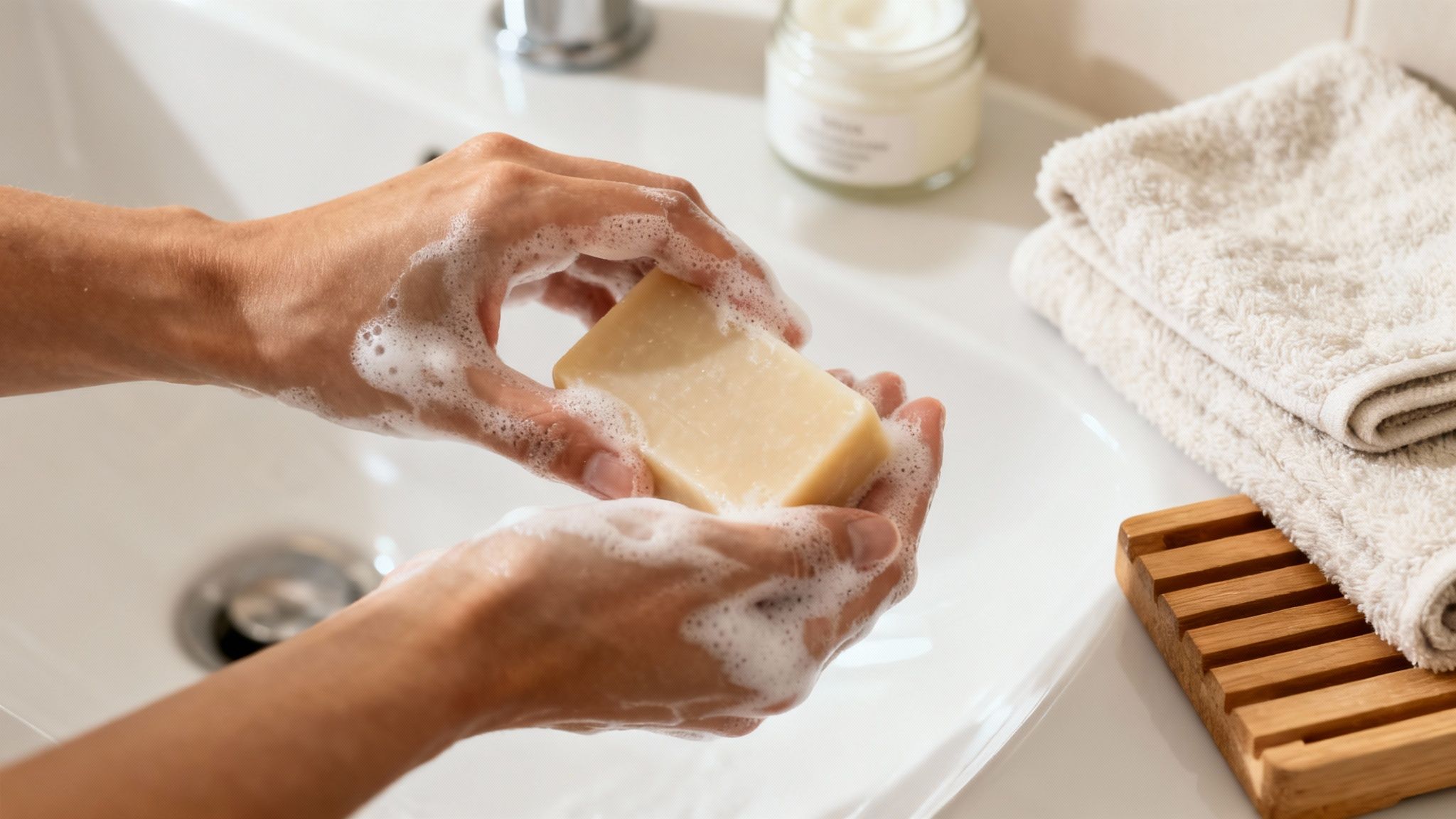
- Lather in Your Hands: Instead of rubbing the bar directly on your skin, create a rich, creamy lather between your palms first. This approach is far less abrasive and ensures you get an even, gentle application every time.
- Massage, Don't Scrub: Use just your fingertips to gently massage the lather onto your skin in slow, circular motions. This cleanses perfectly without the harsh friction that can trigger redness and sensitivity.
Perfect Your Post-Wash Care
What you do right after you rinse is just as important as the wash itself. Your skin is most receptive to hydration in the moments after cleansing, making it the perfect window to lock in moisture and fortify that precious skin barrier.
First, gently pat your skin dry with a soft, clean towel—and never, ever rub. Rubbing creates unnecessary friction and stress on delicate skin.
While your skin is still a little damp, immediately apply your favorite moisturizer. This simple action seals in the hydration from your wash, maximizing the soothing effects of the goat milk soap and keeping your skin feeling soft and comfortable all day long.
And remember, a truly holistic routine for sensitive skin goes beyond just your soap and lotion. It’s also worth looking at other things that come in contact with your skin daily. For instance, switching to sensitive skin-friendly laundry detergents can make a big difference, since your clothes and towels are against your skin 24/7.
The Growing Movement Toward Natural Skincare
The buzz around goat milk soap isn't just a fleeting fad—it’s a powerful signal of a much bigger shift in how we think about skincare. People are consciously moving away from complicated, chemical-laden products, instead searching for solutions that are gentle, effective, and transparent.
This movement is all about a desire for ingredients we can actually understand and trust, especially as skin sensitivities seem to be on the rise. If you've ever found yourself squinting at an ingredient label packed with unpronounceable chemicals, you're not alone. You're part of a growing community choosing nature-first options, which has helped bring products like goat milk soap for sensitive skin out of the niche farmers-market scene and into the spotlight.
The Driving Force Behind Natural Choices
So, what’s really fueling this change? A huge factor is the increasing prevalence of skin conditions like eczema, psoriasis, and just general sensitivity. People are simply fed up with cleansers that promise the world but only deliver more irritation. They're actively seeking alternatives that work with their skin, not against it.
This shift is about more than just dodging "bad" ingredients; it's about actively seeking out "good" ones that nourish and support the skin’s delicate barrier. The philosophy is refreshingly simple: if an ingredient comes from nature and has a long history of being kind to skin, it's probably a better bet for long-term health.
Consumers are no longer just buying a product; they are investing in a philosophy of wellness and transparency. This means seeking out brands that are honest about their sourcing, use minimal ingredients, and prioritize skin health over synthetic performance.
This thoughtful approach often goes beyond just the soap dish. It's a holistic view of gentle living, where people also consider the fabrics touching their skin all day, leading them to explore things like natural fiber clothing or even luxury bamboo bedding designed for sensitive skin.
Market Growth Confirms the Trend
This isn't just a feeling; the numbers back it up. The demand for gentle, natural products has lit a fire under the skincare market, with goat milk cosmetics right at the forefront.
The global goat milk cosmetics market was valued at an impressive USD 4.03 billion in 2023. And it's not slowing down. Projections show it’s on track to hit USD 7.51 billion by 2031, growing at a healthy clip of 8.3% each year. This isn't a temporary spike—it's a lasting change in what people want for their skin. You can learn more about the goat milk cosmetics market growth and what’s driving it.
Why This Matters for Your Skincare Journey
Knowing you're part of this larger movement is incredibly validating. It confirms that your decision to find a gentler, more natural solution like goat milk soap is a smart one—an idea shared by millions of others. It also means that brands like The Goats Field are more committed than ever to creating pure, effective products that meet this growing need.
By choosing a simple, farm-sourced soap, you're doing more than just washing your face and body. You are taking part in a conscious shift toward products that are kinder to your skin and, often, to the planet. It’s a movement that celebrates nature’s incredible ability to give our skin everything it truly needs to be healthy, calm, and resilient.
Common Questions About Goat Milk Soap
Switching to a natural soap, especially for sensitive skin, usually brings up a few questions. We get it. You want to feel completely confident in your choice. This section tackles the most common concerns about using goat milk soap for sensitive skin, giving you clear, straightforward answers.
We'll cover everything from potential allergies to how long it might take to see those calming results you’re looking for. Getting the facts first helps you build your new routine with total peace of mind.
Can I Use Goat Milk Soap If I Have a Dairy Allergy?
This is an important question, and we're glad you asked. A true dairy allergy is an immune system response to milk proteins like casein. Because goat milk soap contains these proteins, anyone with a known, severe milk protein allergy should be extremely careful.
It's helpful to know this is different from lactose intolerance, which is a digestive issue related to milk sugar and doesn't typically cause a skin reaction from soap.
For your safety, a patch test is non-negotiable.
- Lather up a small amount of soap and apply it to a discreet patch of skin, like your inner elbow or behind your ear.
- Wait for 24-48 hours and watch for any signs of redness, itching, or irritation.
- If you have a history of severe allergic reactions (anaphylaxis) to dairy, we strongly recommend talking to your allergist or dermatologist before trying it at all.
Your well-being is always the top priority. This simple precaution is the smartest first step.
Will It Help My Eczema or Psoriasis?
Many people with eczema and psoriasis tell us they feel significant relief after switching to goat milk soap. Its natural anti-inflammatory properties can help calm the redness and itching that come with a flare-up. At the same time, its rich fatty acids get to work repairing the compromised skin barrier common with these conditions.
The soap cleanses gently without stripping away the protective oils your skin desperately needs. This helps break the frustrating cycle of dryness and irritation that often makes eczema and psoriasis worse.
It's best to think of goat milk soap as a powerful ally in your skincare routine, not a medical cure. It helps create a healthier, more resilient skin environment, which can reduce the frequency and severity of flare-ups. But it should always be used alongside any treatments prescribed by your doctor.
Think of it as building the best possible foundation for your skin to finally heal and feel comfortable.
How Long Until I See Results?
When starting any new skincare routine, patience and consistency are your two best friends. You’ll probably notice some immediate perks after your very first wash—like your skin feeling softer and less tight. But the deeper, more lasting changes take a bit more time.
Your skin naturally renews itself in a cycle that takes about 28 days. To see a real shift, like a visible reduction in redness or a stronger, less reactive skin barrier, you should plan on using the soap consistently for at least 2 to 4 weeks.
This gives the nourishing ingredients enough time to do their job, calming inflammation and rebuilding your skin's defenses from the ground up. The initial feeling of comfort is great, but the real reward comes with dedicated, daily use.
Is Goat Milk Soap pH-Balanced for Skin?
Yes, and this is one of its biggest wins for sensitive skin. The pH of goat milk is remarkably close to the healthy pH of human skin, which sits around 5.5. This natural harmony is a game-changer for keeping your skin happy.
Many commercial soaps are highly alkaline, meaning they have a high pH. Using them can throw your skin's acid mantle out of whack. That’s the thin, protective film on the surface that defends against bacteria, irritants, and other environmental stressors.
When that barrier is broken, skin becomes dry, irritated, and much more likely to have a flare-up.
Because goat milk soap works with your skin's natural pH, it cleanses effectively without stripping away this crucial protective layer. This fundamental difference is why it helps keep sensitive skin calm and balanced instead of leaving it feeling exposed and vulnerable. It simply respects your skin's biology.
Are you ready to give your sensitive skin the gentle, nourishing care it deserves? At The Goats Field, we craft our soaps in small batches using fresh milk from our own goats and simple, clean ingredients you can trust.
Discover the difference of farm-fresh skincare and find your perfect soap today at thegoatsfield.com