
Using oatmeal to exfoliate is a wonderfully gentle way to get rid of dead skin cells. It leaves you with a brighter complexion but skips the harshness you often find with chemical alternatives. The natural compounds in oatmeal manage to cleanse, hydrate, and soothe all at once, which is why it’s a go-to for almost every skin type, especially sensitive and eczema-prone skin. It’s amazing how this simple pantry staple can become such a powerful skincare treatment with just a bit of know-how.
Why Oatmeal Is Your Skin's Best Friend
Long before it was a breakfast bowl staple, oatmeal was a trusted skincare secret. And it's not just folklore—modern science actually backs up why this humble grain works so well. Unlike those aggressive scrubs that can create tiny tears and leave your skin angry, exfoliating with oatmeal is a soft touch that respects your skin's delicate barrier.
The real magic is in its unique makeup. Oatmeal is packed with compounds that cleanse, calm, and moisturize your skin at the same time. This multitasking ability is what really makes it stand out from so many other exfoliants on the market that only do one thing.
The Gentle Cleansing Power of Saponins
One of oatmeal’s best-kept secrets is its natural saponins. Just think of saponins as Mother Nature’s soap. When you mix them with water, they create a mild lather that gently lifts away dirt, extra oil, and other impurities sitting on your skin.
This cleansing action is incredibly subtle but very effective. It gets rid of the daily grime without stripping your skin of its essential moisture—a problem you’ve probably run into with synthetic cleansers or harsh scrubs. This step perfectly preps your skin to buff away any dullness.
Deep Hydration from Beta-Glucans
While the saponins are busy cleansing, another key player gets to work on hydration: beta-glucan. This is a type of soluble fiber found in oat cell walls, and it does remarkable things for your skin.
When you put it on your skin, beta-glucan does two critical jobs:
- Deep Moisturization: It can actually get through the outer layers of your skin to deliver moisture where it’s needed most.
- Barrier Support: It also forms a super-fine, protective film on your skin's surface. This helps lock in all that good hydration and defend against environmental stress.
This double-duty effect means that while you’re exfoliating, you're also deeply conditioning and calming your skin. You get to skip the redness or that tight, dry feeling that so often comes after a good scrub.
If you have easily irritated skin, this is a huge win. Instead of feeling stripped and raw, your skin feels soft, supple, and comfortable after an oatmeal scrub.
A History of Soothing Skin
Using oatmeal for skincare is anything but a new trend; its therapeutic properties have been trusted for centuries. The practice actually dates all the way back to ancient Egypt around 2000 BC, where whole oats were used in baths to soothe all sorts of skin issues.
A major step forward came in 1945 with the arrival of commercial colloidal oatmeal, a very finely milled oat powder. Its power was officially recognized when the U.S. Food and Drug Administration (FDA) approved colloidal oatmeal as a skin protectant in 2003, confirming its ability to relieve minor irritations and itching. You can read more about oatmeal's history and FDA recognition in skincare if you're curious. This long history, backed by modern science, is exactly why exfoliating with oatmeal remains a trusted method for getting healthy, radiant skin.
Crafting Your Own Oatmeal Skincare Treatments
There's something incredibly satisfying about making your own skincare. You get to control exactly what touches your skin, swapping out harsh chemicals for fresh, natural ingredients straight from your pantry. When you start exfoliating with oatmeal, you become the artisan, blending simple staples into treatments that are both effective and deeply soothing.
The real magic of homemade scrubs is in their simplicity and power. In just a few minutes, you can whip up a potent treatment where every single component has a purpose—from the gentle buffing action of the oats to the nourishing touch of other natural goodies. This is your chance to really listen to your skin and give it exactly what it’s asking for.
Understanding the Key Ingredients
Before we dive into the recipes, let’s talk about the “why” behind each ingredient. This isn’t just a random mix; it’s a thoughtfully combined trio designed to work in harmony.
- Oatmeal: The hero of our recipes, oatmeal offers a soft, physical exfoliation. Its texture is perfect for sloughing away dead skin cells without creating the micro-tears that some aggressive store-bought scrubs can cause.
- Honey: A true gift from nature, honey is a natural humectant, which means it actively pulls moisture into the skin. It's also famous for its antibacterial properties, making it a fantastic ally for calming down blemish-prone or irritated skin.
- Goat Milk: This is our secret to a creamy, luxurious base. Goat milk is brimming with fatty acids and lactic acid, which gently soften and hydrate the skin while reducing inflammation and redness.
This powerhouse team creates a foundation for both face and body scrubs that delivers results you can see and feel. You'll find that this combination leaves skin feeling polished and pampered, never punished.
This simple chart helps show how oatmeal's main job can change depending on what your skin needs on any given day.
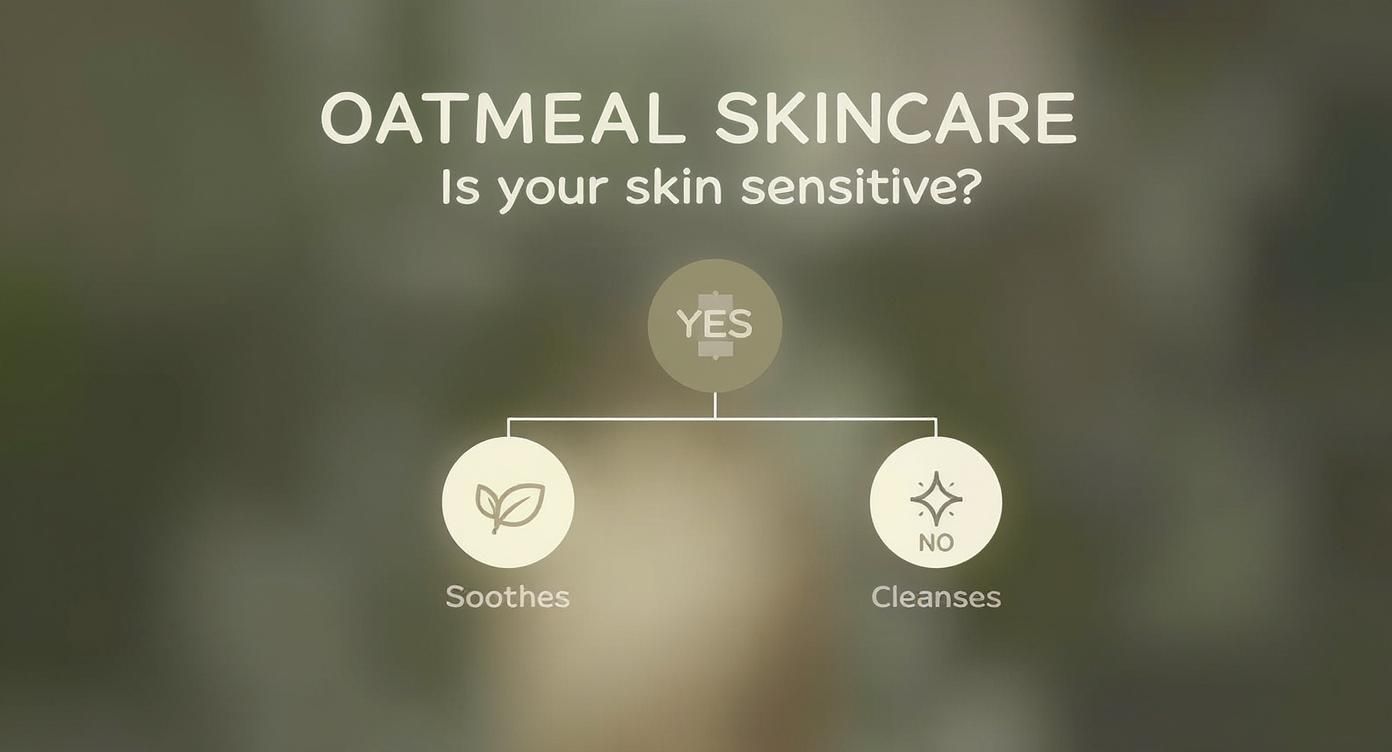
As you can see, while oatmeal is a brilliant cleanser for everyone, its real strength for sensitive complexions is its incredible ability to soothe and calm.
Calming Oatmeal and Honey Facial Polish
The skin on your face is far more delicate than the skin on your body, so it needs a much gentler approach. For this facial polish, colloidal oatmeal is your best friend. Its super-fine, powder-like texture gives you all the benefits without any risk of irritation.
Here’s how to mix up your calming facial polish:
- Build Your Base: In a small bowl, mix two tablespoons of colloidal oatmeal with one tablespoon of raw honey. The thick, sticky nature of the honey will help everything bind together beautifully.
- Add Liquid Slowly: Now, gently stir in one to two tablespoons of goat milk. The trick is to add it bit by bit until you have a smooth, spreadable paste. You're aiming for a consistency that's not too thick but won't drip down your face.
- Give It a Minute: Let the mixture sit for about a minute. This gives the oatmeal a chance to absorb the liquid, creating that perfect, creamy texture you want for an easy application.
This polish is designed to take the edge off redness and gently buff away dullness, revealing a brighter, more even complexion. It’s a wonderful weekly reset for skin that's feeling a bit stressed out.
Pro Tip: Don't have colloidal oatmeal on hand? No problem. You can make your own by blitzing regular rolled oats in a clean coffee grinder or blender. Just keep going until it becomes a fine, soft powder. Getting the texture right is the key to a safe and effective facial scrub.
Nourishing Oatmeal and Brown Sugar Body Scrub
When it comes to your body—especially rough spots like elbows, knees, and heels—you can use an exfoliant with a bit more oomph. For this, good old-fashioned rolled oats work perfectly, providing a more substantial texture to effectively smooth things over.
Follow these simple steps for a truly luxurious body scrub:
- Mix the Dry Stuff: In a medium bowl, combine half a cup of rolled oats with a quarter cup of brown sugar. The sugar crystals will team up with the oats for a fantastic dual-action exfoliation.
- Bring It All Together: Add two tablespoons of honey and about a quarter cup of goat milk to your dry mix. Stir it all up until you have a thick, scoopable scrub.
- Boost the Hydration: For an extra dose of moisture, feel free to add a tablespoon of a skin-loving oil like coconut or almond oil. This final touch will leave your skin feeling exceptionally soft long after you've stepped out of the shower.
This scrub is ideal for using in the shower. The warm water helps soften your skin, making it easier for the oatmeal and sugar to do their job of sloughing off dead cells and revealing smooth, glowing skin underneath.
Ready to take your DIY skills to the next level? You can easily customize these recipes with other skin-loving ingredients.
Oatmeal Exfoliant Customization Guide
Tailor your DIY oatmeal scrub or mask to your specific skin needs by adding these beneficial ingredients.
| Ingredient | Best For Skin Type | Benefit |
|---|---|---|
| Yogurt | Oily, Acne-Prone | Contains probiotics and lactic acid to help clarify and balance skin. |
| Mashed Avocado | Dry, Mature | Rich in fatty acids and vitamins E and C for deep hydration. |
| Turmeric Powder | Dull, Uneven Tone | Has anti-inflammatory and brightening properties for a healthy glow. |
| Green Tea | All Skin Types | Packed with antioxidants to protect skin from environmental stressors. |
| Almond Oil | Sensitive, Dry | A gentle, nourishing oil that softens and soothes irritation. |
Just a small amount of one of these additions can give your homemade treatment a targeted boost.
Proper Storage for Your Homemade Creations
Because these recipes are made with fresh, natural ingredients and contain no preservatives, they won't last forever. Storing them correctly is key to keeping them safe and effective.
For the facial polish, your best bet is to make a fresh batch for each use. If you happen to have a little leftover, pop it in an airtight container in the fridge for no more than 48 hours.
The body scrub can be stored in an airtight jar in a cool, dark place (like a bathroom cabinet) for up to one week. Just be sure to use a clean spoon each time you scoop it out to avoid introducing any bacteria. And whatever you do, don't let water get into the jar—that's a surefire way to encourage mold growth.
Mastering Your At-Home Exfoliation Technique
Having the perfect DIY oatmeal scrub is a great start, but the real secret to unlocking that healthy glow is all in your technique. How you apply the treatment is just as important as what’s in it. A gentle, mindful approach is the difference between helping your skin and causing it more stress.
Think of it like this: your skin is delicate fabric, not a countertop that needs a heavy-duty scrub. The goal is to gently persuade dead skin cells to lift away, not to aggressively sand them off. Nailing this technique for both your face and body will make your at-home spa sessions safer, more effective, and a whole lot more enjoyable.
Gentle Facial Exfoliation for a Radiant Complexion
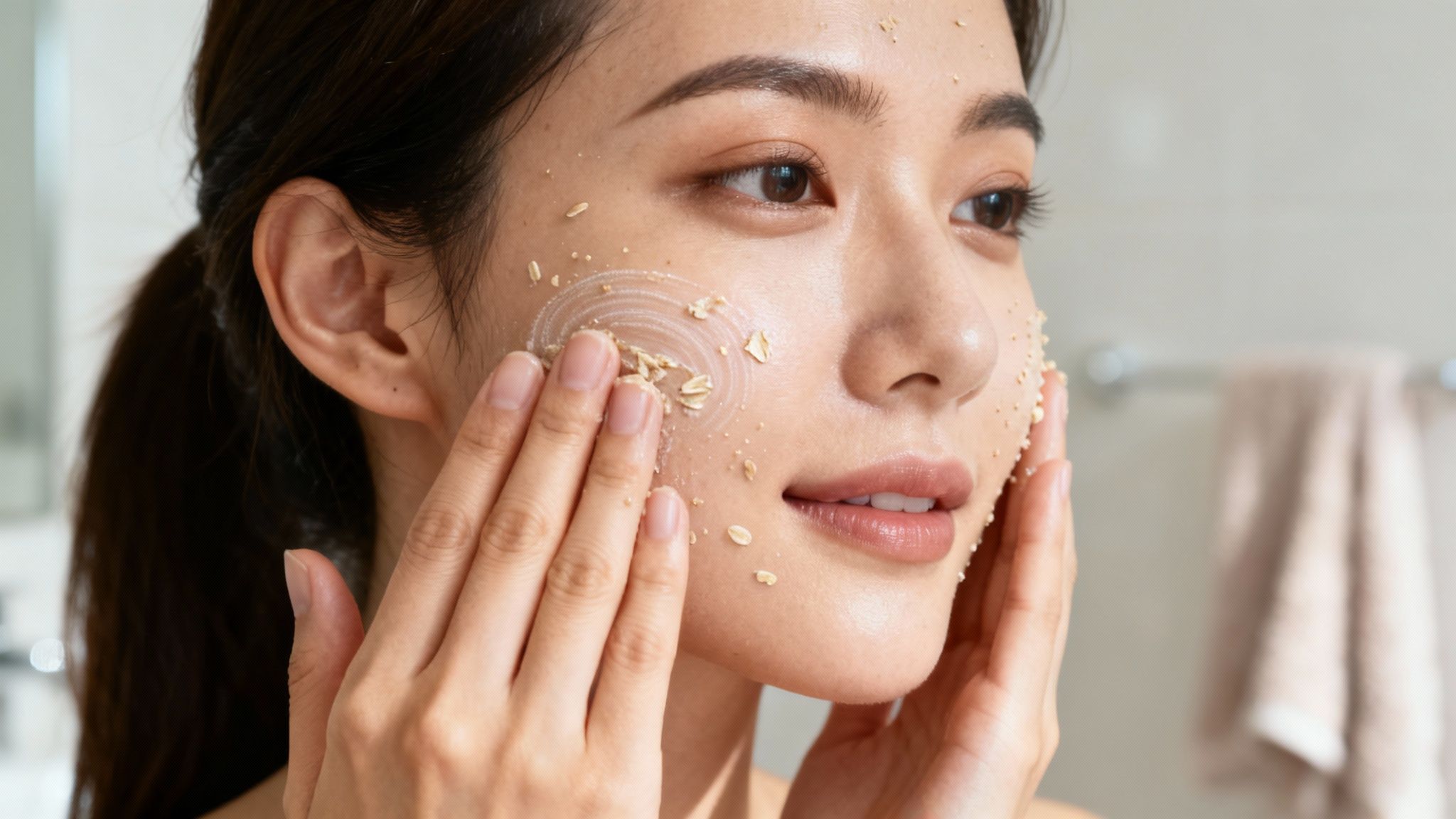
The skin on your face is much thinner and more sensitive than the rest of your body, especially around the eyes. This delicate area demands a feather-light touch to prevent irritation, redness, or damage to your skin barrier. Your homemade oatmeal polish is perfectly suited for this, but your technique has to match its gentle nature.
Before you even think about applying the scrub, you need to start with a clean slate.
- Prep Your Skin: First, wash your face with a mild cleanser to remove any makeup, oil, or daily grime. This lets the oatmeal scrub get right to work on the dead skin cells without anything in the way.
- Dampen Your Face: Pat your skin lightly with a towel but leave it damp. Applying the scrub to damp skin helps it glide smoothly and cuts down on friction.
Now that your skin is prepped, scoop a small amount of the oatmeal polish onto your fingertips. I always recommend using your ring and middle fingers—they naturally have a lighter touch. Apply the scrub in small, upward circular motions. Imagine you're giving yourself a light massage, not scrubbing a pot.
Key Takeaway: Always use gentle, upward circles. This motion works against gravity and helps stimulate circulation without pulling or tugging at your skin. Give a little extra love to areas prone to congestion, like your nose and chin, but be super careful to avoid the fragile skin right around your eyes.
After about 30 to 60 seconds of this gentle massage, it’s time to rinse. Use lukewarm water—never hot, which can strip your skin of its natural oils. Rinse until no residue is left, then gently pat your face dry with a clean, soft towel.
Effective Body Exfoliation for Silky Smooth Skin
Your body can handle a bit more texture than your face, making it the perfect canvas for a more robust oatmeal scrub. This is your chance to really focus on those areas that tend to get rough or dry, like your elbows, knees, and heels. The right technique not only smooths the skin but also helps boost circulation for an all-over healthy glow.
The shower is the best place for body exfoliation. It’s way less messy, and the warm water and steam help soften your skin, making it more receptive to the scrub.
Best Practices for Body Polishing:
- Start from the Bottom Up: Begin applying the scrub at your feet and work your way up toward your heart using long, sweeping strokes. This method is thought to encourage lymphatic drainage and improve circulation.
- Focus on Rough Zones: When you get to your knees, elbows, and heels, switch to small, firm circular motions. These spots have thicker skin and can benefit from a little extra attention to buff away dryness.
- Be Gentle on Sensitive Spots: For more delicate areas like your chest, neck, and stomach, lighten your pressure and use the same gentle, circular motions you used on your face.
Once you've exfoliated your entire body, rinse off thoroughly with warm water. But don't stop there! The final step is what really locks in all that newfound smoothness.
Immediately after stepping out of the shower, while your skin is still a little damp, apply a rich moisturizer. Products with ingredients like goat milk are perfect here, as they provide deep hydration and soothe freshly exfoliated skin. Applying lotion to damp skin helps seal in moisture, leaving you feeling soft and hydrated for hours. Trust me, this simple post-exfoliation step makes a huge difference in maintaining that silky, polished feel.
A Gentle Approach for Sensitive and Eczema-Prone Skin
Exfoliating with oatmeal is known for being incredibly mild, but if your skin is highly reactive or you’re dealing with eczema, you have to be extra careful. The goal isn't just to get brighter skin; it's to do it without upsetting your delicate skin barrier. Success means learning to read your skin’s unique signals and respecting its boundaries.
Before you even think about putting a new scrub or mask on your face, there's one step that is absolutely non-negotiable: the patch test. This simple check can save you from a world of irritation by showing you how your skin will react on a tiny, hidden spot. Think of it as a crucial safety check, especially since sensitive skin can be unpredictable.
How to Perform an Effective Patch Test
Doing a patch test is easy, but doing it right gives you the most trustworthy results. You're basically looking for any red flags before committing to a full-face or body application.
Here’s a simple way to get it done:
- Pick a discreet spot: Choose a small patch of skin that’s out of sight, like the area behind your ear, your inner wrist, or inside your elbow.
- Apply a tiny amount: Dab just a little bit of the oatmeal mixture onto your chosen spot.
- Wait and watch: Let it sit for the recommended time (or just a few minutes if you're feeling extra cautious), then rinse. Now, the waiting game begins. Keep an eye on the area for at least 24 hours.
So, what are you watching for? Any signs of trouble—redness, itchiness, burning, or little bumps. If you see any of that, your skin is sending a clear message: this recipe isn't for you right now. If everything looks calm and clear, you’re good to go.
The Power of Colloidal Oatmeal for Reactive Skin
For anyone with eczema or serious sensitivity, not all oatmeal is the same. You want to look for colloidal oatmeal. This isn’t the stuff you eat for breakfast; it's been ground into an ultra-fine powder that suspends in liquid. This creates a milky, soothing barrier over your skin.
And it’s not just talk. Its benefits are well-documented. Over 30 clinical studies with more than 3,000 participants have shown that products with colloidal oatmeal bring real relief for eczema, dermatitis, and severe dryness. It's the only natural ingredient recognized by both Health Canada and the US FDA with claims to protect and relieve eczema, thanks to its unique anti-inflammatory powers.
Colloidal oatmeal works by forming a protective film that helps lock in moisture while shielding the skin from irritants. This makes it an incredible ally for supporting a compromised skin barrier, which is often the root problem with sensitive skin and eczema.
When you're dealing with very sensitive or irritated areas, it helps to borrow wisdom from other gentle skincare practices. For example, learning about preventing diaper rash offers some great insights into how to manage delicate skin with the most gentle care possible.
When to Exfoliate and When to Stop
With sensitive skin, frequency is key. The "less is more" rule is your best friend. If you overdo it, you can strip away the skin's natural oils and make things much worse. For most sensitive skin types, a gentle oatmeal exfoliation once every 7 to 10 days is more than enough.
Knowing when to skip it altogether is even more important. Your skin will tell you when it needs a break, and listening is non-negotiable for its long-term health.
Avoid exfoliation when:
- You're having an active flare-up: If your eczema or psoriasis is flaring, your skin is already inflamed. Exfoliating now will only add fuel to the fire and slow down the healing process.
- Your skin is broken or sunburned: Never, ever exfoliate over open wounds, cuts, or a fresh sunburn. The barrier is damaged, and it will be painful and set you back.
- You’ve used other exfoliants recently: Keep track of other active ingredients in your routine, like retinoids or chemical exfoliants (AHAs/BHAs). Piling on exfoliants is a recipe for serious irritation.
At the end of the day, your skin is the boss. On days it feels tight, itchy, or just plain angry, reach for soothing, hydrating products instead of a scrub. By respecting these boundaries, you can use oatmeal exfoliation as a tool for healing and glow, not a source of stress.
Building Your Post-Exfoliation Glow Routine
The real magic of exfoliating with oatmeal doesn’t stop when you rinse it off. What you do right after is what truly locks in that smooth, fresh feeling and helps you build a lasting glow. Think of it as the final, most important step in the skin renewal process you just kicked off.
Turning a simple skincare step into a powerful ritual all comes down to consistency. Once you figure out how often to exfoliate and what your skin craves afterward, you can make this practice a natural part of your life, keeping your complexion calm, hydrated, and radiant.
Finding Your Perfect Exfoliation Frequency
There isn't a single right answer for how often you should exfoliate. The secret is to pay close attention to what your skin is telling you. It's so easy to over-exfoliate, which can damage your skin barrier and cause irritation—exactly the opposite of what we want. The goal is to find a rhythm that keeps your skin smooth without stressing it out.
Here’s a good starting point based on your skin type:
- For Normal or Combination Skin: Sticking to once or twice a week is usually the sweet spot. It’s just enough to clear away dead skin cells and keep things bright without going overboard.
- For Oily or Congested Skin: You might feel the need to exfoliate two to three times per week to help manage clogged pores and extra oil. Just be careful—oily skin isn't always tough skin, so keep an eye out for any irritation.
- For Dry or Sensitive Skin: Less is definitely more here. A gentle oatmeal exfoliation once every 7 to 10 days is often perfect for revealing fresher skin without stripping away its natural moisture.
Remember, your skin’s needs can change. Stress, hormones, and even the seasons can throw it for a loop. If your face ever feels tight, looks red, or stings when you apply other products, that's your skin waving a red flag. It's time to ease up and give it a break.
The Critical Steps of Post-Exfoliation Care
Once you’ve rinsed off your oatmeal scrub, you have a golden window of opportunity to deeply nourish that fresh new layer of skin. Following these simple steps will help soothe, hydrate, and protect your newly polished complexion.
First things first, rinse your skin completely with lukewarm water. Steer clear of hot water, which can strip away your skin’s natural oils and leave it feeling dry and angry. Make sure every last trace of the scrub is gone.
Next, gently pat your skin dry with a soft, clean towel. Don't rub! Rubbing creates friction and can cause redness, especially on freshly exfoliated skin. A gentle dabbing motion is all you need, leaving your skin slightly damp.
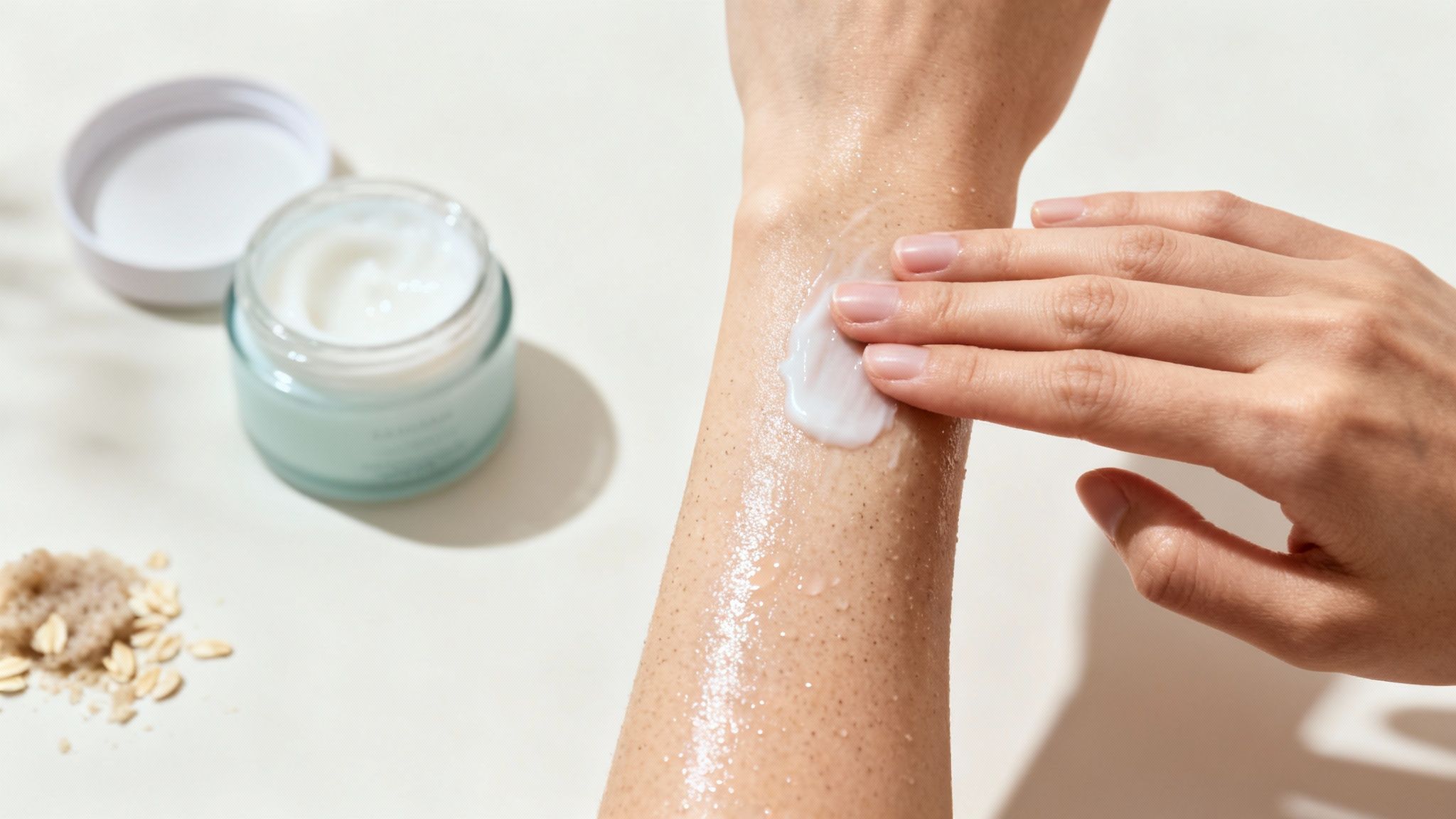
The most important step? Moisturize. Right away. Applying a high-quality, soothing moisturizer to damp skin helps lock in that precious hydration and support your skin barrier.
This is where pairing your oatmeal scrub with the right products makes all the difference. A moisturizer featuring goat milk, like the ones from The Goats Field, is the perfect follow-up. Goat milk is packed with nourishing fatty acids and vitamins that calm inflammation and deliver deep, lasting moisture.
This teamwork between exfoliation and hydration is how you build that healthy, lit-from-within glow. By sticking to this simple aftercare routine, you’re not just scrubbing your skin—you’re nurturing it for the long run.
Common Questions About Exfoliating With Oatmeal
Even with a step-by-step guide, it's natural to have a few questions pop up. Let's tackle some of the most common ones about exfoliating with oatmeal so you can get started with total confidence.
Can I Use Instant Oatmeal?
It’s a tempting shortcut, especially when you’re in a hurry, but it's best to avoid instant or flavored oatmeal packets. They’re often loaded with added sugars, flavorings, and preservatives that can easily irritate the skin.
Stick to the pure stuff. Plain rolled oats or finely ground steel-cut oats will do the trick nicely. For the absolute most gentle and effective facial exfoliation, though, colloidal oatmeal is always the gold standard because of its super-fine, powder-like texture and proven calming properties.
Is It Possible to Over-Exfoliate with Oatmeal?
Oh, absolutely. Oatmeal is incredibly gentle, but you can definitely have too much of a good thing. Over-exfoliating can mess with your skin's natural moisture barrier, leading to redness, dryness, and even more sensitivity.
The key is to listen to your skin. If it starts feeling tight, raw, or just plain irritated, that's a clear signal to ease up. Most people find that exfoliating one to two times per week is the sweet spot for maintaining a healthy glow without stressing their skin out.
Key Takeaway: The whole point of exfoliating with oatmeal is to gently buff away dead skin cells, not to strip your skin raw. A light touch and a "less is more" approach are your real secrets to success here.
Why Does My Skin Feel a Little Red Afterwards?
A little bit of a temporary flush right after you exfoliate is usually perfectly normal. You’re physically stimulating the skin, which naturally increases blood flow to the surface. This slight pinkness should disappear within an hour or so.
Now, if that redness comes with stinging, burning, or itching that just won't quit, you’ve likely scrubbed too hard or might have a sensitivity to another ingredient in your mix. This is why a patch test is so important, and remember to always, always be gentle.
What Should I Do If My Scrub Feels Too Abrasive?
If your oatmeal scrub feels scratchy or rough, don’t push through it. The most common culprit is that the oats aren't ground finely enough, which is especially noticeable on the delicate skin of your face.
Here are a few quick fixes to try:
- Grind it finer: Pop your oats into a clean coffee grinder or blender and pulse them until they have a much softer, more powdery feel.
- Add more liquid: A splash more goat milk or a bit of extra honey will create a creamier, more cushioned paste, which dials down the scrub's intensity.
- Let it sit for a minute: Let your mixture rest for a few minutes before you apply it. This gives the oats time to absorb some of the liquid and soften up.
Ready to follow up your gentle exfoliation with the perfect soothing aftercare? The Goats Field crafts nourishing, all-natural skincare with goat milk sourced directly from our farm. Our lotions and soaps are made to calm and hydrate freshly exfoliated skin, locking in moisture for a healthy glow that lasts. Discover the difference at https://thegoatsfield.com.