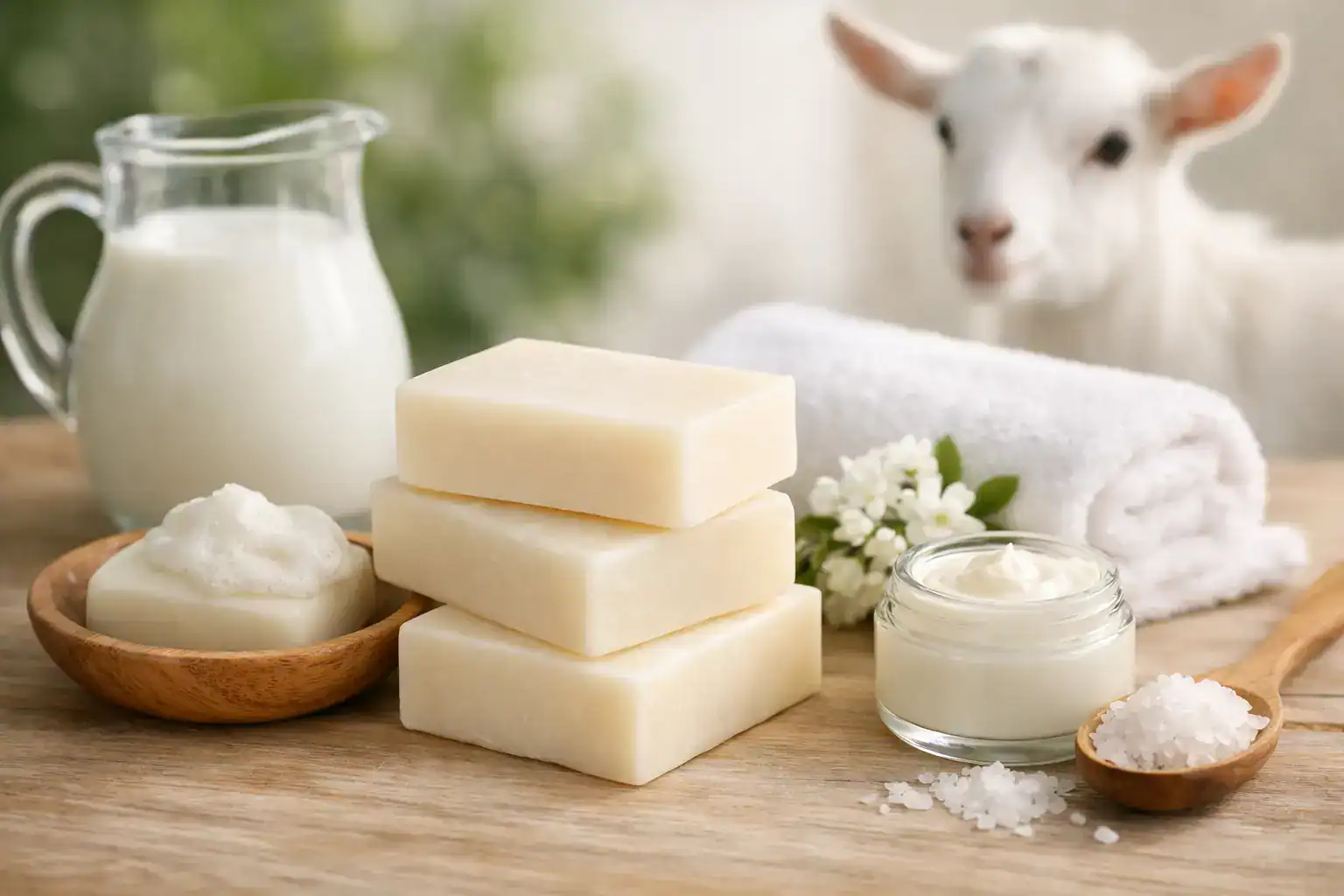
When your skin feels tight right after a shower, looks flaky by lunchtime, or stings when you apply a lotion that used to feel fine, the problem may not be your moisturizer alone. Your cleansing routine can make a real difference. Using goat milk soap for skin barrier care is one simple way to make the daily wash feel less like a setback and more like a gentle part of caring for dry, sensitive skin.
Your skin barrier does a quiet but demanding job all day. It helps hold water in and keeps everyday irritants, changing weather, and friction from getting too close. A thoughtful soap cannot solve every skin concern, but a mild, well-made bar can help you avoid stripping away the comfort your skin works hard to maintain.
What the skin barrier needs from a cleanser
The outermost layer of skin is often called the skin barrier. Think of it as your skin’s protective boundary: it helps reduce moisture loss while standing between your body and the outside world. When that boundary is stressed, skin may feel dry, rough, itchy, sensitive, or unusually reactive.
Many things can contribute to a compromised-feeling barrier. Cold air, low indoor humidity, long hot showers, frequent handwashing, harsh detergents, and heavily fragranced products can all leave skin feeling less comfortable. Some people are naturally more prone to dryness or eczema, while others notice sensitivity after a change in routine, season, or medication.
Cleansing is necessary, but the goal is not for skin to feel squeaky clean. That tight, stripped feeling is not a sign that a product worked better. For dry or delicate skin, a good cleanser removes daily dirt and excess oil without making you feel like you need to rush for lotion the second you step out of the shower.
Why goat milk soap can feel gentler
Goat milk has long been valued in traditional skincare because it brings a naturally creamy, comforting quality to a bar of soap. In a properly formulated goat milk soap, the milk is paired with skin-loving oils and butters that become part of the finished bar. The result is a rich lather that cleanses while feeling softer and less harsh than many basic soaps.
Goat milk naturally contains fats, proteins, and lactic acid. In soap, those qualities contribute to the bar’s gentle, nourishing character, though it is wise to keep expectations grounded. Soap is a rinse-off product, not a treatment, and the exact experience depends on the full recipe, how your skin responds, and the rest of your routine.
What many families appreciate most is the difference in feel. A handcrafted goat milk bar can provide a creamy wash for hands, body, and even the face when the formula is suitable for facial use. That can be especially welcome when skin is dry from winter air, frequent washing, or the simple wear and tear of everyday life.
For people trying to simplify their bathroom shelf, a gentle bar also has practical appeal. You do not need a complicated routine to support comfortable skin. A mild cleanse, lukewarm water, and a good moisturizer applied while skin is still slightly damp can be a dependable place to start.
The formula matters as much as the goat milk
Not every goat milk soap is the same. Goat milk is a wonderful ingredient, but the rest of the formula matters just as much. A bar made with quality oils and a balanced recipe will feel different from a bar loaded with strong fragrance, unnecessary dyes, or ingredients that do not agree with your skin.
If your barrier feels sensitive, look for plainspoken ingredient lists and products made with a gentle purpose. Essential oils are plant-derived and can create a lovely natural scent, but even natural ingredients can be too much for some people. If you know your skin reacts to fragrance, choose an unscented bar or a very lightly scented option. This is not about avoiding every ingredient forever. It is about paying attention to what helps your own skin stay calm.
At The Goats Field, goat milk soaps are crafted by hand from pure goat milk from the farm, with a focus on clean, family-friendly ingredients and everyday moisture. That kind of small-batch care matters because a simple bar should feel dependable enough to keep by every sink, in the shower, or in a travel bag.
How to use goat milk soap for skin barrier care
A gentler soap helps most when the rest of the washing routine supports it. Start with warm, not hot, water. Hot water may feel soothing in the moment, but it can leave dry skin feeling even more depleted afterward.
Work the bar into your hands, a soft washcloth, or a gentle soap saver before applying the lather to skin. There is no need to scrub hard or leave soap sitting on the body for long. Let the lather do the cleansing, then rinse thoroughly.
After patting skin dry, leave a little moisture behind rather than rubbing with a towel. Follow with a lotion or cream while skin is still slightly damp. This small habit helps trap in hydration and is often more useful than adding several extra products to your routine.
For hands, especially during cold months or busy seasons of frequent washing, keep a moisturizer near the sink. Wash with a gentle goat milk soap, pat dry, and apply lotion right away. The same approach works well for healthcare workers, parents, gardeners, cooks, and anyone whose hands are washed again and again throughout the day.
Keep the bar dry between uses
A quality bar lasts longer and stays more pleasant to use when it can dry out between washes. Place it on a draining dish or soap saver instead of letting it sit in a puddle of water. This is a small detail, but it helps protect the bar and makes your simple skincare routine go further.
When a simple routine is the better routine
If your skin barrier is feeling overwhelmed, this is usually not the time to introduce several new exfoliants, scrubs, scented body washes, and active products at once. Give skin a quieter routine for a couple of weeks: gentle cleansing, moisturizer, and daily sun protection when skin will be exposed.
This does not mean everyone needs to use the same bar or avoid all fragrance. Some people love a lightly scented goat milk soap and use it comfortably for years. Others do best with unscented products, particularly on the face, hands, or areas prone to eczema. Your skin gets the final say.
Patch testing is helpful if you have a history of reactions. Use the soap on a small area first and watch for itching, burning, redness, or a rash. If irritation occurs, stop using it. Persistent, painful, cracked, oozing, or spreading skin symptoms deserve guidance from a dermatologist or qualified healthcare professional.
A comforting bar for everyday care
There is something reassuring about returning to a bar of soap made with a short, purposeful ingredient list and a gentle job to do. Goat milk soap is not meant to be a miracle in a bar. It is meant to make an ordinary moment – washing your hands, showering after work, bathing a child – feel kinder to skin that needs a little extra care.
Choose a bar that suits your sensitivities, use it with warm water and a light touch, and follow with moisture. Those steady, everyday choices can give your skin barrier the breathing room it has been asking for.