
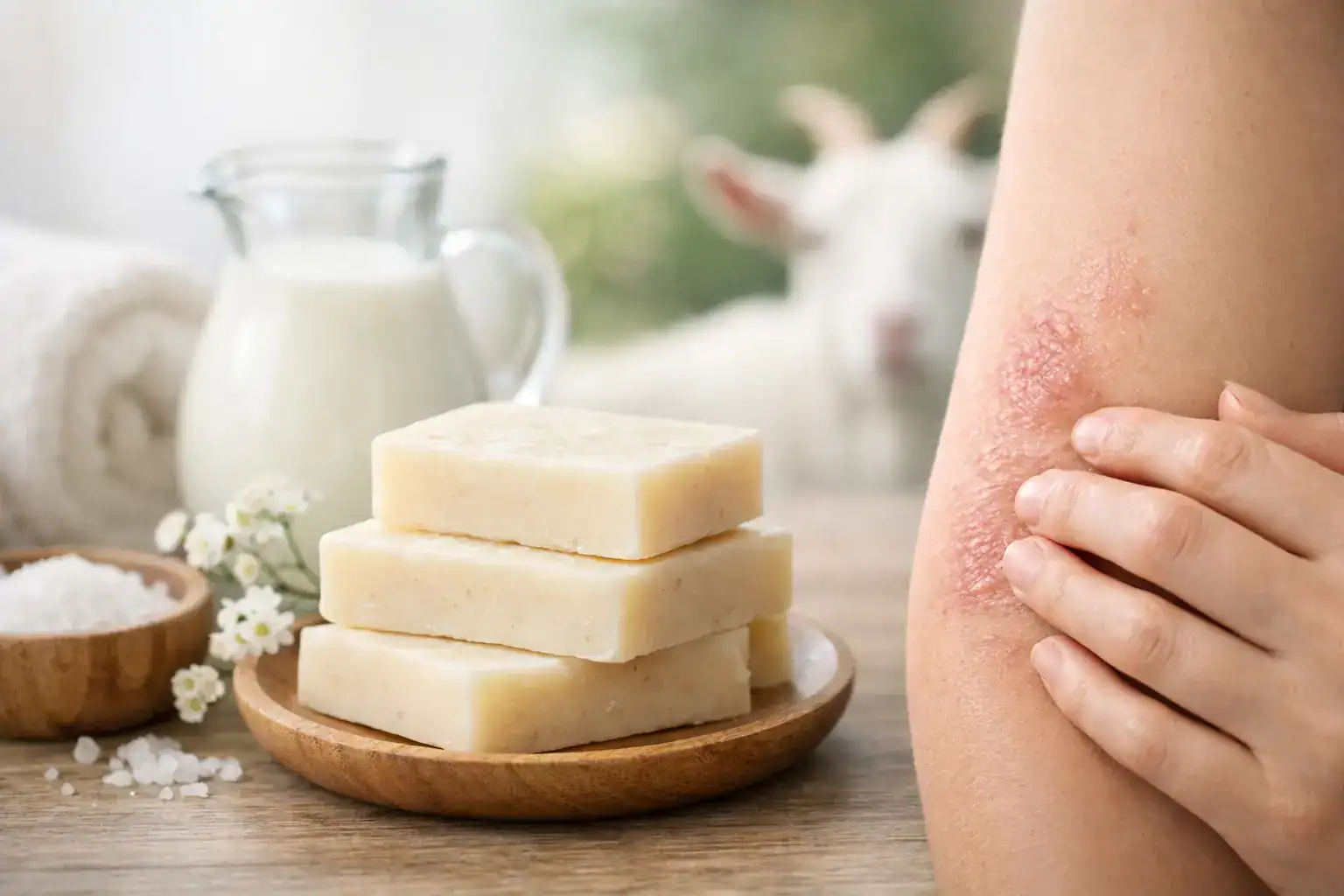
A hot shower can feel wonderful at the end of a long day, but for eczema-prone skin, it can leave behind a familiar sting, tightness, or itch. If you are searching for an eczema relief with goat milk soap example, the most helpful answer is not a miracle promise. It is a gentle, repeatable routine that removes what needs removing without asking already stressed skin to work harder.
Goat milk soap may be a comforting part of that routine because it is naturally rich and creamy, and a thoughtfully made bar can cleanse without the sharp, stripped feeling many people get from heavily fragranced body washes. Every person and every flare is different, but the way you use a gentle soap matters just as much as the soap itself.
An Eczema Relief With Goat Milk Soap Example
Consider a parent whose hands are dry, itchy, and rough from frequent dishwashing, cold weather, and helping little ones wash up throughout the day. They switch from a strongly scented liquid hand soap to a simple goat milk bar with a short, easy-to-understand ingredient list. Instead of scrubbing their hands under very hot water, they use lukewarm water, make a light lather for about 20 seconds, rinse well, and pat dry.
Within a few minutes, while the skin is still slightly damp, they apply a thick, fragrance-free moisturizer. They also keep the goat milk soap on a draining soap saver, rather than letting it sit in a puddle at the sink. The bar lasts longer, stays cleaner between uses, and is ready when the family needs it.
This example does not mean goat milk soap treats eczema or replaces medical care. What it shows is a practical way to reduce one common source of irritation: harsh or overzealous cleansing. For many people with sensitive skin, the goal is not to feel squeaky-clean. The goal is to feel clean, comfortable, and less tight afterward.
Why Cleansing Can Make Eczema Feel Worse
Eczema is a condition in which the skin barrier does not hold onto moisture as well as it should. When that protective barrier is weakened, everyday things can cause trouble: dry air, sweat, fabrics, stress, allergens, frequent handwashing, and certain personal care ingredients.
Soap is only one part of the picture, but it is a part people use every day. Strong surfactants, rough washcloths, very hot water, and added fragrance can all leave sensitive skin feeling more irritated. Even natural ingredients are not automatically a good fit for everyone. A botanical scent that smells fresh and clean may still bother a person who reacts to fragrance or essential oils.
A well-made goat milk soap is often chosen for its mild, moisturizing feel. Goat milk contains naturally occurring fats and proteins that contribute to a creamy lather. When paired with skin-friendly oils and a careful small-batch process, it can offer a simpler alternative to a crowded bottle of body wash with a long list of unfamiliar ingredients.
That said, a bar soap is not automatically gentle just because it contains goat milk. The full formula matters. So does the area you are washing. Hands that need frequent cleansing may tolerate a bar differently than eyelids, a baby’s cheeks, or skin that is cracked and actively inflamed.
How to Use Goat Milk Soap Gently
The kindest routine is usually the least complicated one. Use lukewarm water, not hot water. Wet the skin, lather the soap in your hands or on a soft cloth, and use only enough lather to cleanse the area. There is rarely a need to scrub dry patches, and there is no prize for a huge pile of bubbles.
Rinse thoroughly, then pat the skin dry with a soft towel. Do not rub back and forth. Follow promptly with a moisturizer that works for your skin, especially after bathing or washing hands. This step is easy to skip when life is busy, but it helps hold in the water left on the skin after rinsing.
For full-body bathing, many dermatology professionals recommend limiting cleanser to the areas that truly need it, such as underarms, feet, groin, and visibly soiled skin. Arms, legs, and other dry areas often do not need a thorough soap wash every single day. A brief lukewarm rinse may be enough between fuller washes, depending on your activity and personal needs.
At The Goats Field, goat milk soaps are crafted by hand from pure goat milk right here on our farm, with the everyday needs of dry and sensitive skin in mind. Choosing a simple bar can make the bathroom routine feel less like a chemical experiment and more like a small act of care.
Choosing a Bar for Sensitive, Eczema-Prone Skin
Start with the simplest option available. If you know fragrance bothers your skin, choose an unscented or minimally scented bar rather than trying to push through discomfort. If essential oils have caused redness, itching, or burning before, take that history seriously. “Natural” should never mean you have to ignore what your own skin is telling you.
Read the ingredient list with a practical eye. Look for a formula built around goat milk and nourishing oils, and avoid products loaded with dyes, strong perfume, or ingredients you already know do not agree with you. It is also wise to introduce only one new product at a time. When you change soap, lotion, detergent, and shampoo all at once, it becomes hard to know what helped or what caused a reaction.
A patch test can offer an extra layer of caution. Use a small amount of lather on a limited area of intact skin, rinse it off, and watch for discomfort or a delayed reaction over the next day or two. A patch test cannot guarantee that a product will work everywhere on the body, but it can help you make a more informed choice.
The Trade-Off: Gentle Does Not Mean Enough for Every Situation
There are times when a basic goat milk soap may not be the right answer on its own. If you work in healthcare, food service, childcare, or another job that requires frequent handwashing, you may need to use the cleansing products required by your workplace. In that case, focus on what you can control: water temperature, gentle drying, regular moisturizing, and protective gloves when appropriate.
Likewise, if your eczema is weeping, crusted, cracked, painful, spreading, or showing signs of infection, do not experiment your way through it. Contact a dermatologist or other qualified healthcare professional. Prescription treatment, allergy testing, or a tailored skin-care plan may be needed. Goat milk soap can be a pleasant part of daily skin care, but it should not delay care for a serious flare.
Children deserve extra care, too. A baby’s or young child’s skin can react differently from an adult’s, even to gentle products. Keep routines simple, avoid getting soap near the eyes, and ask a pediatrician or dermatologist for guidance when rashes are persistent, severe, or uncertain.
Small Routine Changes That Support Softer Skin
The soap at the sink is only one small piece of your environment. Dry skin often responds better when the rest of the routine is gentle as well. Keep baths and showers short, choose soft breathable fabrics when possible, and use fragrance-free laundry products if scented detergent seems to trigger irritation.
It also helps to make moisturizing easy. Keep a trusted moisturizer beside the sink, near the shower, and in a bag for work or travel. When it is within reach, you are more likely to use it after handwashing instead of waiting until your skin feels uncomfortable.
Pay attention to patterns without judging yourself. If your hands flare after using cleaning products, wear gloves for chores. If wool makes you itch, place a soft layer between it and your skin. If a particular soap leaves your face tight, save it for hands or stop using it altogether. Skin care is personal, and a routine that feels good is more likely to become one you keep.
The gentlest path is often the most ordinary one: a mild cleanse, a soft towel, a good moisturizer, and patience with skin that needs a little extra kindness.