
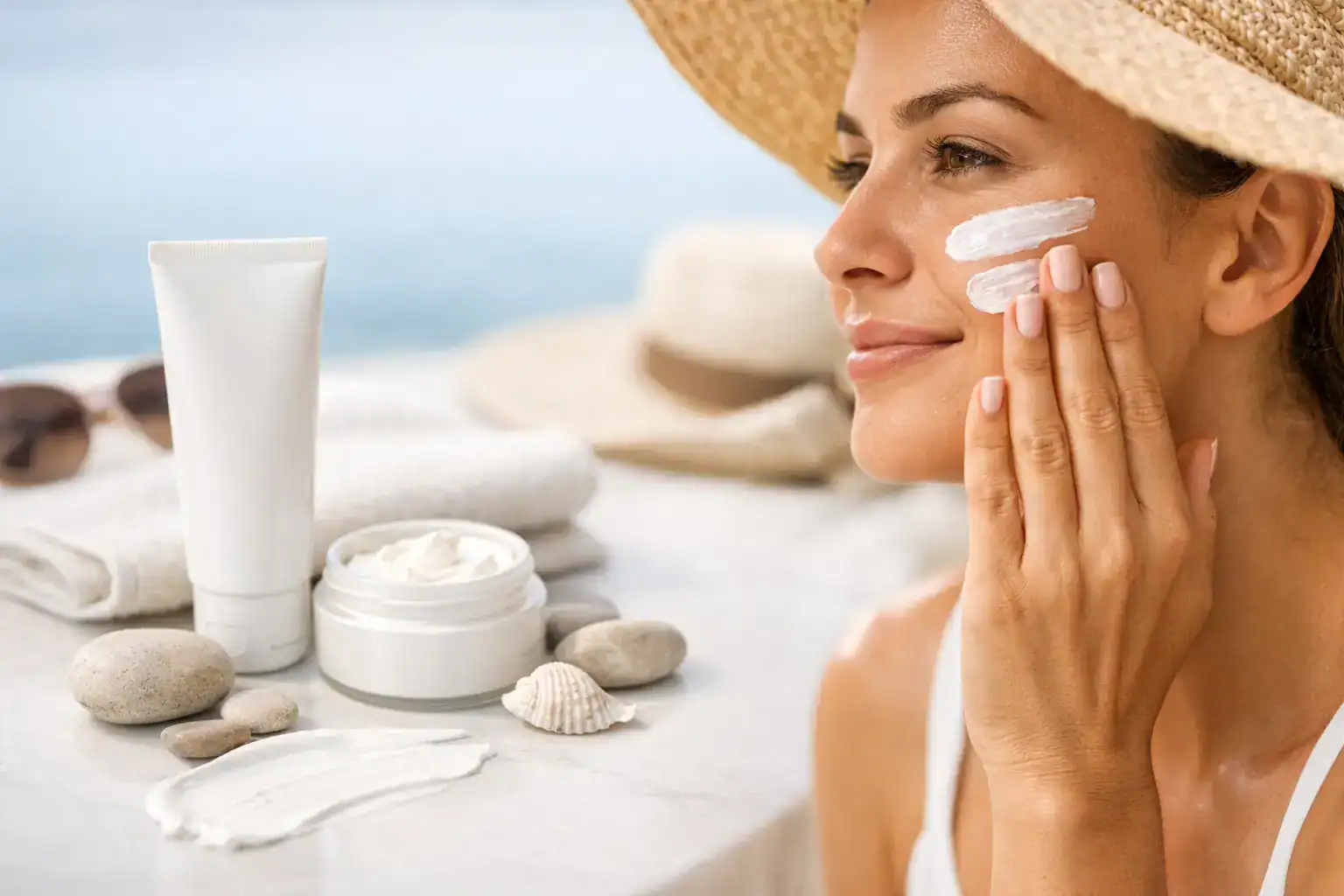
If your sunscreen pills, feels chalky, or seems to vanish the minute you add moisturizer or makeup, the problem usually is not the sunscreen itself. It is the order, texture, or amount. Learning how to layer mineral sunscreen can make the difference between sun protection that truly stays put and a morning routine that slides off by lunchtime.
For sensitive skin, that matters. Mineral sunscreen is often the gentler choice because it sits on top of the skin and helps shield it with zinc oxide, titanium dioxide, or both. But it can also be less forgiving when layered over rich creams, facial oils, or silicone-heavy makeup. A few small changes in timing and application can make it feel much easier to wear every day.
How to layer mineral sunscreen in a daily routine
The basic rule is simple: apply skincare from thinnest to thickest, and make sunscreen the last step of skincare before makeup. That means cleanser first, then any watery serums, then moisturizer, and then mineral sunscreen.
This order matters because mineral sunscreen needs to form an even film over the skin. If you apply moisturizer on top of it, or rub in foundation too soon, you can break up that protective layer. Even if your skin still feels coated, the coverage may not be as even as it needs to be.
If your routine is very simple, that is often best. Cleanse, moisturize if needed, let that settle, then apply sunscreen generously. Many people with dry or sensitive skin do well with a gentle, nourishing moisturizer underneath, especially if their sunscreen has a more matte finish. If your sunscreen already feels moisturizing enough, you may be able to skip a separate cream in warmer weather.
Why mineral sunscreen can pill or feel heavy
Mineral formulas behave differently than chemical sunscreens. Because the UV filters are mineral powders suspended in a base, they can be more prone to sitting on the skin rather than melting into it. That is part of why they are often a good fit for reactive skin, but it also means layering needs a lighter hand.
Pilling often happens when too many products are applied, when each layer has not had time to settle, or when ingredients do not play nicely together. Heavy oils under sunscreen can cause slipping. Thick silicone primers can cause rolling. Rubbing instead of gently spreading can also disturb the film.
The fix is usually not complicated. Use fewer layers, let each one absorb for a minute or two, and press or smooth products on instead of aggressively rubbing. If one moisturizer consistently causes pilling under your sunscreen, that pairing may simply not be a good match.
The best order for moisturizer and mineral sunscreen
For most people, moisturizer goes before sunscreen. Think of moisturizer as your comfort layer and sunscreen as your protection layer. You want your skin nourished first, then sealed with sun protection on top.
If you have very dry skin, choose a moisturizer that absorbs well rather than one that leaves a greasy coating. A rich cream can be wonderful at night but too much under daytime sunscreen. On the other hand, if your skin is oily or combination, a light lotion or hydrating serum may be enough under mineral sunscreen.
It also depends on the sunscreen formula. Some mineral sunscreens are creamy and moisturizing enough to stand on their own. Others are made to control shine and can feel better over a separate layer of hydration. Sensitive skin usually does best when the routine stays steady and uncomplicated.
How long to wait between skincare layers
You do not need a 20-minute routine, but a little patience helps. After moisturizer, give your skin about one to three minutes before sunscreen. If your skin still feels wet or slippery, wait a little longer.
After sunscreen, give it another few minutes before applying makeup. This helps the mineral film set more evenly. If you rush into foundation right away, you are more likely to smear it around and create patchy protection.
In real life, a practical routine works better than a perfect one. Apply your moisturizer, brush your teeth, then apply sunscreen. Make the bed, then do your makeup. Those small pauses are often enough.
How to layer mineral sunscreen under makeup
This is where many people get frustrated, especially if they want natural ingredients and a finish that does not look dry or cakey. The key is to use enough sunscreen first and treat makeup as a light layer on top, not something to blend back and forth into the skin.
Start with the proper amount of sunscreen for your face and neck. For most adults, that is about two finger lengths for the face, though exact needs vary by face size and product spreadability. Apply it in sections if needed rather than trying to glob it all on at once.
Once it sets, use makeup with a gentle touch. Press on tinted moisturizer, concealer, or foundation instead of buffing aggressively with a brush. A damp sponge often works well because it lays product down with less friction. If you use primer, keep it light and test whether it actually improves wear. Sometimes primer makes mineral sunscreen behave worse, not better.
Powder can help reduce shine, but too much can emphasize texture or dryness. If your skin is sensitive or mature, a small amount usually looks better than a full matte finish.
What to avoid when layering mineral sunscreen
A few common habits make mineral sunscreen harder to wear. One is using facial oil right before sunscreen. Oils can interfere with how evenly sunscreen spreads, especially if they stay slick on the surface.
Another is mixing sunscreen into moisturizer or makeup to make it easier to apply. That can dilute the formula and leave you with less reliable coverage. It is better to apply each product separately in its own layer.
Also avoid assuming SPF in makeup is enough. Tinted moisturizer or foundation with SPF can be a helpful extra, but it should not replace your main sunscreen layer. Most people simply do not apply enough makeup to reach the protection listed on the label.
Reapplying mineral sunscreen without ruining your routine
Reapplication is where good intentions often fall apart. If you are outdoors, sweating, swimming, or spending time in direct sun, sunscreen needs to be reapplied regularly. But over makeup, that can feel tricky.
For bare skin days, reapplying the same mineral sunscreen is straightforward. Use the full amount again and smooth it on gently. If you are wearing makeup, a tinted mineral sunscreen can sometimes be the easiest refresh because it blends more naturally into the complexion.
Powder sunscreens can be useful for touch-ups, especially on the scalp or for reducing shine, but they should be seen as a helper rather than your only line of defense. If you are in strong sun for hours, a more substantial reapplication is still the safer choice.
Hats, shade, and timing matter too. Sunscreen is important, but it works best as part of a full sun-care routine, not as the only strategy.
How to layer mineral sunscreen for sensitive or dry skin
If your skin stings easily, gets flaky, or reacts to fragrance and harsh ingredients, the best routine is often the quietest one. Use a gentle cleanser, a simple moisturizer, and a mineral sunscreen made for sensitive skin. That is usually enough.
Dry skin often needs a little more cushion underneath sunscreen, but there is a balance. Too little moisture and the sunscreen can drag or cling to patches. Too much and it may slip. A lightweight but nourishing cream tends to give the best middle ground.
This is one reason families who prefer clean, handcrafted skincare often stick with straightforward formulas. When products are designed to comfort the skin instead of overwhelm it, layering becomes much easier. At The Goats Field, that same practical mindset shapes how we think about daily skin care – gentle ingredients, comfortable wear, and products that fit real routines.
A simple routine that usually works
If you want the easiest answer to how to layer mineral sunscreen, here it is: start with clean skin, add a light moisturizer if your skin needs it, wait a minute or two, then apply a generous layer of mineral sunscreen. Let it set before makeup, and keep the rest of the routine light.
You do not need ten products for sunscreen to work well. You need a calm base, enough product, and a little time between layers. Once you find the combination your skin likes, the whole routine feels less like trial and error and more like second nature.
Good sun protection should not feel like a battle with your face every morning. When the layers are simple and your products are chosen with care, mineral sunscreen can be one of the kindest parts of your routine.