
The magic of goat milk lotion isn't just one single thing. It’s how its unique blend of fatty acids, lactic acid, and essential vitamins (like Vitamin A) work together to moisturize deeply, exfoliate gently, and soothe even the most sensitive skin.
The Real Benefits of Using Goat Milk Lotion
When you smooth on goat milk lotion, you're doing more than just moisturizing. You're giving your skin a complete nutritional treatment, kind of like a superfood smoothie for your body.
Many lotions offer a quick fix, a temporary layer of moisture that sits on top. But goat milk lotion works differently. It sinks in and gets to the root of skin health, which is why so many people with dry, stressed, or sensitive skin swear by it.
What makes it so special? It comes down to its structure. The fat globules in goat milk are smaller, allowing them to absorb effortlessly without leaving that greasy feeling behind. This creates a lasting moisture barrier that defends your skin from the elements all day long.
A Quick Look at What It Does
So, what can you actually expect to see and feel? Right away, most people notice softer, smoother skin. But the real transformation happens over time.
The natural lactic acid gently buffs away dullness, revealing a brighter, more even complexion. For anyone dealing with chronic dryness or conditions like eczema, it delivers a wave of calming relief, dialing down redness and discomfort.
Here's a simple breakdown of its core jobs:
- Deep Nourishment: It's packed with vitamins A, B2, C, and D that go straight to your skin cells to support repair and build resilience.
- Gentle Exfoliation: Lactic acid, a natural Alpha-Hydroxy Acid (AHA), dissolves dead skin cells, letting fresh, new skin shine through.
- Soothing Relief: Its anti-inflammatory nature is a true lifesaver for calming down eczema, psoriasis, and general skin sensitivity.
- Barrier Support: The rich fatty acids are like building blocks for your skin's lipid barrier, helping to lock in moisture and keep irritants out.
Goat milk’s pH is almost identical to that of human skin. This natural harmony helps protect the skin’s delicate acid mantle, steering clear of the irritation and dryness that more alkaline products can trigger.
To give you a clearer picture, this table breaks down exactly how goat milk lotion works its magic.
Goat Milk Lotion Benefits at a Glance
| Benefit | Key Nutrient/Property | What It Does for Your Skin |
|---|---|---|
| Deep Hydration | Fatty Acids & Triglycerides | Penetrates the skin barrier to deliver long-lasting moisture without a greasy feel. |
| Gentle Exfoliation | Lactic Acid (AHA) | Removes dead skin cells, promoting cell turnover for a brighter, smoother complexion. |
| Skin Repair | Vitamin A (Retinol) | Encourages the production of new skin cells and helps repair damaged tissue. |
| Soothing & Calming | Anti-inflammatory Properties | Reduces redness, swelling, and irritation, making it ideal for eczema and psoriasis. |
| Barrier Protection | Selenium & Healthy Fats | Shields skin from environmental damage and strengthens its natural defenses. |
| pH Balance | Similar pH to Human Skin | Maintains the skin's natural acid mantle, preventing dryness and irritation. |
Each of these elements plays a vital role in creating healthier, more resilient skin. While goat milk lotion is a powerhouse on its own, you can always build on these benefits by exploring broader strategies for effective facial skin hydration.
What Makes Goat Milk a Skincare Powerhouse
Ever wonder what a five-star, nutrient-packed meal for your skin would look like? That’s pretty close to the experience of using goat milk lotion. A lot of lotions out there feel more like a temporary snack, giving you that surface-level moisture that disappears in an hour. Goat milk, on the other hand, delivers deep, lasting nourishment from the inside out.
The secret is in its unique molecular structure. Goat milk is made up of smaller fat globules and proteins, which is just a technical way of saying it can sink into your skin incredibly easily. It doesn’t just sit on top. This means it delivers its powerhouse blend of nutrients right where your skin needs them most, without leaving behind that heavy, greasy feeling.
But that efficient absorption is just where the story begins. The real magic is what’s inside the milk itself.
The Nutrient-Rich Composition
Goat milk is naturally brimming with ingredients your skin craves. Think of it as a complete skincare cocktail, mixing vitamins, minerals, and acids that work together to rebuild and protect your skin’s health.
Here are three of the most important players:
- Alpha-Hydroxy Acids (AHAs): Specifically, lactic acid. This isn't a harsh chemical peel; it's a super gentle exfoliant that works by dissolving the "glue" holding old, dead skin cells together. The result? Fresher, brighter skin is revealed from underneath.
- Essential Fatty Acids: These are the literal building blocks for a healthy skin barrier. They help lock in moisture, prevent water loss, and shield your skin from environmental troublemakers like pollution and dry winter air.
- Vitamins and Minerals: Goat milk is a fantastic source of Vitamin A, which is crucial for repairing damaged skin tissue and encouraging healthy new cell growth. It also packs a dose of selenium, a mineral known for its powerful antioxidant properties.
This diagram breaks down exactly how these components come together to nourish, calm, and support your skin.
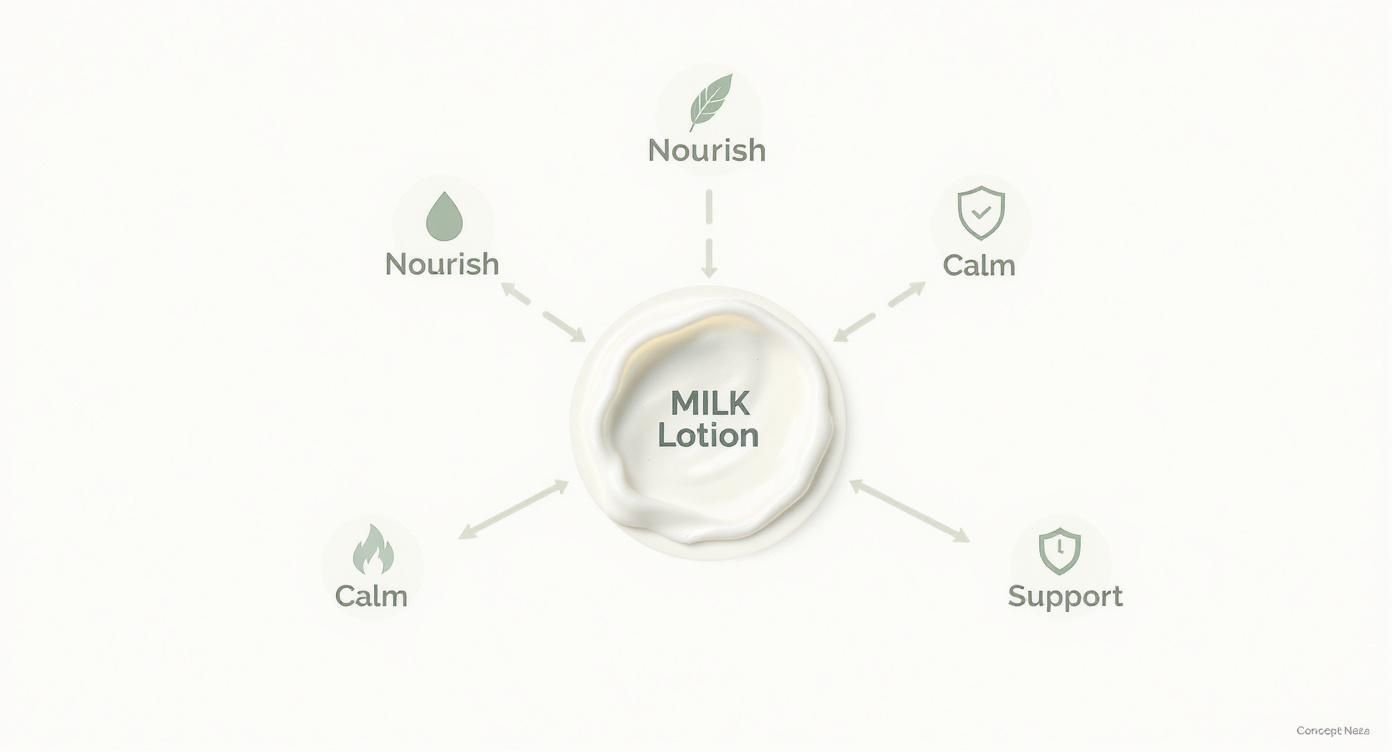
You can see how each element plays a role in a complete approach to skin health, from renewing the surface to defending the deep moisture barrier.
Rebuilding Your Skin’s Natural Defenses
Think of your skin’s moisture barrier like a brick wall. The skin cells are the bricks, and the lipids (fats) are the mortar holding it all together. When that mortar gets weak, cracks form. Moisture escapes, irritants get in, and you’re left with dryness, redness, and sensitivity.
The caprylic and capric triglycerides found in goat milk are exceptional at replenishing this "mortar." They restore the lipid barrier, effectively sealing in hydration and strengthening your skin's natural defenses against the outside world.
This restorative power is a huge reason why goat milk lotion provides such lasting comfort. It doesn't just add moisture; it helps your skin learn how to hold onto its own hydration. While goat milk is a star, it's interesting to see how its approach compares to other natural wonders, like the hydrating benefits of ingredients like Tremella mushroom, which is also making waves in the natural skincare world.
It’s these unique, therapeutic properties that are getting people’s attention. The market for goat milk body lotion was valued at an impressive $1.2 billion and is projected to hit $2.8 billion by 2033—clear proof of its effectiveness. This trend shows a real shift toward natural ingredients that deliver results you can actually see and feel.
Gentle Relief for Sensitive and Stressed Skin
If you have sensitive skin, you know the struggle. Finding something that actually calms your skin instead of making it angry can feel like a never-ending quest. For those of us dealing with conditions like eczema or psoriasis, it's even trickier—so many lotions are packed with fragrances and chemicals, or have a pH that just throws an already stressed-out skin barrier into chaos.
This is exactly where goat milk lotion comes in as a breath of fresh air.
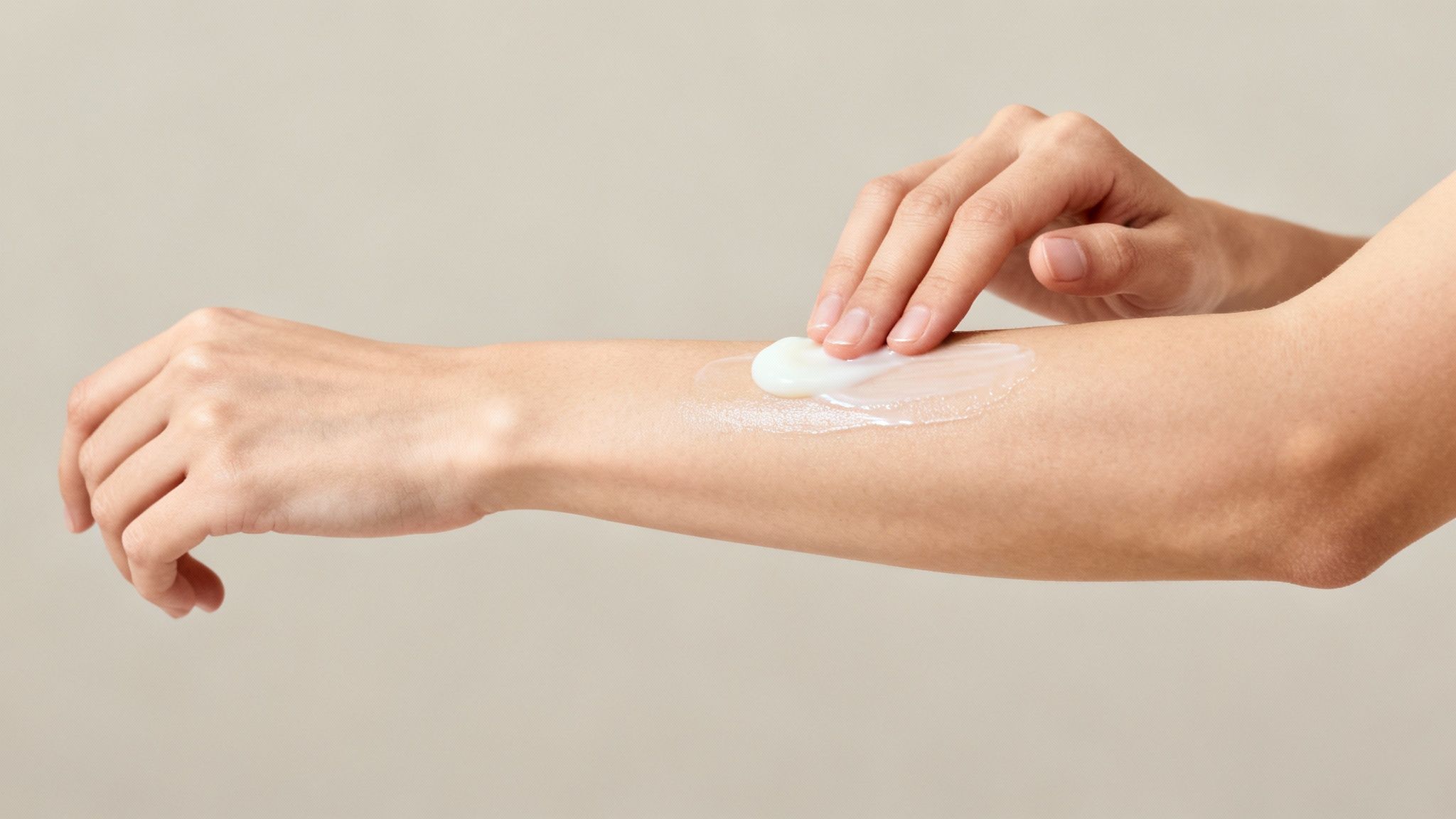
One of the biggest wins for goat milk lotion is beautifully simple: its pH is nearly identical to our own skin's. Your skin has a delicate, protective film called the acid mantle, which ideally sits at a pH between 4.7 and 5.75. This slightly acidic sweet spot is what keeps moisture locked in and bad bacteria out.
When you slather on products that are too alkaline, they can tear down this natural shield, leaving your skin exposed, dry, and irritated. Goat milk lotion, on the other hand, works with your skin's natural chemistry. It helps keep that acid mantle intact instead of fighting against it.
Soothing Inflammation and Itchiness
Beyond just pH balance, goat milk is a powerhouse of natural anti-inflammatory compounds. The unique fatty acids and triglycerides found in the milk go to work soothing redness and calming that maddening itch that comes with flare-ups.
Think of it this way: inflamed skin is basically sending out SOS signals. The compounds in goat milk lotion act like a calming negotiator, telling the skin it's okay to stand down. It’s why so many people with eczema swear that using it regularly helps dial down the intensity and frequency of their symptoms.
The natural probiotics in goat milk also play a key role in building a healthier skin microbiome. By feeding the good bacteria on your skin's surface, goat milk helps fortify its defenses against the very irritants that trigger sensitivity in the first place.
This calming effect is backed up by all the good stuff inside the lotion. Key nutrients, like the mineral selenium, help fight oxidative stress in the skin, adding another layer of relief.
A Gentle Choice for Chronic Conditions
When you're managing a chronic skin condition, "gentle" isn't a bonus—it's a must-have. The one-two punch of deep, non-greasy moisture and natural anti-inflammatory properties makes goat milk lotion an incredibly reliable friend for troubled skin.
Here’s a quick look at how it helps with specific concerns:
- For Eczema: It delivers the serious hydration needed to fight the characteristic dryness of eczema, while its anti-inflammatory nature helps soothe the relentless itch and redness.
- For Psoriasis: While it’s not a cure, the lotion can help soften and moisturize the thick, scaly patches, bringing some much-needed comfort and reducing that tight feeling from psoriasis plaques.
- For General Sensitivity: It offers moisture and nutrients without the harsh chemicals, parabens, or synthetic fragrances that are common triggers for reactive skin types.
At the end of the day, choosing goat milk lotion is about giving your skin ingredients it already knows how to use. It offers a way to comfort and moisturize without adding more stress to the system, making it a perfect match for skin that needs a little extra understanding.
How to Choose a High-Quality Goat Milk Lotion
With so many options crowding the shelves, picking the right goat milk lotion can feel like a chore. But not all lotions are created equal, and knowing what separates a truly nourishing product from a watered-down imitation is the key to getting all those amazing benefits of goat milk lotion.
Becoming a smart shopper starts with one simple habit: ignore the pretty promises on the front of the bottle and flip it over to read the ingredients. The label on the front is all marketing, but the ingredient list tells the real story. This is where you can spot a powerhouse formula and sidestep products that are little more than chemicals, water, and a tiny dash of goat milk for show.
Check the Goat Milk Source and Placement
The most important factor is, you guessed it, the goat milk. A high-quality lotion will list goat milk (or its scientific name, caprae lac) right at the top of the ingredient list. Ideally, it should be the first or second ingredient listed. If it's buried at the bottom after a long list of chemicals, you're just not getting a high enough concentration to do your skin any good.
Beyond its placement, how the milk is processed makes a huge difference in its nutrient power.
- Fresh Goat Milk: This is the gold standard. Lotions made with fresh, liquid goat milk—like those from farm-sourced brands such as The Goats Field—keep all their natural vitamins, fatty acids, and lactic acid in their most potent form.
- Powdered Goat Milk: While it still has benefits, the dehydration process used to make milk powder can weaken some of the delicate vitamins and enzymes. It's often a shortcut for mass-produced lotions looking for a longer shelf life and lower costs.
When goat milk is the first ingredient, it means it's the most prominent component by weight. This is your guarantee that you're getting a product built around goat milk's nourishing properties, not one that just uses the name as a marketing gimmick.
Finding a genuinely good goat milk lotion requires a bit of detective work on the ingredients label. To make it easier, here’s a quick guide on what to look for versus what to run from.
How to Choose a High-Quality Goat Milk Lotion
| Quality Factor | What to Look For (High Quality) | What to Avoid (Low Quality) |
|---|---|---|
| Goat Milk Placement | Listed as the 1st or 2nd ingredient (Caprae Lac) | Buried at the bottom of the list |
| Goat Milk Form | Fresh, liquid goat milk for maximum nutrients | Powdered goat milk (Goat Milk Powder) |
| Oils and Butters | Natural, plant-based oils like shea butter, coconut oil, jojoba oil | Mineral oil, petroleum, petrolatum |
| Fragrance | Unscented or scented with pure essential oils (e.g., lavender oil) | Synthetic "fragrance" or "parfum" |
| Preservatives | Natural options like Vitamin E (Tocopherol) or plant extracts | Parabens (methylparaben, propylparaben) and phthalates |
| Overall Formula | Short, simple, and recognizable ingredient list | Long list of complex chemical names you can't pronounce |
By keeping these points in mind, you can confidently choose a lotion that will actually nourish your skin instead of just coating it in cheap fillers.
What to Look for in the Formula
Beyond the goat milk, the rest of the ingredients play a huge supporting role. A truly great goat milk lotion will pair the milk with other natural, skin-loving components. You want to see simple, recognizable ingredients that add real value.
Look for These Beneficial Additions:
- Natural Oils and Butters: Things like shea butter, coconut oil, or jojoba oil boost the lotion's moisturizing power without clogging your pores.
- Essential Oils: If you like a scented lotion, look for ones that use pure essential oils like lavender or citrus. Avoid synthetic "fragrance" or "parfum," which are common culprits for skin irritation.
- Vitamin E (Tocopherol): This is a fantastic antioxidant that helps protect your skin. As a bonus, it also acts as a natural preservative for the lotion itself.
Ingredients to Avoid
What’s not in your lotion is just as important as what is. So many commercial lotions are packed with cheap fillers and harsh chemicals that cancel out the benefits of goat milk and can easily irritate sensitive skin. If you see a long, complicated list filled with words you can’t pronounce, it's usually a red flag.
Steer Clear of These Common Culprits:
- Parabens: These are chemical preservatives (like methylparaben) that have been linked to skin irritation and other health concerns.
- Phthalates: Often hiding in synthetic fragrances, these are chemicals you don't want on your skin.
- Mineral Oil & Petroleum: These ingredients create a plastic-wrap-like barrier on the skin. They might make your skin feel smooth temporarily, but they offer zero nutritional value and can clog pores.
- Artificial Dyes and Fragrances: These are some of the most frequent causes of allergic reactions and skin sensitivity.
Choosing a quality lotion is an investment in your skin’s health. By learning to read the label like a pro, you can pick a product that delivers on its promises and gives your skin the gentle, nourishing care it truly deserves.
Making Goat Milk Lotion Part of Your Daily Routine
Great skin doesn't happen overnight; it comes from consistency. And weaving goat milk lotion into your daily life is far easier than you might imagine. It’s so versatile it can replace a whole handful of other products on your bathroom shelf.
Stop thinking of it as just a body moisturizer. Instead, see it as your all-in-one solution for targeted care, from your face all the way down to your toes.
The secret to getting the most out of every drop is timing. The best possible moment to apply any lotion is right after you hop out of the shower or bath. Your skin is warm, your pores are open, and that slightly damp surface is basically a sponge ready to soak up moisture. Applying it then locks in hydration for the rest of the day, creating a protective layer that feels soft, not tacky.
Maximizing Every Application
With a formula this packed with nutrients, a little goes a long, long way. You don’t need to slather it on. A small, dime-sized dollop is usually perfect for an area like your hands or face.
One of the standout benefits of goat milk lotion is how quickly its lightweight texture sinks in, delivering nourishment deep down without leaving any greasy film behind.
This stuff is so much more than a simple body cream. Here are a few ways to make it an absolute staple in your routine:
- Gentle Facial Moisturizer: Use it morning and night on your face and neck. It provides balanced hydration that won't clog your pores.
- Soothing After-Sun Care: Pop a bottle in the fridge during the summer. It's an incredible cooling and calming treat for sun-kissed skin.
- Restorative Hand and Foot Cream: Apply it before climbing into bed to help repair dry, cracked hands and feet while you sleep.
Your skin is most receptive to hydration immediately after cleansing. By making post-shower application a habit, you turn a simple routine into a powerful strategy for maintaining skin barrier health and resilience.
The buzz around goat milk in skincare is real, and it’s backed by results. While it makes up only about 2.4% of the world's total milk production, its place in the cosmetics world has exploded.
The global market for goat milk skincare is set to grow faster than the wider dairy market, which tells you people are actively seeking out natural, effective ingredients. You can discover more insights about this growing market on databridgemarketresearch.com. Once you understand just how versatile it is, a single bottle can become your most trusted skincare partner.
Why Natural Skincare Is More Than Just a Trend
The buzz around goat milk lotion isn't just a passing fad. It’s part of a much bigger story: people are getting smarter about what they put on their skin. We're all getting a little tired of complicated, lab-made formulas with ingredients we can't even pronounce.
Instead, there's a real shift back to basics. We want skincare that's honest, gentle, and actually works, without all the marketing noise and harsh chemicals. It’s about choosing products that work with our skin, not against it. Goat milk fits this perfectly—it's an age-old remedy that’s finding its place in the modern world for a very good reason.
The Proof Is in the Growth
And this isn't just a feeling; the numbers back it up. The worldwide demand for goat milk cosmetics is exploding as more and more people experience the benefits of goat milk lotion for themselves.
This isn't just a small uptick. The market was valued at a huge USD 4.03 billion in 2023 and is expected to soar to USD 7.51 billion by 2031. That kind of growth shows a massive change in what we all want from our skincare. We're looking for products that are not only effective but also fit a healthier, more mindful way of life. You can read the full research about these market trends here.
This shift represents a return to foundational wisdom: the best skincare often comes from nature, not a lab. Consumers are voting with their wallets for products that offer real, gentle nourishment.
When you choose something like a farm-sourced goat milk lotion from The Goats Field, you're doing more than just buying another product. You're embracing a philosophy of skincare that champions purity, simplicity, and ingredients you can actually understand and trust. This move toward natural care is clearly here to stay, with goat milk leading the charge.
Common Questions About Goat Milk Lotion
As you get ready to try goat milk lotion, you might have a few questions. And you should! It's always smart to be curious about what you put on your skin. Let's tackle some of the most common ones so you can feel great about your choice.
Is Goat Milk Lotion Suitable For Oily Or Acne-Prone Skin?
Yes, it absolutely can be. Even though it's incredibly moisturizing, a well-made goat milk lotion is typically non-comedogenic, which is just a fancy way of saying it won’t clog your pores.
The secret is the natural lactic acid, which provides a super gentle exfoliation that actually helps keep pores clear. On top of that, its famous anti-inflammatory properties can calm down the redness that usually comes along with breakouts. The key is to pick a lighter formula that isn't packed with other heavy, pore-clogging oils.
Can I Use It If I Have A Dairy Allergy?
This is a really important question, and it really depends on your specific allergy. A topical reaction to milk proteins is much, much less common than the kind of reaction you'd get from digesting it. Many people with lactose intolerance or even a cow's milk allergy find they can use goat milk lotion without any trouble at all.
However, if you have a known severe dairy allergy, especially to the protein called casein, it’s always best to play it safe.
Pro Tip: Always, always do a patch test before going all-in with a new skincare product. Just dab a small amount on your inner arm and wait 24 hours. This simple step lets you see if your skin is happy with its new friend.
How Is It Different From Shea Butter Or Coconut Oil?
While shea butter and coconut oil are fantastic natural moisturizers in their own right, goat milk brings a whole different set of tools to the job. The real difference is its complex nutritional profile that you just don't find in plant-based butters.
Think of it this way: shea butter and coconut oil are like great conditioners, but goat milk is a full-on treatment.
Goat milk delivers:
- Alpha-Hydroxy Acids (AHAs) for natural, gentle exfoliation.
- A rich blend of vitamins like A and B2 that help repair skin cells.
- Selenium, a powerful little antioxidant that protects your skin from stress.
This unique combination makes goat milk lotion more than just a moisturizer—it’s complete nourishment for your skin.
Ready to feel the difference for yourself? The Goats Field crafts farm-fresh goat milk lotion in small batches, using pure ingredients to soothe and nourish even the most sensitive skin. Discover our gentle, effective formulas today.