

If you've ever wondered, "can goat milk soap help my eczema?", the short answer is a resounding yes. For so many people, it offers gentle, meaningful relief where other products have failed.
Unlike those harsh commercial soaps that strip your skin of its natural oils and just make the irritation worse, goat milk soap provides a calming, moisturizing cleanse. It's designed to support your skin's barrier, not tear it down.
Why Eczema-Prone Skin Needs a Different Approach
Living with eczema means your skin's protective barrier is already struggling. I like to think of it as a brick wall with gaps in the mortar—it just can't keep moisture locked in or keep irritants out.
This is exactly why ordinary cleansers, often loaded with synthetic detergents like sulfates, can feel like throwing fuel on a fire. They leave your skin feeling tight, dry, and even more inflamed. Using a harsh soap on eczema strips away the few precious lipids your skin has left, kicking off that frustrating itch-scratch cycle we all know too well.
What your skin is crying out for is a cleanser that does the complete opposite. It needs something that gently cleans while depositing moisture and calming down that angry inflammation. This is where making the switch to goat milk soap for eczema can be a real game-changer.
A Gentler Cleanse
The goal here isn't just to get clean; it's to do it without causing more damage. Goat milk soap works in harmony with your skin's naturally delicate pH, helping to maintain its defenses instead of disrupting them. For a deeper dive into caring for delicate complexions, this ultimate guide to sensitive skincare is a fantastic resource.
This gentle nature is precisely why it's become such a trusted solution for so many. In fact, goat milk soap has seen a huge surge in popularity, especially for skin conditions like eczema. Online searches for 'goat milk soap' nearly doubled between 2018 and 2023, which shows a real shift toward natural, effective alternatives.
The core rule for eczema care is simple: cleanse without stripping, and moisturize without irritating. A well-made goat milk soap absolutely nails the first part, perfectly setting the stage for effective moisturizing and long-term barrier repair.
To really see the difference, let's put them side-by-side.
Goat Milk Soap vs Conventional Soap for Eczema
This quick comparison table breaks down how the key properties in each type of soap can affect eczema-prone skin. It’s a simple way to see why one helps and the other often hurts.
| Feature | Goat Milk Soap | Conventional Soap |
|---|---|---|
| Cleansing Agent | Natural fats and proteins | Harsh sulfates (SLS/SLES) |
| Moisture Effect | Hydrates with natural fatty acids | Strips natural oils, causing dryness |
| pH Level | Similar to human skin (pH-balanced) | Often highly alkaline, disrupting the skin barrier |
| Key Nutrients | Rich in vitamins (A, D) and minerals | Typically lacks skin-nourishing vitamins |
| Common Irritants | Free from synthetic fragrances and dyes | Often contains artificial fragrances and parabens |
As you can see, the two are worlds apart. Goat milk soap is built to nourish and protect, while many conventional soaps are formulated in a way that can aggravate the very issues eczema sufferers are trying to solve.
How Goat Milk Soap Calms Eczema Flare-Ups
To really get why goat milk soap works so well for eczema, picture your skin’s protective barrier like a brick wall. The bricks are your skin cells, and the mortar holding everything together is a mix of natural oils and lipids. When eczema hits, it's like cracks forming in that mortar. Precious moisture gets out, and all sorts of environmental irritants can sneak in.
This breach of defense is what triggers the classic eczema flare-up: dryness, redness, and that nagging, relentless itch. Unfortunately, many commercial soaps act like a pressure washer on this already weakened wall. They blast away what’s left of the mortar with harsh detergents, leaving your skin even more exposed and vulnerable.
Goat milk soap, on the other hand, works more like a gentle repair crew. It cleans your skin without stripping it bare. More importantly, it delivers the very ingredients your skin needs to start rebuilding that protective barrier. Instead of making things worse, it actively reinforces your skin's natural defenses.
This visual shows the huge difference in how commercial soaps and goat milk soap treat eczema-prone skin.
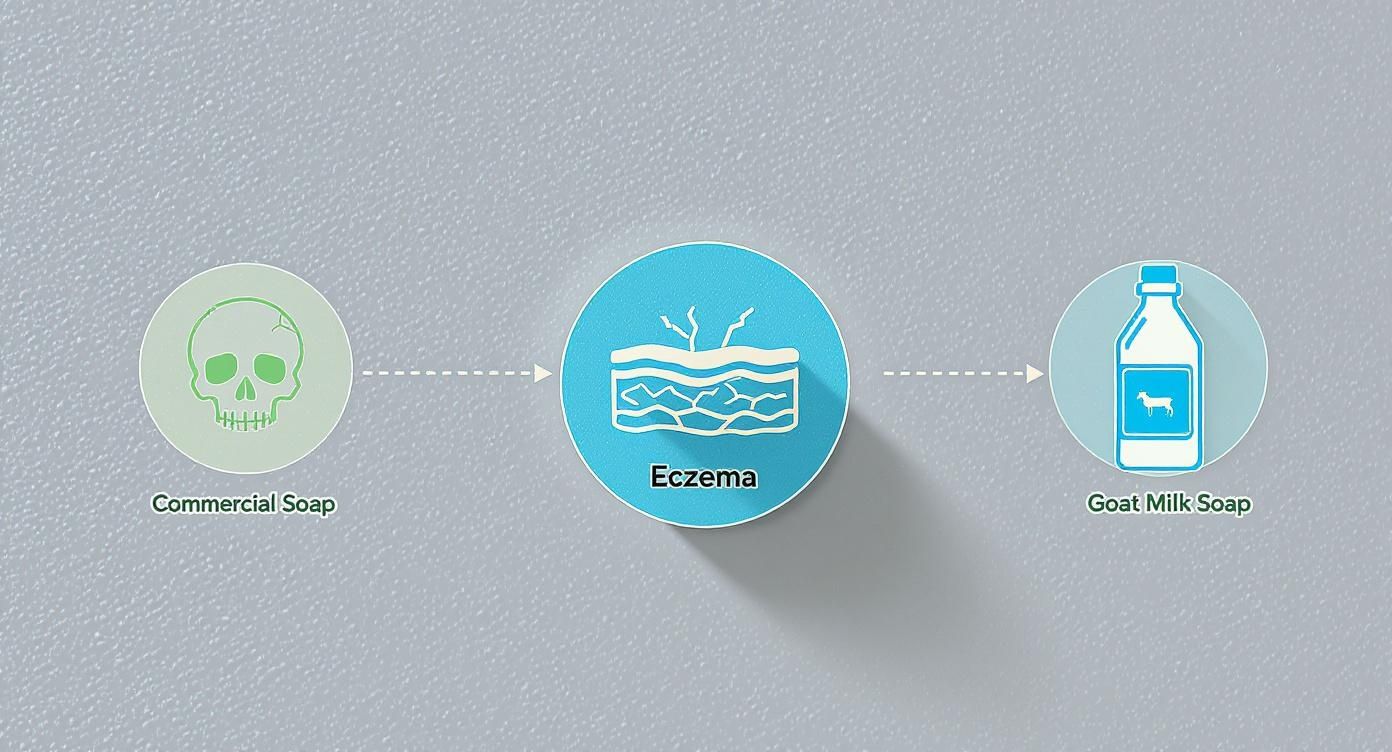
The key takeaway is simple. One approach adds fuel to the fire with irritants, while the other provides the actual building blocks for healing and relief.
Rebuilding the Skin Barrier with Natural Fats
The real secret to goat milk soap’s calming power is its unique makeup, especially its high fatty acid content. These aren't just any fats; their structure is incredibly similar to the lipids found in your own skin. This makes them amazing at patching up that compromised barrier.
Goat milk is naturally loaded with capric and caprylic acids, fatty acids known for their moisturizing and anti-inflammatory gifts. These, along with a high concentration of Vitamin A, help repair the skin barrier and soothe inflammation. You can get more details on how these ingredients support distressed skin over at The Goats Field's blog.
Think of these fatty acids as the perfect mortar for your skin's brick wall. When you wash with goat milk soap, you’re not just cleaning away dirt; you’re also depositing these essential lipids back into your skin, helping to seal the cracks and lock in moisture.
The Gentle Power of Lactic Acid
One of the standout components in goat milk is lactic acid, a type of alpha-hydroxy acid (AHA). Now, when people hear "acid," they often jump to thinking about harsh chemical peels. But the lactic acid in goat milk is incredibly gentle and does wonders for eczema.
Eczema often leads to a buildup of dry, flaky dead skin cells on the surface, which makes the roughness and itching even worse. Lactic acid works by gently dissolving the "glue" holding these old cells together, allowing them to wash away easily without any harsh scrubbing.
This process gives you a double win:
- It smooths skin texture: By clearing away that top layer of flaky skin, it reveals the softer, healthier skin hiding underneath.
- It improves moisture absorption: With the dead cell barrier gone, moisturizers and the soap's own nourishing ingredients can sink in deeper and do their job more effectively.
Unlike synthetic exfoliants that can cause tiny tears and more irritation, this natural exfoliation is subtle and supportive—exactly what delicate skin needs.
Key Takeaway: Goat milk soap doesn't just clean the surface. It delivers fatty acids to repair the skin barrier from the inside and uses lactic acid to gently clear away the dead skin cells that cause irritation.
A Cocktail of Anti-Inflammatory Vitamins and Minerals
Beyond the fats and acids, goat milk is a powerhouse of skin-loving nutrients that directly fight the inflammation driving an eczema flare-up. Two of the biggest players here are Vitamin A and selenium.
Vitamin A is absolutely critical for skin repair. It supports the daily process of cell turnover and has known anti-inflammatory properties, helping to calm the redness and swelling that come with eczema. A lack of Vitamin A can lead to dry, flaky skin, so getting it topically provides direct support right where you need it.
Selenium is a mineral with powerful antioxidant properties. Think of antioxidants as your skin’s personal security team, protecting it from damage caused by environmental stressors called free radicals. This protection is vital for inflamed skin, as it helps calm the inflammatory response and supports the entire healing process.
By delivering these nutrients straight to the skin while you wash, goat milk soap helps turn down the volume on irritation, giving your skin the peace it needs to heal.
What the Research Says About Eczema and Goat Milk
The stories you hear from people who’ve finally found relief for their eczema with goat milk soap are incredibly powerful. When something works this well for so many, word tends to get around fast.
But it’s smart to look beyond personal experiences and ask the big question: "What does the science say?"
Let's take a clear-eyed look at the research. The reality is, while the real-world success stories are overwhelmingly positive, large-scale clinical trials focused specifically on goat milk soap for eczema are still playing catch-up. Science often moves a bit slower than practical experience, but the early findings are promising and help explain why so many people get fantastic results.
The Scientific Underpinnings
Dermatological studies usually zero in on the individual components inside goat milk, not necessarily the finished bar of soap. What they’ve found is that goat milk is loaded with proteins and compounds known for helping regulate the immune response and supporting the skin's barrier—two absolute game-changers when you're managing eczema.
The natural anti-inflammatory fatty acids, skin-loving vitamins like A and D, and the gentle exfoliant lactic acid all have well-documented benefits for distressed skin. This gives us a solid scientific reason why goat milk is inherently soothing. It just makes sense that a soap carefully made to keep these properties intact would deliver those same benefits right where you need them.
One comprehensive review dug deep into the existing literature on the topic. It confirmed that goat milk is packed with beneficial compounds for skin health but also pointed out a gap. The analysis found a real lack of studies that directly compared goat milk soap against conventional cleansers in a controlled setting for eczema.
Interestingly, it noted that only 3 out of 15 studies published between 2010 and 2020 specifically involved participants with eczema, highlighting a clear need for more focused research. To see the full picture of these findings, you can learn more about the study's conclusions on MyEczemaTeam.
This doesn't mean the positive experiences aren't valid; it just shows the formal scientific process is still in the early innings of documenting what many people already know works.
Acknowledging Potential Sensitivities
It's also crucial to be smart and a little cautious with any new skincare product, especially when you're dealing with a compromised skin barrier. Eczema-prone skin is just naturally more vulnerable to irritation and can sometimes develop new sensitivities.
While goat milk itself is incredibly gentle, other ingredients thrown into a soap formula could potentially trigger a reaction. This is exactly why choosing a soap with a simple, clean ingredient list—free from synthetic fragrances, harsh sulfates, and other junk—is an absolute must.
The slight possibility of a reaction, however small, really drives home the importance of two key habits for anyone with eczema:
- Always read the full ingredient list: You need to know exactly what you're putting on your skin. No surprises.
- Always perform a patch test: Before going all in, test a new soap on a small, hidden patch of skin for at least 24 hours to make sure it agrees with you.
The Balanced View: The mountain of anecdotal evidence points to goat milk soap being a highly effective tool for managing eczema. While we wait for more formal clinical trials, the known properties of its ingredients provide a rock-solid scientific foundation for its soothing and barrier-supporting benefits.
At the end of the day, this balanced perspective gives you the power to make a smart choice. You can feel confident trying goat milk soap for eczema, knowing both its real-world track record and where the science currently stands.
How to Choose the Right Goat Milk Soap
Walking down the skincare aisle can feel like a maze, especially when you're trying to manage something as tricky as eczema. But here’s the good news: picking the right goat milk soap doesn't have to be a guessing game. It all comes down to becoming a smart label-reader—learning to spot the good stuff and sidestep the ingredients that trigger flare-ups.
First thing to know: not all goat milk soaps are created equal. Far from it. Many mass-produced bars just toss in a bit of powdered goat milk, burying it under a mountain of synthetic detergents and fillers. A truly great soap will have fresh goat milk listed right near the top of the ingredients, which means you're getting a real, effective dose of its calming fats, vitamins, and lactic acid.
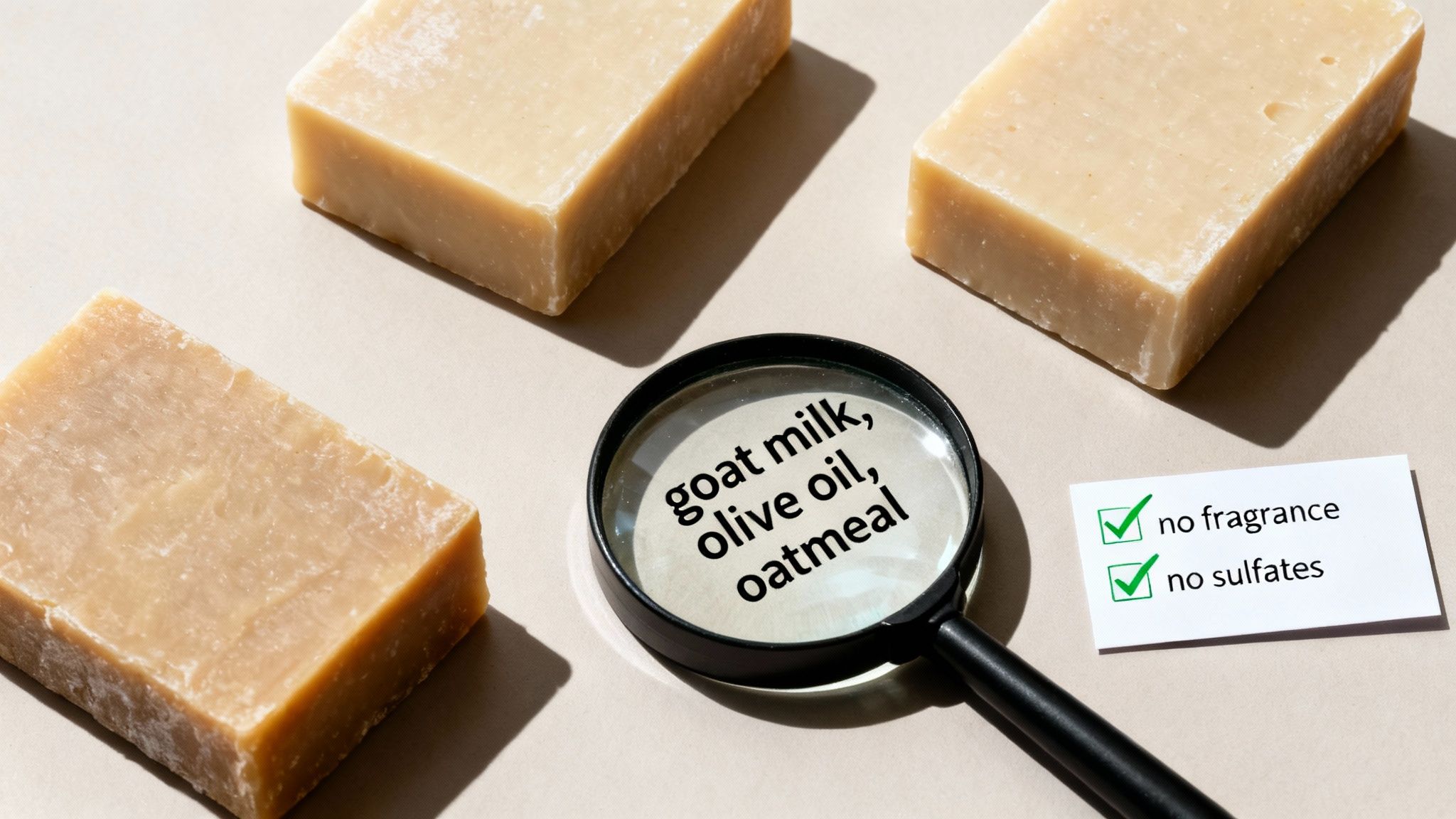
Think of it like buying orange juice. You wouldn't pick the sugary "from concentrate" drink over 100% pure-squeezed juice, right? The same logic holds true for your skin. The closer the soap is to its natural source, the kinder it will be to your distressed skin.
Ingredients to Look For
Beyond a healthy dose of fresh goat milk, certain natural additives can give your skin an extra layer of relief. These ingredients work beautifully with goat milk, creating a formula that's powerfully soothing.
- Colloidal Oatmeal: This isn’t your breakfast cereal. It's oatmeal ground into an ultra-fine powder that creates a protective film on your skin, locking in moisture while calming that relentless itch.
- Raw Honey: As a natural humectant, honey literally pulls moisture from the air and draws it into your skin. It also has well-known antibacterial properties, which is a huge plus for protecting a compromised skin barrier.
- Shea or Cocoa Butter: These rich, creamy butters are loaded with fatty acids and vitamins. They deliver intense moisture that helps repair a dry, cracked, and unhappy skin barrier.
- Nourishing Oils: Keep an eye out for saponified oils like olive oil, coconut oil, or sunflower oil. These form the gentle cleansing foundation of the soap, ensuring your skin feels soft and cared for, never stripped and tight.
The right additives can turn a good goat milk soap into an exceptional one, tailor-made for the unique needs of eczema-prone skin.
Expert Tip: A short, simple ingredient list is almost always a green flag. If you can't pronounce half the ingredients, it’s probably best to put that soap back on the shelf. For sensitive skin, less is definitely more.
Eczema-Friendly Additives in Goat Milk Soap
To make things even clearer, here’s a quick breakdown of some of the best ingredients you can find added to a quality goat milk soap, and what they do for eczema-prone skin.
| Ingredient | Primary Benefit for Eczema | How It Works |
|---|---|---|
| Colloidal Oatmeal | Soothes Itching & Redness | Forms a protective barrier on the skin, reducing water loss and calming inflammation. |
| Raw Honey | Hydrates & Protects | Acts as a natural humectant to draw in moisture and has antibacterial properties to protect compromised skin. |
| Shea Butter | Deep Moisturization | Rich in fatty acids and vitamins, it helps to restore the skin’s lipid barrier and heal cracks. |
| Olive Oil | Gentle Cleansing & Softening | Saponified olive oil cleanses without stripping natural oils, leaving skin hydrated and soft. |
These ingredients work in synergy with the goat milk to provide comprehensive care—cleansing, moisturizing, soothing, and protecting all at once.
Ingredients to Avoid at All Costs
Knowing what to look for is only half the battle. Knowing what to run from is just as crucial. Certain ingredients are notorious eczema triggers and can undo all your hard work in a single wash. When shopping for any soap, but especially for sensitive skin, choosing a fragrance-free soap for eczema is a great place to start.
Always give the label a quick scan to make sure the soap is free from these common culprits:
- Synthetic Fragrances: Often hidden under the term "fragrance" or "parfum," these are complex cocktails of chemicals that are one of the most common triggers for contact dermatitis and eczema flares.
- Sulfates (SLS/SLES): Sodium Lauryl Sulfate and Sodium Laureth Sulfate are aggressive detergents. They create that big, bubbly lather but do so by stripping your skin of its vital protective oils, leaving it dry and irritated.
- Parabens: These are preservatives that can throw your skin's natural balance out of whack and have been linked to allergic reactions, especially in people with sensitive skin conditions.
- Alcohols: Not all alcohols are bad, but drying alcohols like SD alcohol or denatured alcohol can seriously dehydrate your skin, making eczema symptoms feel much, much worse.
Getting into the habit of checking for these irritants can save your skin a world of hurt. A truly eczema-friendly goat milk soap will be proud to tell you it's sulfate-free, paraben-free, and fragrance-free.
Integrating Goat Milk Soap into Your Routine
Picking up a gentle, nourishing goat milk soap for eczema is a brilliant first step. But how you use it can be the difference between good results and genuine, lasting relief. When you have sensitive skin, bringing any new product into your life needs to be done with a bit of care. Think of it less like adding one ingredient and more like building a supportive system where every step works together—starting with the most important rule: safety first.
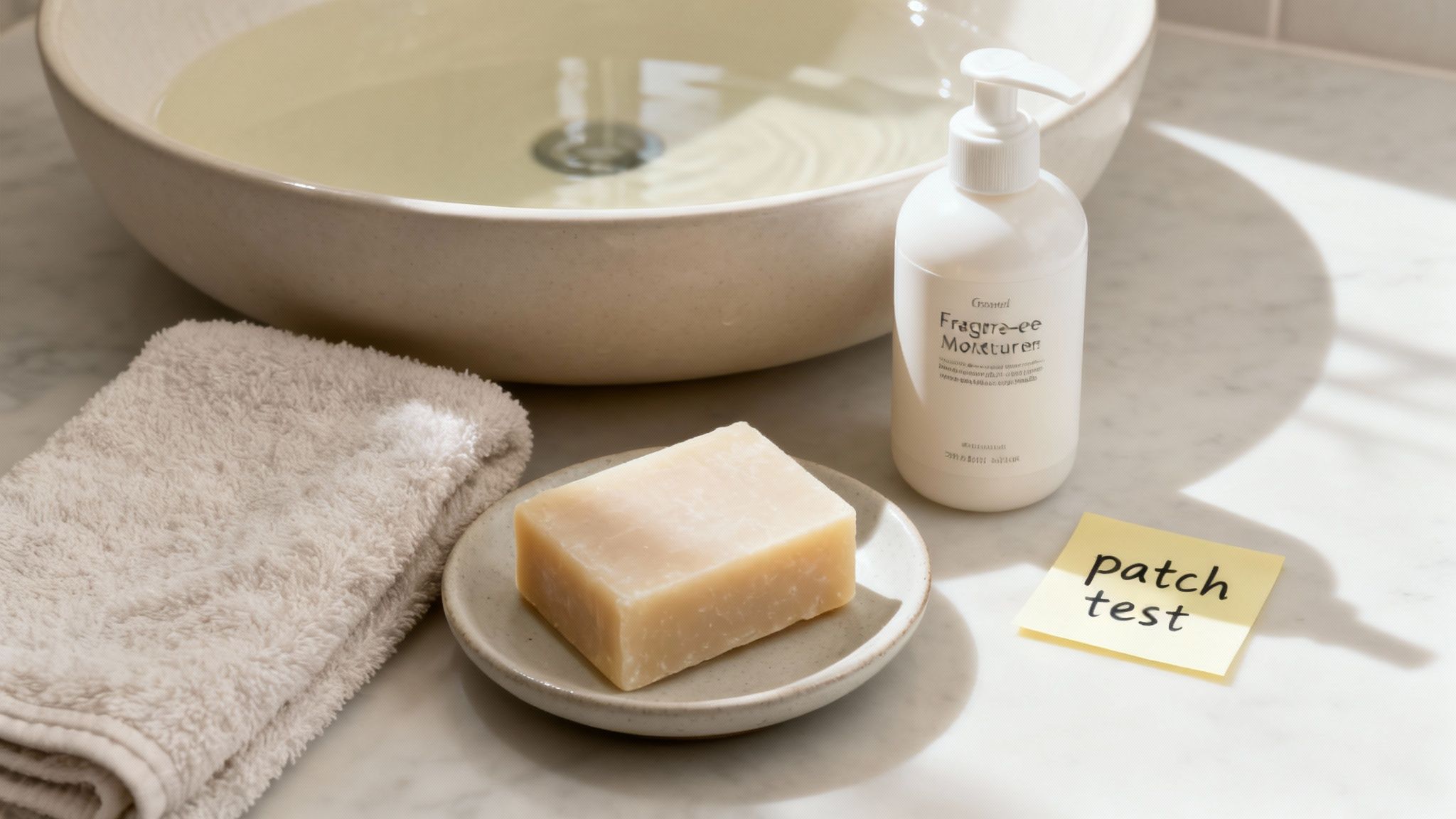
Before you start using a new soap all over, a patch test is non-negotiable. Eczema-prone skin has a weakened barrier, which makes it extra vulnerable to reactions, even from completely natural ingredients. This simple test is your best friend for making sure a new soap is a good match for your unique skin.
How to Perform a Patch Test
Doing a patch test is easy and gives you total peace of mind. Just follow these quick steps to check for sensitivity before you commit to using the soap everywhere.
- Select a Test Area: Pick a small, out-of-the-way patch of skin. The inside of your elbow or behind your ear are perfect spots because the skin there is sensitive, but it's also easy to cover if a reaction pops up.
- Apply the Soap: Work up a small amount of lather in your hands and apply it to the test spot. Let it sit for about a minute, then rinse it off completely with lukewarm water.
- Wait and Observe: Gently pat the area dry and then leave it alone for at least 24 hours. Keep an eye on the spot for any signs of trouble—increased redness, itching, burning, or a new rash.
If your skin looks and feels perfectly happy after 24 hours, you're good to go. But if you see any irritation at all, stop using the soap immediately.
Best Practices for Bathing with Eczema
Once you've passed the patch test, it's time to bring your new soap into your bathing routine. The real goal here is to cleanse gently while locking in as much moisture as possible and keeping irritation at bay. How you wash is just as critical as what you wash with.
- Keep it Lukewarm: Hot water feels nice, but it's a major culprit for stripping your skin's natural oils, which only makes dryness and inflammation worse. Stick with lukewarm water to keep your skin calm.
- Lather in Your Hands: Never, ever rub a bar of soap directly on inflamed skin. That friction can cause even more irritation. Instead, create a rich, creamy lather in your hands first, then gently apply the foam to your body with just your fingertips.
- Pat, Don't Rub: After your bath or shower, fight the urge to rub yourself dry with a towel. Gently pat your skin with a soft, clean towel, leaving it just a little damp. This sets you up perfectly for the most important step of all.
This gentle approach makes sure the cleansing process soothes your skin instead of making things worse. The final step is where you seal in all that goodness.
The Golden Rule: The 'soak and seal' method is the foundation of good eczema care. It turns a simple bath from just a cleansing ritual into a powerful treatment that traps critical moisture in your skin.
Dermatologists are huge fans of this technique for fighting the intense dryness that defines eczema. The idea is simple: bathe in lukewarm water for 5–10 minutes, gently pat your skin almost dry, and then slather on a thick moisturizer within three minutes. Using a gentle cleanser like goat milk soap for eczema is the perfect start to this incredibly effective routine. You can learn more about the importance of moisturizing for eczema on NationalEczema.org. That simple three-minute window makes a world of difference in preventing water from evaporating and sealing in the hydration your skin craves.
Common Questions About Goat Milk Soap for Eczema
Making a change to your skincare routine always brings up a few questions, especially when you're dealing with something as personal and sensitive as eczema. It's completely normal to want all the facts before you dive in. So, let's clear up some of the most common queries we hear.
Think of this not as a search for a magic bullet, but as finding a gentle, supportive cleanser that partners with your skin. Getting the practical details straight is the first step toward finding lasting calm and comfort.
Can I Use Goat Milk Soap on My Baby's Eczema?
Yes, in most situations, a pure, unscented goat milk soap is wonderfully gentle for a baby’s delicate skin. That said, it's crucial to proceed with a little extra caution.
A baby's skin barrier is brand new and incredibly sensitive, so you absolutely must do a patch test on a small, out-of-the-way spot first. We always suggest having a quick chat with your pediatrician before introducing any new product to your baby’s routine—it’s always better to be safe.
How Long Until I See Results for My Eczema?
This is the big question, isn't it? The honest answer is that it's different for everyone. Goat milk soap for eczema is a supportive tool, not an overnight fix. Some people feel a calming sensation and notice less itching within the first week of daily use.
For many others, the real magic happens over the long term. As the weeks go by, the nourishing fats and vitamins get to work strengthening the skin barrier, which can lead to fewer and less intense flare-ups. Consistency, paired with a solid "soak and seal" moisturizing habit, is what truly brings lasting improvement.
The goal here is gradual, sustainable healing. Think of it as giving your skin the daily nutrition it needs to rebuild its own defenses, rather than looking for a quick, temporary band-aid.
Is It Possible to Be Allergic to Goat Milk Soap?
While a true allergy to goat milk soap is uncommon, it’s not impossible. This is something to be particularly mindful of if you have a known allergy to dairy or milk proteins.
What's more, when eczema has severely compromised the skin barrier, the skin can sometimes become newly sensitized to ingredients it was fine with before. This is exactly why patch testing is a non-negotiable first step for anyone with eczema. Taking just 24 hours to test ensures the soap is going to be a friend to your skin, not a foe.
At The Goats Field, we obsess over creating formulations free from common eczema triggers. Our soaps are handcrafted with a high percentage of fresh goat milk and often enriched with natural soothers like oatmeal and honey. We steer clear of synthetic fragrances, parabens, and sulfates to keep our bars gentle enough for the most reactive skin. You can learn more about our farm-fresh approach to skincare on The Goats Field. This dedication to clean, simple ingredients helps minimize the risk of any irritation.
Ready to experience gentle, farm-fresh relief for your sensitive skin? The Goats Field crafts nourishing skincare with all-natural ingredients to soothe and protect.