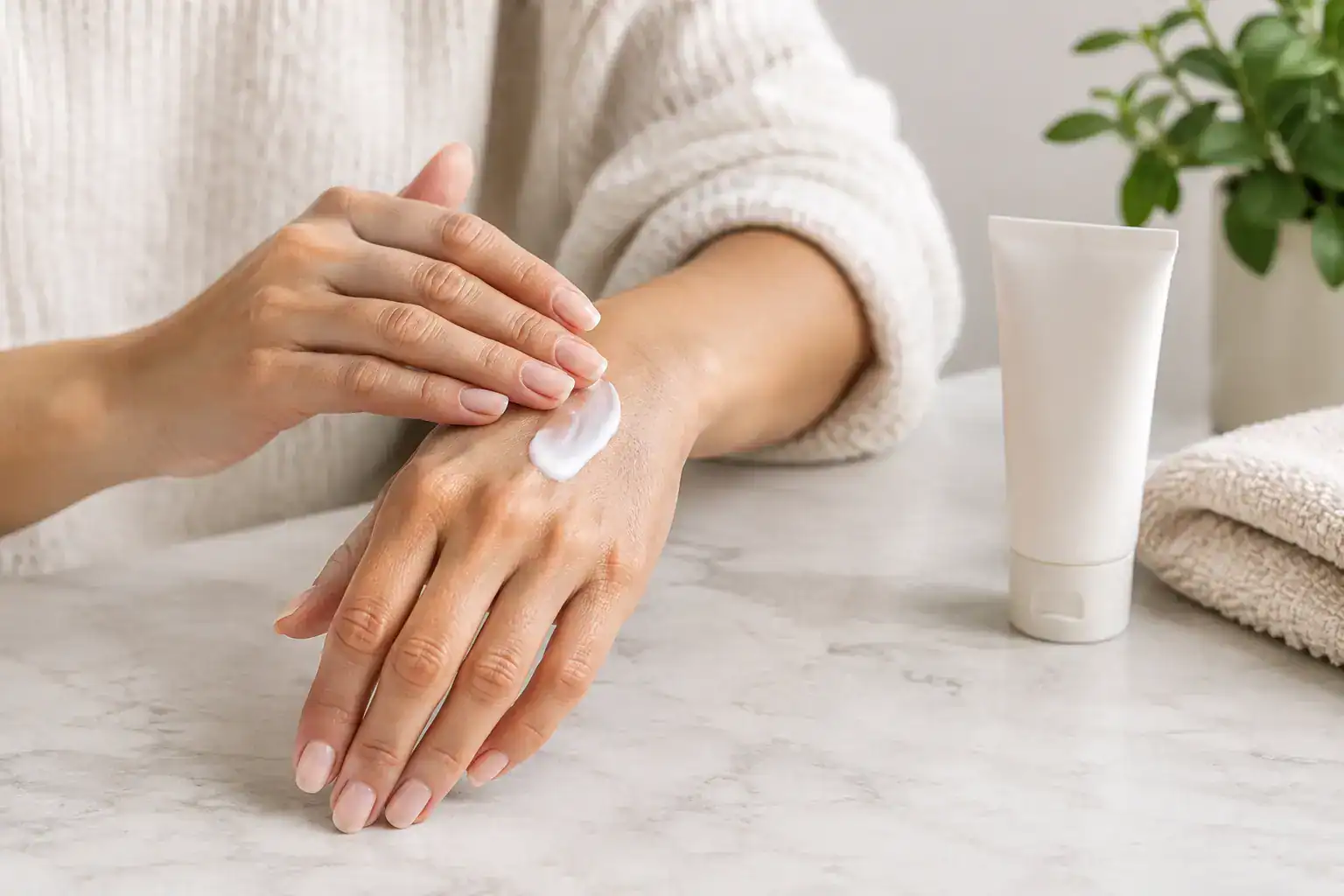
Hands tell the truth about a lotion quickly. After a few sink washes, a cold walk, a shift at work, or an afternoon of cleaning, they will let you know whether a formula actually comforts dry skin or simply sits on top of it. This hand lotion review focuses on what matters most when your hands are sensitive, rough, cracked, or constantly reaching for another application.
For many families, hand care is not a little luxury. It is everyday skin care. The right lotion should soften dry areas, feel pleasant enough to use often, and bring peace of mind about what you are putting on your skin.
A Hand Lotion Review Starts With Real-Life Use
A good hand lotion has to work in the moments that cause dryness in the first place. Frequent handwashing, hand sanitizer, gardening, caregiving, food prep, winter air, and indoor heat can all leave skin feeling tight and uncomfortable. If you have eczema-prone or reactive skin, even a familiar lotion can sting or leave redness behind.
That is why the first question should not be, “Does it smell nice?” Fragrance can be a lovely part of a routine, but comfort comes first. A dependable formula should leave hands feeling moisturized soon after application, with enough lasting softness that you are not applying it again five minutes later.
Texture matters, too. Some people love a richer cream before bed, when they can let it soak in slowly. Others need a lotion that absorbs comfortably between tasks, especially healthcare workers, parents, cooks, and anyone who uses a keyboard or phone throughout the day. Neither preference is wrong. The best choice depends on when and where you will use it.
What Makes Goat Milk Lotion Different?
Goat milk has long been valued in gentle skin care because it is naturally rich in fats and proteins that help give lotions a creamy, nourishing feel. In a thoughtfully made hand lotion, goat milk supports moisture without requiring a heavy, waxy finish.
For dry hands, that balance is especially welcome. A formula can feel rich without being greasy, helping rough knuckles, cuticles, and palms feel more comfortable while still allowing you to get on with your day. People with sensitive skin often appreciate products made with straightforward, nature-derived ingredients and without a long list of harsh additives.
Of course, “natural” should not mean you have to accept a product that does not perform. A hand lotion should spread easily, absorb well, and make skin feel noticeably softer. It should also be gentle enough to keep by the sink, in a work bag, or on a bedside table for regular use.
The feel after application counts
When trying a hand lotion, pay attention to the first minute and the next hour. In the first minute, a good lotion should glide over dry skin without pulling or leaving white streaks that need excessive rubbing. It should not make your hands feel slick, sticky, or coated.
Over the next hour, notice whether your skin still feels comfortable. If hands become tight again right away, the formula may be too light for your needs. If every surface feels oily, it may be better suited to overnight use than daytime application. A comfortable, nourished finish is often the sweet spot.
Ingredient simplicity is a practical benefit
For sensitive households, simpler ingredient choices can make shopping less stressful. Look for products made with nourishing oils and butters, goat milk, and scents derived from essential oils when fragrance is desired. If your skin reacts easily, an unscented option may be the most comfortable place to start.
Ingredient labels are personal. One person may enjoy a fresh citrus or calming lavender scent, while another needs fragrance-free care because of skin sensitivities or a workplace preference. The important thing is having a clear idea of what is in the bottle and why it is there.
How to Choose the Right Lotion for Your Hands
There is no single best hand lotion for every person. The lotion that feels perfect after gardening may be too rich for repeated use at a desk. The formula a retiree keeps beside the recliner may not be the one a nurse wants in a uniform pocket. Start with your own pattern of dryness.
If your hands are mildly dry, a lighter daily lotion may be enough after washing. If you deal with roughness around the knuckles, dry cuticles, or seasonal cracking, choose a more nourishing formula and use it consistently. Applying lotion when hands are slightly damp after washing can help hold onto that fresh, comfortable feeling.
For very reactive, inflamed, or persistently cracked skin, it is wise to introduce one new product at a time and patch test first. Hand lotion can support a gentle routine, but it is not a substitute for medical care when skin is painful, bleeding, infected, or not improving.
A Closer Look at Everyday Performance
The most useful lotions earn their place through repetition. They are the ones you reach for after dishes, before driving, following a shower, or before sleep. They do not need dramatic packaging or a complicated promise. They simply make your hands feel better and make it easy to care for them again tomorrow.
A handcrafted goat milk lotion can be particularly appealing for shoppers who want a small-batch product made with care rather than a mass-market formula built around filler and strong perfume. At The Goats Field, goat milk skin care is crafted by hand from pure goat milk right here on the farm, with sensitive skin and everyday family use in mind.
That farm-to-product approach matters because it keeps the focus where it belongs: on a lotion that feels comforting, uses ingredients you can recognize, and fits into real routines. It also makes a thoughtful gift for teachers, caregivers, hosts, new parents, or anyone whose hands could use a little extra kindness.
Scent should be supportive, not overwhelming
A pleasant scent can turn a quick application into a small pause in a busy day. Essential-oil-based scents often feel cleaner and more grounded than the sharp perfume notes found in some conventional lotions. Still, scent should fade into the background rather than announce itself across the room.
If you are buying for a gift or a shared household, a soft, familiar scent is often a safe choice. If you are shopping for someone with eczema, allergies, or known fragrance sensitivity, prioritize the gentlest option available. The kindest lotion is the one they will feel comfortable using often.
Packaging affects whether you will use it
A pump bottle is convenient at the kitchen or bathroom sink. A smaller bottle is easy to carry in a purse, glove compartment, or work bag. A tube can be useful for travel and less messy for children to use on their own.
This may sound minor, but good skin care depends on consistency. Put lotion where dryness happens, not where you hope to remember it later. One by the sink and one near the bed is often more helpful than a single bottle tucked away in a cabinet.
Getting More From Your Hand Lotion
Use hand lotion after washing, but do not wait until your skin feels painfully dry. A small amount applied regularly is usually more comfortable than trying to rescue severely dry hands once a day. Massage it over the backs of your hands, around the fingers, across the palms, and into the cuticles.
At night, use a slightly more generous layer and give it a moment to settle before bed. If winter weather or frequent washing has your hands feeling especially rough, this simple habit can make mornings feel noticeably better. For gardeners and hands-on workers, applying lotion after the day is done gives hardworking skin time to rest.
A hand lotion is a small household staple, but the right one can feel like real care. Choose a formula that respects sensitive skin, feels good in your hands, and makes it easier to keep showing up for the people and work you love.