
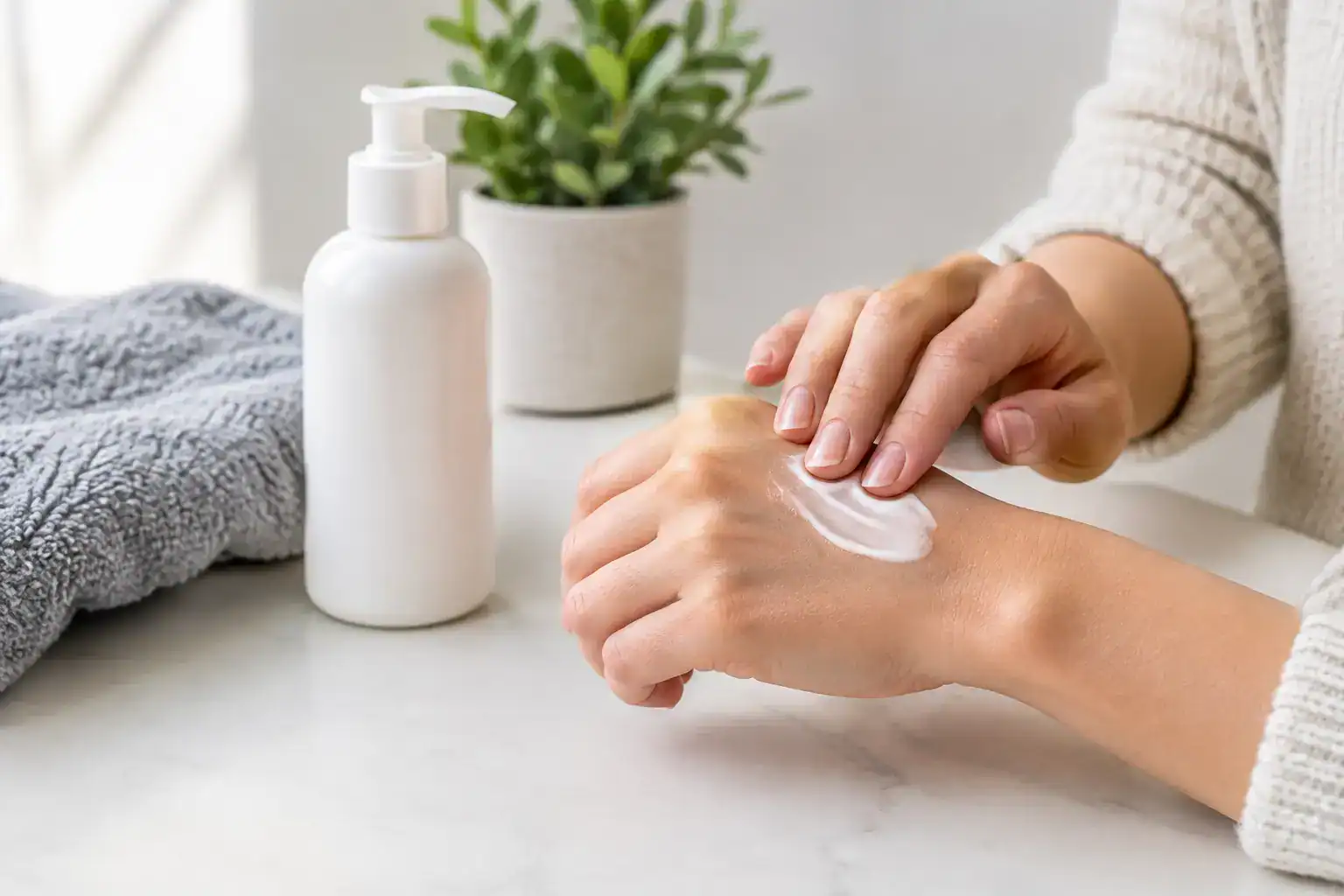
Hands tell the story of a full day. They carry groceries, wash dishes, care for children, tend gardens, work with tools, and get washed again and again. A good working hands lotion routine example is not about adding another complicated task to your day. It is about giving dry, hardworking skin small moments of moisture before it becomes rough, tight, flaky, or cracked.
For sensitive skin especially, the best routine is usually simple: cleanse gently, apply lotion when hands are still slightly damp, and give them a richer layer of care before bed. Consistency matters more than using a large amount once in a while.
Why hardworking hands need more than occasional lotion
The skin on your hands has a tough job, but it does not have much protection. Frequent handwashing, hand sanitizer, hot water, cold weather, cleaning products, gardening soil, and dry indoor air can all pull moisture from the skin barrier. Once that barrier is stressed, hands may sting when washed, feel papery around the knuckles, or develop rough patches along the fingertips and palms.
Lotion helps by bringing moisture and softness back to the surface of the skin. But timing matters. Applying a gentle lotion after washing helps hold onto the water already on your hands, while a bedtime application gives the skin a longer quiet period to feel nourished.
If your hands are prone to eczema or ingredient sensitivity, less can be more. A product with a short, understandable ingredient approach and a comfortable feel may be easier to use faithfully than a heavily fragranced lotion that sits on the skin or causes irritation.
A working hands lotion routine example for every day
This routine works well for people who wash their hands often, work outdoors, clean at home, spend time in healthcare settings, or simply struggle with seasonal dry skin. Adjust the frequency based on your day. Someone working with water or sanitizer may need lotion several times daily, while another person may only need it after washing and at bedtime.
Morning: Start with a gentle layer
After your morning handwash, pat your hands dry rather than rubbing them hard with a towel. Leave a little moisture behind, then massage a small amount of lotion over your palms, fingers, cuticles, and knuckles.
Do not skip the backs of your hands. They are exposed to sun, wind, and frequent washing, yet they are easy to overlook. Work the lotion in until your hands feel comfortable, not slippery. A lotion that absorbs well is especially useful in the morning, when you still need to hold a coffee mug, help a child get ready, type, drive, or head out the door.
For very dry areas, use what is left on your fingertips to press lotion into the creases around each knuckle. This small habit can make a noticeable difference over time.
During the day: Reapply after the moisture stealers
The most useful times to reapply are after handwashing, dishwashing, cleaning, gardening, bathing a child, or using sanitizer repeatedly. Keep lotion where the routine naturally happens: beside the kitchen sink, in a work bag, near your desk, or on the nightstand.
You do not need a thick coat every time. A pea-sized amount is often enough for a daytime refresh. Focus on the places that feel dry first, then smooth the remaining lotion over both hands.
If you wear gloves for cleaning, yard work, or food preparation, apply lotion after removing them and washing your hands. Gloves protect from some irritants, but heat and sweat inside them can still leave skin feeling dry. If your hands are already cracked or sore, choose tasks carefully and avoid exposing them to harsh cleaners without protection.
After wet work: Give skin a reset
Dishes, laundry, and household cleaning can be especially hard on hands because they combine water, detergent, and repeated towel drying. Hot water may feel soothing in the moment, but it can make dryness worse. Lukewarm water is the kinder choice when you can manage it.
After wet work, wash away any residue, pat hands dry, and apply lotion right away. This is a good time for a slightly more generous layer, especially across fingertips and around nails. These areas often show the first signs of dryness because they take so much friction throughout the day.
For a family with busy hands, this does not need to be perfect. Even choosing one dependable moment after the dinner dishes can help turn hand care into a routine instead of a rescue mission.
The bedtime step that helps rough hands recover
Night is when hardworking hands get a break. Before bed, wash gently if needed and apply a fuller layer of lotion. Take an extra minute to massage it into the palms, thumbs, cuticles, and any rough spots. This is not only relaxing. It gives the skin several uninterrupted hours without more washing, weather, or work.
If your hands are very dry, try this simple approach two or three nights a week: apply lotion, wait a minute for it to settle, then wear soft cotton gloves to bed. The gloves are optional, but they can help keep lotion on your skin instead of your sheets. Some people love this extra step; others find it uncomfortable. It depends on what you will actually keep doing.
Deep cracks, bleeding skin, swelling, warmth, or a rash that does not improve deserve attention from a healthcare professional. Lotion can support dry skin, but it is not a replacement for medical care when the skin may be infected or severely inflamed.
Choosing a lotion for sensitive, busy hands
The right lotion should make you want to use it often. Look for a formula that feels nourishing but does not leave a greasy coating that interferes with work. For many families, goat milk lotion is a welcome choice because it feels creamy and comforting on dry skin while fitting easily into an everyday routine.
Scent preference matters, too. A soft essential-oil-based scent may feel pleasant at bedtime, while an unscented or lighter option can be more practical for work, cooking, or sensitive noses. If you react easily to new products, test a small amount on one area first and keep the rest of your routine steady for a few days.
At The Goats Field, our lotions are crafted by hand from pure goat milk on our farm with families and sensitive skin in mind. The goal is simple, skin-loving moisture that feels good enough to reach for after every wash.
Small routine changes that protect your hands
Lotion works best alongside a few practical adjustments. Keep showers and handwashing comfortably warm instead of hot. Wear protective gloves for harsh cleaning products and cold outdoor chores. Use a gentle soap, then avoid scrubbing your hands with a towel until they are completely dry.
Pay attention to the pattern behind your dryness. If your knuckles feel tight every winter, begin your routine before the weather turns cold. If sanitizer at work causes stinging, add a lotion application before your shift, at breaks, and when you get home. Prevention is usually easier than repairing severely dry skin later.
Your hands do not need a complicated regimen to feel cared for. Place a good lotion where life happens, use it after the moments that dry your skin out, and let bedtime be your daily reset. Those small, steady acts of care can help your hands feel softer, calmer, and ready for whatever tomorrow asks of them.